

 Preview
 Send
Send Share
Share
 Details

 Download
 Similars
 X-Ray
X-Ray Diaporama
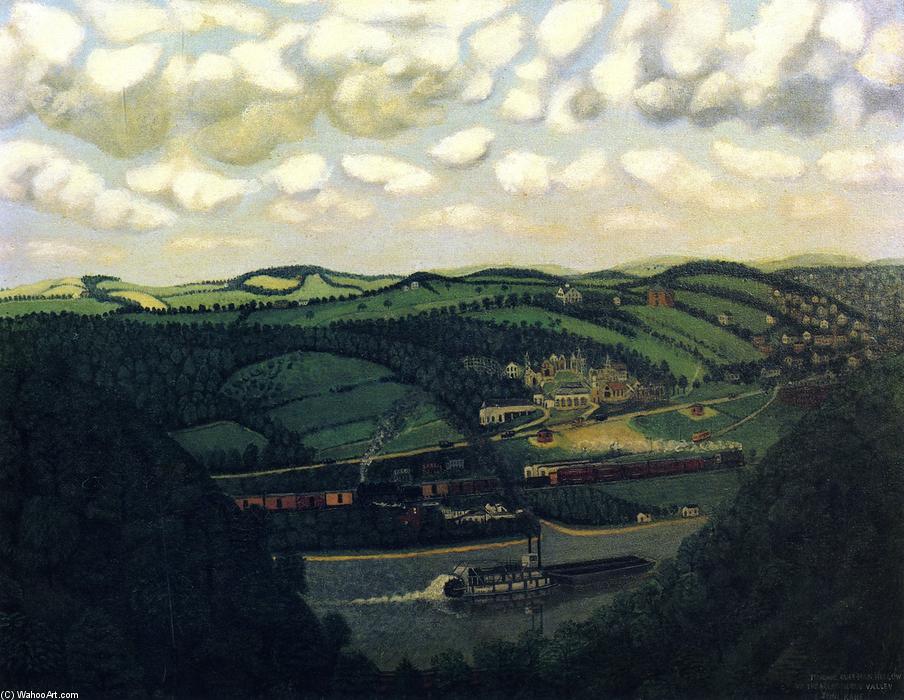
Through Coleman Hollow, Up the Allegheny Valley


 Read More
Purchase a high-resolution, enhanced digital image, far superior to the online preview.
Each file is meticulously prepared by our in-house specialists using advanced tools and expert manual retouching. We ensure every image has exceptional clarity, precise color accuracy, and fine detail.
The final file is delivered via email within 72 hours, optimized for immediate use in professional, editorial, and print environments. This is the same quality trusted by top-tier design studios, publishers, and galleries.
Digital Image
Download a high-resolution file for personal display, printing, and creative projects. ( Buy Print Buy Hand Made Painting)
Included in Every Digital Image Order
Expert Digital Delivery, Guaranteed
When you choose ArtsDot.com, you're not just getting an image - you're receiving a professionally enhanced digital artwork, crafted with precision and backed by a satisfaction guarantee. Here's everything that comes with your order, automatically:

Fast Email Delivery
Your high-resolution digital image file will be emailed to you within 72 hours of ordering - ready for immediate use.

AI-Enhanced Digital File
Your artwork is professionally optimized using advanced AI tools and manual editing, ensuring maximum detail, clarity, and color accuracy.

Free Lifetime Re-Delivery
Accidentally deleted or lost your file? No worries - we'll resend it to you anytime, free of charge.

No Import Fees - Ever
Enjoy your artwork instantly with zero customs, duties, or delivery fees - digital downloads are always tax-free.

Color Accuracy Guarantee
We ensure your digital image reflects the original colors as closely as possible using professional tools and color management.

60-Day Satisfaction Guarantee
If you're not satisfied with your digital image, we'll revise it or refund 100% within 60 days - no questions asked.

100% Money-Back Guarantee
Not satisfied? Get a full refund within 60 days of receiving your digital file - no questions asked.

Bulk Order Discounts
Buy 3 images, save 10% - Buy 5, save 15% - Buy 10+, save 20%. Great for creative projects, galleries, and agencies.
Collectible Description
Through Coleman Hollow, Up the Allegheny Valley – A Reflection of Industrial Pennsylvania
John Kane’s “Through Coleman Hollow, Up the Allegheny Valley,” painted in 1928, isn't merely a depiction of a scenic landscape; it’s a poignant snapshot of America during its industrial boom—a testament to both the grandeur of nature and the transformative influence of burgeoning industry. The painting captures a tranquil train journey winding through Coleman Hollow, nestled within the Allegheny Valley, offering viewers an immersive experience into the visual language of the era.Subject Matter & Composition
The central focus is undeniably the locomotive traversing the valley, skillfully rendered against a backdrop of towering mountains. Kane’s meticulous attention to detail extends beyond the train itself—the carriages are populated with figures suggesting movement and life, subtly hinting at the human element within this expansive panorama. Below, a boat rests peacefully on the water's edge, anchoring the scene and providing a counterpoint to the dynamism above. This balanced composition emphasizes harmony between man and environment, reflecting the optimistic spirit of the time.Style & Technique – Impressionistic Influences
Kane’s artistic style leans heavily into impressionism, evident in his loose brushstrokes and vibrant color palette. Unlike academic realism prevalent during this period, Kane prioritizes capturing fleeting moments of light and atmosphere—a characteristic hallmark of Impressionist painters like Claude Monet and Camille Pissarro. The artist employs broken color techniques to simulate the shimmering effect of sunlight filtering through the mountain peaks, creating a luminous quality that transcends mere representation. Thick impasto adds textural richness to the canvas, conveying a palpable sense of physicality and immediacy.Historical Context – Pennsylvania’s Steel Industry
Painted during the height of Pennsylvania's steel industry—a period marked by rapid urbanization and technological advancement—the artwork speaks volumes about the socio-economic landscape of the 1920s. John Kane himself experienced this transformative era firsthand, working as a gandy dancer on the B&O; Railroad, immersing him in the rhythms of industrial labor and fostering an appreciation for the rugged beauty of the region’s landscapes. The painting serves as a visual chronicle of this pivotal moment in American history—a celebration of progress intertwined with reverence for the natural world.Symbolism & Emotional Resonance
Beyond its descriptive accuracy, “Through Coleman Hollow” carries symbolic weight. The train symbolizes movement, aspiration, and connection – representing the journey towards industrial prosperity while simultaneously acknowledging the importance of preserving natural spaces amidst rapid change. The mountains stand as emblems of strength, permanence, and tradition—a grounding force against the surging tide of innovation. Ultimately, Kane’s painting evokes a feeling of serenity and contemplation, inviting viewers to pause and appreciate the sublime beauty of Pennsylvania's wilderness. It’s an artwork that resonates with nostalgia for a bygone era while simultaneously affirming the enduring power of art to capture both visual splendor and profound emotional truth.Related Artworks

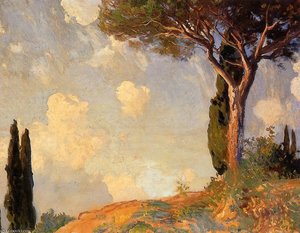
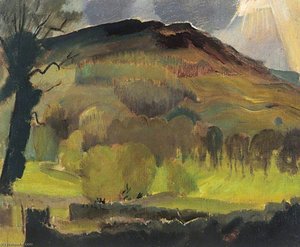
Artist Biography
John Kane: A Visionary of Industrial Pennsylvania
Born in West Calder, Scotland, in 1860, John Kane’s artistic journey was anything but conventional. His early life, marked by the loss of his father and a move to America following his stepfather's footsteps, instilled within him a resilience and an observant eye for the world around him. He began working as a gandy dancer on the B&O Railroad at age 19, a physically demanding role that exposed him to the rhythms of industry and the stark beauty of the American landscape – particularly the burgeoning steel towns of Western Pennsylvania.
Kane’s artistic development wasn't a sudden revelation but rather a gradual unfolding. A devastating accident in 1891, which resulted in the amputation of his left leg, led him to seek employment with the Pressed Steel Car Company in McKees Rocks. It was here, amidst the clang and hiss of machinery, that he began sketching on discarded boards – initially as a means of passing the time during his lunch breaks. These early sketches, filled with an almost childlike directness, captured the essence of his surroundings: the towering smokestacks, the gritty streets, and the hardworking men who shaped the region’s industrial heart.
The Naïve Vision
Kane's style quickly evolved into what is now recognized as “Naïve” or “Primitive” art. His paintings lacked the meticulous detail and illusionistic perspective of academic traditions, instead prioritizing direct observation and emotional expression. He employed a limited palette – predominantly blues, greens, browns, and ochres – to create atmospheric landscapes that felt both immediate and timeless. Crucially, Kane’s work was rooted in his lived experience; he wasn't striving for photographic realism but rather distilling the *feeling* of a place, capturing its spirit with an unpretentious honesty.
His subjects were largely drawn from the industrial landscape of Pittsburgh and Scotland – scenes of rural life, religious architecture, and glimpses into everyday existence. He frequently depicted St. John’s College, a prominent landmark in his hometown, alongside other churches and historical buildings, imbuing them with a sense of quiet dignity and spiritual resonance. These paintings weren't merely representations; they were imbued with a deep personal connection to the places and people he observed.
Rediscovery and Recognition
Despite exhibiting at the prestigious Carnegie International Exhibition in 1927, Kane’s work initially faced skepticism and dismissal. The prevailing artistic establishment struggled to accept an untrained artist who had seemingly emerged from nowhere. However, a pivotal moment arrived when painter Andrew Dasburg championed his talent, persuading the jury to include Kane's “Scene in the Scottish Highlands” in the exhibition. This recognition sparked widespread media attention, transforming Kane into an overnight sensation – and inadvertently paving the way for other self-taught artists to gain wider acceptance.
Following this breakthrough, Kane’s work began to be exhibited in major museums across America and Europe, including the Museum of Modern Art in New York. His paintings, characterized by their raw emotion, simple forms, and evocative use of color, resonated with audiences who appreciated his unique vision and unwavering commitment to capturing the essence of his subjects.
Legacy and Influence
John Kane’s legacy extends far beyond his individual artistic achievements. He stands as a testament to the power of observation and the possibility of artistic expression regardless of formal training or social status. His work profoundly influenced later generations of artists, particularly those associated with the Outsider Art movement, demonstrating that beauty and meaning can be found in unexpected places – and through unconventional means.
Today, Kane’s paintings are treasured for their honesty, emotional depth, and ability to transport viewers back in time to a rapidly changing industrial landscape. His story serves as an enduring reminder of the importance of embracing individuality and pursuing one's artistic passions with unwavering conviction. His work continues to be exhibited and studied, solidifying his place as a significant figure in 20th-century art.
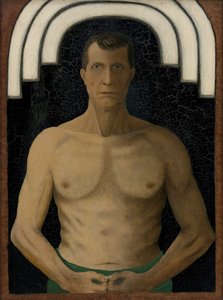
john kane
1860 - 1934 , United Kingdom
Quick Facts
- Artistic Movement Or Style: Naïve art, Primitive
- Artists Who Influenced This Artist: ['None],\n "Artists or movements influenced by this artist": [Grandma Moses, Outsider Art']
- Date Of Birth: August 19, 1860
- Date Of Death: August 10, 1934
- Full Name: John Kane
- Nationality: British (Scottish-born)
- Notable Artworks:
- Panther Hollow
- From My Studio Window
- St John’s Co-Cathedral
- Place Of Birth: West Calder, UK

