 Preview
 Send
Send Share
Share
 Details

 Download
 Similars
 X-Ray
X-Ray Diaporama
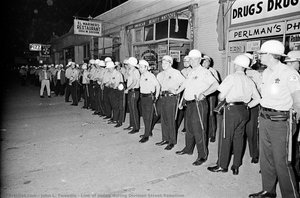
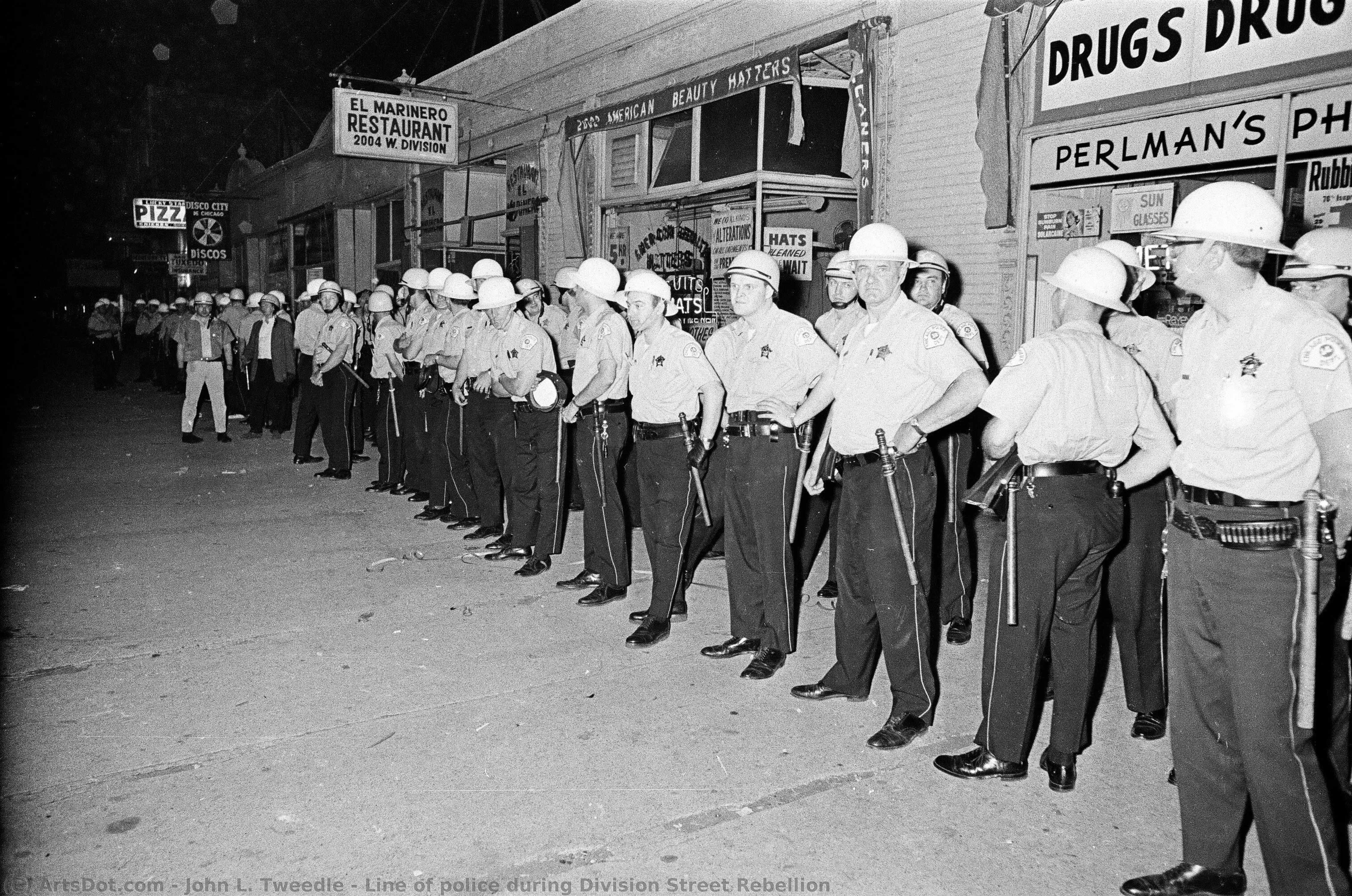
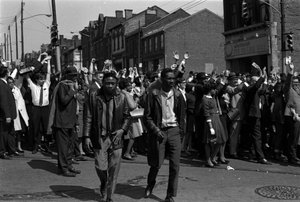
Line of police during Division Street Rebellion


 Read More
Hand Made Oil Reproduction
Hand-painted oil on canvas in your size and frame, made to order by our artists. ( Buy Print Buy Image)




































Pick from our preset sizes that match the artwork's original proportions.

You may enter your own dimensions to fit a specific frame or space. If your selected size does not match the original image's proportions, we will either crop the artwork or extend the painting with additional hand-painted elements. A digital mockup will be sent for your approval before production begins.
Please note that the on-screen preview does not reflect the actual cropping or extension. Only the mockup will accurately show the final composition.
While custom sizes are available, we recommend selecting a dimension from the predefined list to preserve the original proportions.
After order, ArtsDot.com team will email client for instructions and provide a mockup preview
Worldwide Delivery () in 3/4 weeks instead of standard 5 weeks. (5 September). No compromise on quality.

Free Worldwide Express Shipping

High-Quality Linen Canvas

Full Shipping Insurance

Customs Tax Refund Guarantee

True Color Matching Guarantee

60-Day Return Policy (Defects Only)

100% Money-Back Guarantee

Bulk Discount Offer
 Glass option is only available in size under 110 CM

Line of police during Division Street Rebellion
Reproduction Medium
Reproduction Size
-


Total Price
$ 263
Related Artworks








Artist Biography
The Lens of Justice: The Life and Legacy of John L. Tweedle
In the rhythmic clicking of a camera shutter, there exists a profound responsibility—a silent vow to tether fleeting moments to the permanence of history. For John L. Tweedle (1930-1997), this was not merely a professional duty but a sacred calling. Born in the heart of Chicago, Tweedle’s early life was shaped by the stark realities of racial segregation and the palpable tensions of an era defined by struggle. These formative years, steeped in the complexities of urban American life, instilled in him a unique visual vocabulary, one that sought to find dignity within the chaos and truth within the shadows of systemic inequality.
Tweedle’s ascent into the professional sphere marked a watershed moment for African American representation in mainstream media. By securing a position as a staff photographer for the Chicago Daily News, he became one of the first Black photographers at a major white-owned newspaper. This achievement was more than a personal milestone; it was a courageous breach in the wall of journalistic exclusion. Through his lens, the invisible became visible, and the marginalized were granted a seat at the table of public discourse. His work did not merely observe the news; it breathed life into the stories of those often ignored by the traditional press.
Witness to Rebellion and Resilience
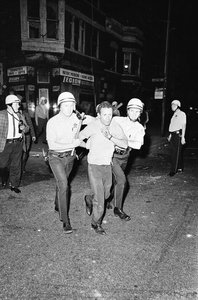
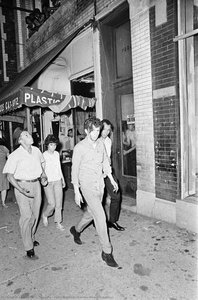
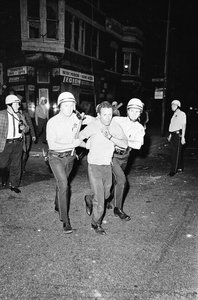
The true magnitude of Tweedle’s artistry is perhaps most poignantly realized in his documentation of the 1966 Division Street Rebellion. As Chicago’s streets became theaters of confrontation, Tweedle moved through the smoke and tension with an unparalleled ability to capture the raw, unvarnished essence of civil unrest. He meticulously recorded the clashes between police forces and Puerto Rican demonstrators, transforming scenes of arrest and defiance into enduring symbols of community resilience. His photographs from this period serve as a vital archive of the struggle for autonomy and recognition within Chicago’s political landscape.
Beyond the grand scale of social upheaval, Tweedle possessed a rare gift for intimacy. He could pivot from the wide-angle tension of a police line to the quiet, soulful portrait of an individual caught in the crossfire of history. This duality—the ability to capture both the epic and the personal—is what elevated his work from mere photojournalism to profound social art. His images of the Division Street Rebellion are not just records of conflict; they are studies of human emotion, capturing the fear, the anger, and the unyielding hope of a people fighting for their place in the sun.
A Lasting Visionary Impact
The historical significance of John L. Tweedle extends far beyond the borders of Chicago. His work resonates as a cornerstone of African American photographic history, embodying a commitment to social justice that continues to inspire generations of visual storytellers. There is a legendary quality to his presence in the field; it is often noted that he possessed an uncanny ability to secure images that others could not, moving through spaces with a grace that allowed him to capture the very soul of his subjects.
As we reflect on his life, several key pillars of his legacy emerge:
- Pioneering Representation: Breaking racial barriers within major American news organizations.
- Historical Preservation: Serving as a primary visual chronicler of the Division Street Rebellion and the broader Civil Rights movement in the North.
- Humanistic Depth: Infusing documentary photography with an emotional nuance that transcends simple reportage.
- Cultural Advocacy: Providing a platform for Puerto Rican and African American identities during periods of intense social transformation.
John L. Tweedle left behind more than just a collection of photographs; he left a testament to the power of the gaze. He taught us that to look closely is to care deeply, and that through the careful preservation of truth, we can ensure that the struggles and triumphs of the past remain an active part of our collective future.
john l. tweedle
1930 - 1997 , United States of America
Quick Facts
- Artistic Movement Or Style: Photojournalism
- Artists Or Movements Influenced By This Artist: ['Michelle Agins']
- Artists Who Influenced This Artist: ['None specified']
- Date Of Birth: 1930
- Date Of Death: 1997
- Full Name: John L. Tweedle
- Nationality: American
- Notable Artworks: ['Police arresting a young person during the Division Street Rebellion']
- Place Of Birth: Chicago, United States