 Preview
 Send
Send Share
Share
 Details

 Download
 Similars
 X-Ray
X-Ray Diaporama
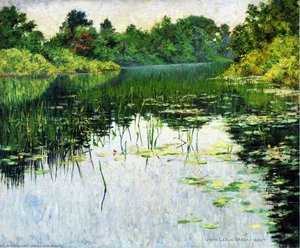
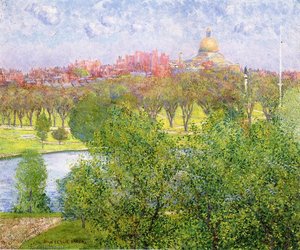
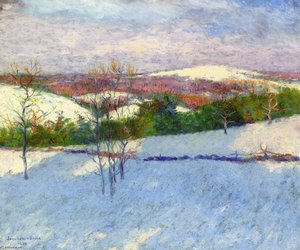
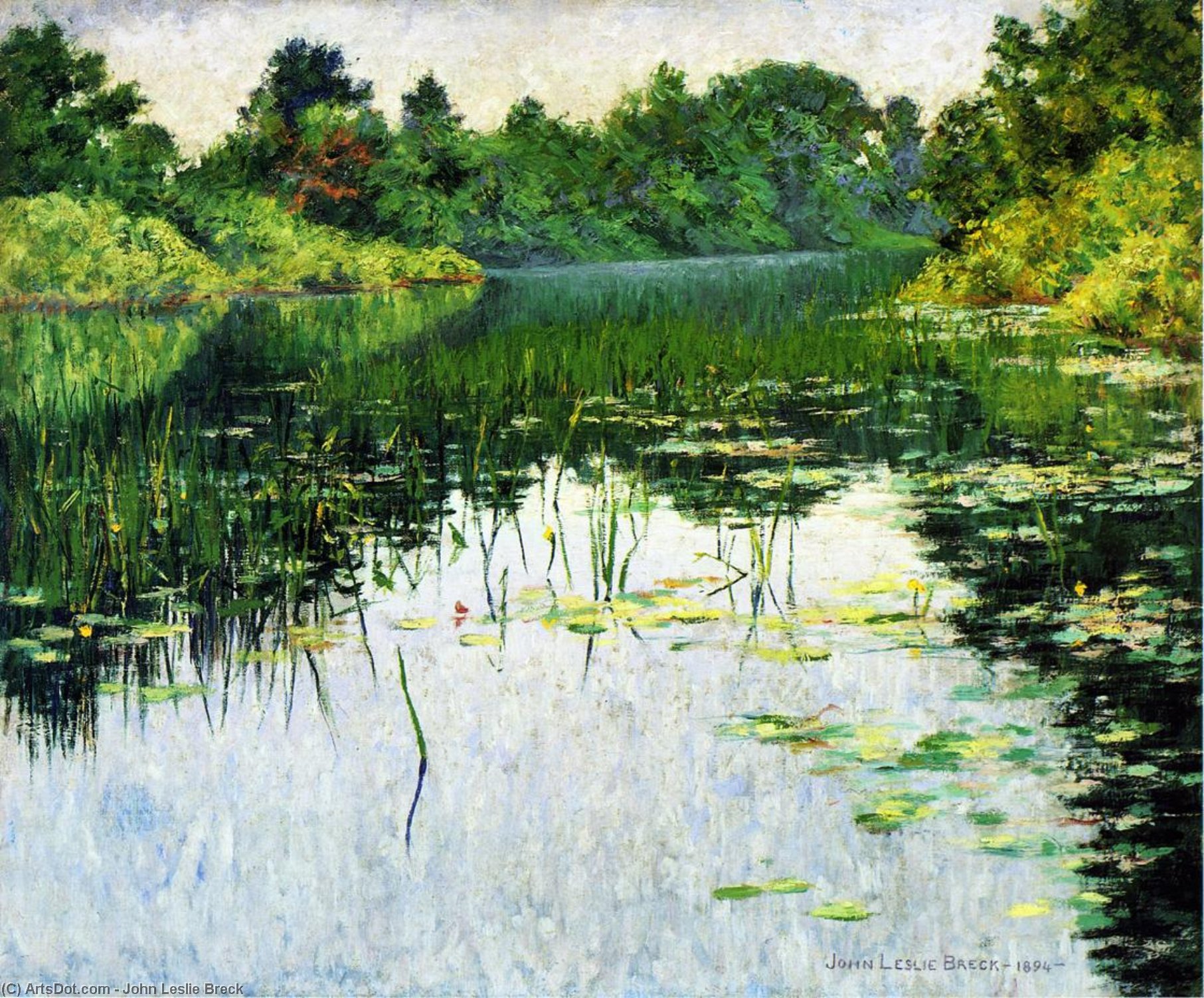
Grey Day on the Charles


 Read More
Hand Made Oil Reproduction
Hand-painted oil on canvas in your size and frame, made to order by our artists. ( Buy Print Buy Image)




P118B $10

P118H $10

P118W $10

P438Z $10

P508JH $12

P508YH $12

P805H $10

P805Z $10

P919BZ $10

P919G $10

P919XJ $10

P959ZH $10

P968JZ $12

W106C $8

W218G $10

W218JH $8

W218Y $10

W307PJ $10

W316G $10

W316PJ $8

W316Y $10

W398PJ $8

W4111J $10

W500HY $15

W500JH $15

W692G $12

W849H $8

W940BG $15

W953PJ $8




Pick from our preset sizes that match the artwork's original proportions.

You may enter your own dimensions to fit a specific frame or space. If your selected size does not match the original image's proportions, we will either crop the artwork or extend the painting with additional hand-painted elements. A digital mockup will be sent for your approval before production begins.
Please note that the on-screen preview does not reflect the actual cropping or extension. Only the mockup will accurately show the final composition.
While custom sizes are available, we recommend selecting a dimension from the predefined list to preserve the original proportions.
After order, ArtsDot.com team will email client for instructions and provide a mockup preview
Worldwide Delivery () in 3/4 weeks instead of standard 5 weeks. (16 August). No compromise on quality.

Free Worldwide Express Shipping

High-Quality Linen Canvas

Full Shipping Insurance

Customs Tax Refund Guarantee

True Color Matching Guarantee

60-Day Return Policy (Defects Only)

100% Money-Back Guarantee

Bulk Discount Offer
 Glass option is only available in size under 110 CM

Grey Day on the Charles
Reproduction Medium
Reproduction Size
-


Total Price
$ 263
Artwork Description
A Serene Glimpse of American Impressionism
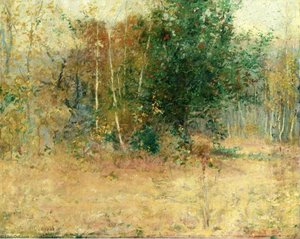
To stand before John Leslie Breck's "Grey Day on the Charles" is to step into a moment suspended in time—a breath drawn on a tranquil riverbank. This seminal work, dating from 1894, captures more than just a waterway; it encapsulates a feeling of profound peace. The scene unfolds with an almost luminous quality, dominated by the lush embrace of greenery that crowds the banks of the Charles River. It is a masterful study in atmosphere, where the very air seems palpable, thick with the quietude of a temperate day.
Mastery of Light and Color
Breck’s technique here is nothing short of revelatory for those who appreciate the evolution of American painting. While he was deeply influenced by the burgeoning spirit of Impressionism—evidenced in his light, bright palette—he never abandoned a dedication to structure that lends the piece an enduring sense of classical balance. Observe how the artist handles the water; it is not merely blue, but a complex tapestry of reflected greys and muted greens, suggesting depth without becoming murky. The interplay between the calm surface of the river, the dense foliage overhead, and the subtle hints of color in the foreground flowers creates an illusion of dimension that draws the viewer deep into the composition. Even the small detail of a boat floating gently suggests life moving through stillness.
The Idyllic Spirit of Nature
Symbolically, "Grey Day on the Charles" speaks to the enduring solace found within nature's embrace. The river itself often symbolizes the passage of time and life’s continuous flow, yet here, that movement is softened by the surrounding tranquility. The lush greenery acts as a protective curtain, suggesting an intimate, almost secret corner of the world discovered only by the appreciative eye. For the collector or designer, this painting offers more than mere decoration; it offers an emotional anchor—a visual retreat from the clamor of modern life.
A Timeless Investment in Artistry
As a piece of American Impressionism, "Grey Day on the Charles" marks a crucial point in art history. It showcases Breck’s unique ability to synthesize European techniques with a distinctly American landscape sensibility. Whether you are seeking an artwork to anchor a formal drawing-room or to infuse a sunlit space with natural serenity, this reproduction offers unparalleled quality. Owning a piece inspired by this masterpiece is acquiring not just paint on canvas, but a tangible connection to the quiet beauty and enduring spirit of late 19th-century American artistry.
Related Artworks


Artist Biography
Early Life and Artistic Beginnings
John Leslie Breck, born at sea off the coast of Hong Kong in 1860 to a United States naval officer and his wife, embarked on a life destined for artistic expression despite its tragically short duration. His early years were spent in Newton, Massachusetts, where he received a traditional education, attending Governor’s Academy before moving on to St. Mark's School. While these institutions provided a foundation, it was Breck’s subsequent pursuit of formal training that truly ignited his passion. In 1877, he journeyed to Europe, specifically Munich and its prestigious Royal Academy of Fine Arts, laying the groundwork for a career deeply intertwined with the evolving landscape of Impressionism.
Upon returning to Boston in 1882, Breck immersed himself in the New England art scene. His initial works reflected this environment, showcasing a meticulous attention to detail and a traditional approach to landscape painting. However, a yearning for something more – a way to capture not just the *appearance* of light and atmosphere but its very essence – led him back across the Atlantic.
The Parisian Influence and Monet’s Circle
In 1886, Breck found himself in Paris, enrolling at the Académie Julian. This move proved pivotal. He studied under Gustave Boulanger and Jules-Joseph Lefebvre, absorbing academic techniques while simultaneously encountering the burgeoning Impressionist movement. It was here that he forged connections with fellow American artists like Willard Metcalf and Theodore Robinson, friendships that would profoundly shape his artistic trajectory. The most significant encounter, however, came in 1887 when Breck traveled to Giverny, France – the idyllic home of Claude Monet.
Monet’s influence on Breck was immediate and transformative. He wasn't merely exposed to Impressionism; he was welcomed into its heart. The vibrant colors, broken brushstrokes, and focus on capturing fleeting moments of light resonated deeply with Breck’s artistic sensibilities. He absorbed Monet’s techniques, learning to depict the atmospheric perspective and luminosity that would become hallmarks of his own style. This period marked a crucial turning point, as Breck began to integrate Dutch Mastery principles with the new Impressionist aesthetic.
Introducing Impressionism to America
Breck is often credited with playing a key role in introducing Impressionism to the United States. In 1890, he organized an exhibition at the St. Botolph Club in Boston, showcasing his own works alongside those of other artists who had embraced the new style. This show was met with both curiosity and resistance; while some critics were dismissive of its perceived lack of finish, others recognized the innovative spirit and emotional power of Impressionism.
The landscapes Breck exhibited at this time – scenes of Massachusetts, Giverny, and Venice – demonstrated his mastery of atmospheric perspective and vibrant color. These paintings weren’t simply representations of places; they were evocations of feeling, capturing the ephemeral beauty of light and shadow. Despite a brief romantic entanglement with Blanche Hoschédé-Monet that ended in heartbreak, Breck continued to refine his technique and explore new subjects.
A Tragic End and Lasting Legacy
Breck’s career was tragically cut short by his untimely death in 1899 at the age of 38. The circumstances surrounding his passing – reported as asphyxiation from lighting gas poisoning – remain somewhat shrouded in mystery, adding a poignant layer to his story. Despite his brief life, Breck left behind a significant body of work that continues to captivate and inspire.
His paintings are held in numerous American museums and private collections, serving as testaments to his talent and vision. The John Leslie Breck Fund, established through his estate at St. Mark's School, ensures the continued support of fine arts education. A notable 1891 portrait of Breck by James Carroll Beckwith, currently on display at the National Gallery of Art in Washington, D.C., offers a glimpse into the artist’s personality and the artistic circles he inhabited.
Breck's legacy extends beyond his paintings themselves. He demonstrated the power of embracing new ideas and techniques, paving the way for future generations of American Impressionists. His work stands as a reminder that true artistry lies not just in technical skill but in the ability to capture the fleeting beauty of the world around us – a quality he achieved with remarkable sensitivity and grace.

john leslie breck
1860 - 1899 , United States of America
Quick Facts
- Artistic Movement Or Style: Impressionism
- Artists Or Movements Influenced By This Artist: ['Dutch Mastery']
- Artists Who Influenced This Artist: ['Claude Monet']
- Date Of Death: 1899
- Full Name: John Leslie Breck
- Nationality: American
- Notable Artworks: ['Haystacks']
- Place Of Birth: Sea
Related Articles

John Constable's Masterpieces: Explore 25 Iconic Landscapes for Your Home
Journey through John Constable's 25 most celebrated landscapes. Explore Romanticism, Dedham Vale & his masterful use of light in iconic paintings like 'Hay Wain'. Find museum-quality art reproductions and elevate your home decor on ArtsDot.com.

John Singer Sargent's 25 Masterpieces: Portraits & Beyond | ArtsDot
Explore 25 iconic John Singer Sargent paintings – from dazzling portraits to Impressionist landscapes. Discover the stories behind Madame X, El Jaleo & more! Find museum-quality art reproductions and elevate your home decor with ArtsDot.com.

Beyond the Horizon: 10 Landscape Masterpieces for Your Home Decor
Journey through 10 breathtaking landscape paintings by Monet, Van Gogh & more! Explore iconic artworks, artistic techniques & find inspiration for your home decor. Museum-quality reproductions at ArtsDot.com. Discover all masterpieces on ArtsDot.com

John Frederick Kensett: Luminosity, Landscape & the American Identity
Explore the luminous landscapes of John Frederick Kensett, a master of Luminism and key figure in the Hudson River School. Discover his serene paintings & enduring legacy with ArtsDot.

Robert Spencer: Luminism, Narrative & the American Landscape Tradition
Explore the captivating world of Luminism & the Hudson River School with our expert analysis. Discover the history, artists, and enduring beauty of 19th-century American landscape painting. Find museum-quality reproductions at ArtsDot.