 Preview
 Send
Send Share
Share
 Details

 Download
 Similars
 X-Ray
X-Ray Diaporama
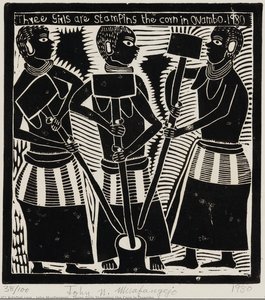
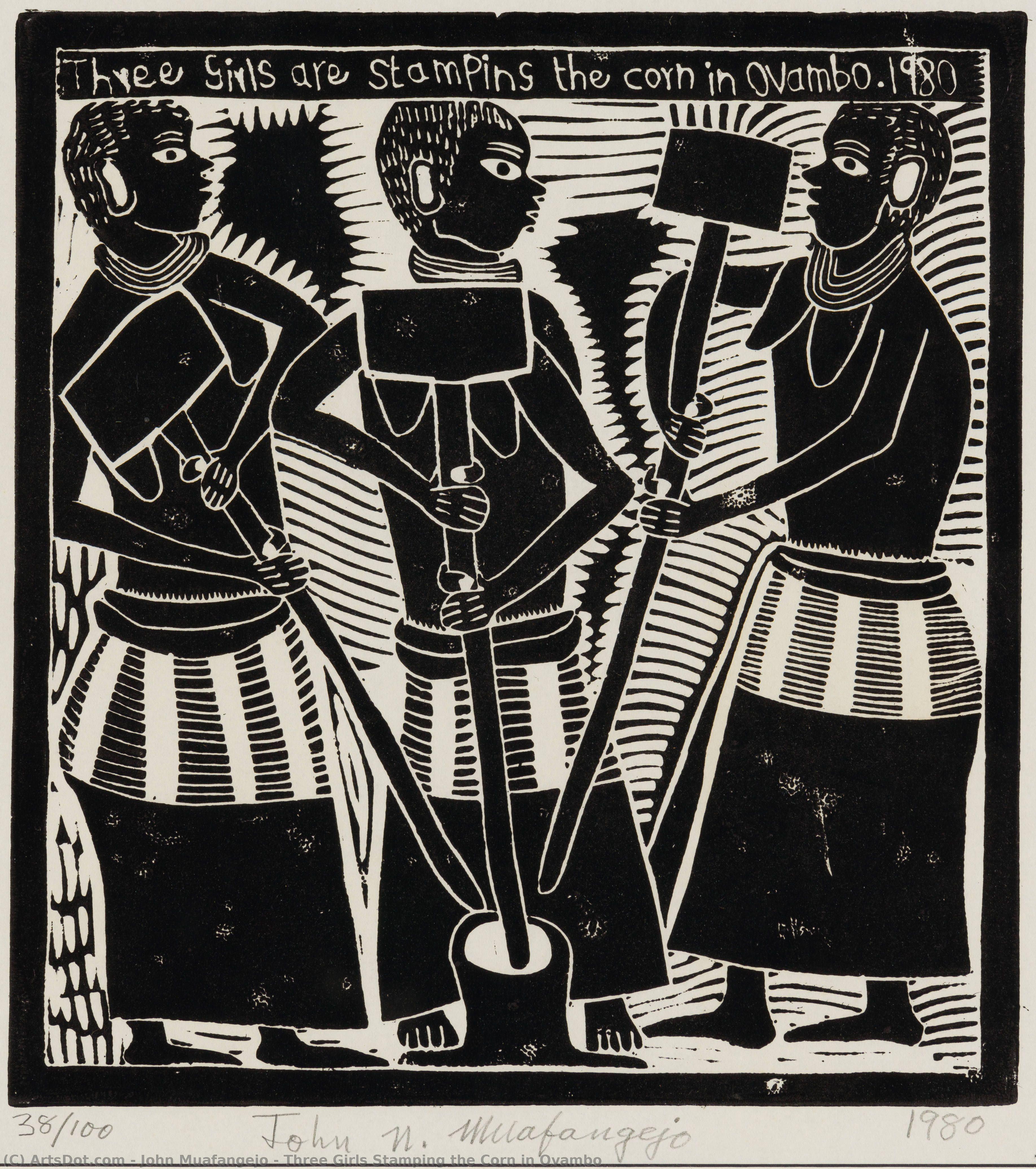
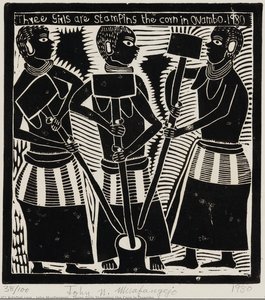
Three Girls Stamping the Corn in Ovambo
 Expressionism
 1980
1980 38.0 x 33.0 cm
 Read More
Hand Made Oil Reproduction
Hand-painted oil on canvas in your size and frame, made to order by our artists. ( Buy Print Buy Image)




































Pick from our preset sizes that match the artwork's original proportions.

You may enter your own dimensions to fit a specific frame or space. If your selected size does not match the original image's proportions, we will either crop the artwork or extend the painting with additional hand-painted elements. A digital mockup will be sent for your approval before production begins.
Please note that the on-screen preview does not reflect the actual cropping or extension. Only the mockup will accurately show the final composition.
While custom sizes are available, we recommend selecting a dimension from the predefined list to preserve the original proportions.
After order, ArtsDot.com team will email client for instructions and provide a mockup preview
Worldwide Delivery () in 3/4 weeks instead of standard 5 weeks. (24 August). No compromise on quality.

Free Worldwide Express Shipping

High-Quality Linen Canvas

Full Shipping Insurance

Customs Tax Refund Guarantee

True Color Matching Guarantee

60-Day Return Policy (Defects Only)

100% Money-Back Guarantee

Bulk Discount Offer
 Glass option is only available in size under 110 CM

Three Girls Stamping the Corn in Ovambo
Reproduction Medium
Reproduction Size
-


Total Price
$ 263
Related Artworks

Artist Biography
A Voice of Kwanyama Through Woodcut Prints
The life of John Ndevasia Muafangejo was a profound testament to the power of visual storytelling, emerging from the rugged landscapes of his youth to achieve international acclaim. Born in 1943 in Etunda lo Nghadi, Angola, Muafangejo’s early years were shaped by the rhythms of the Kwanyama people and the hardships of a life marked by loss. Orphaned at a young age following the death of his father, he was raised in poverty by a mother whose embrace of Christianity would later become a cornerstone of his artistic themes. As a child tending cattle barefoot across the northern parts of Ovamboland, the textures of the land and the resilience of livestock became etched into his consciousness, providing a rich well of imagery that would eventually define his mastery of printmaking.
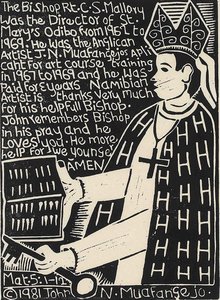
His journey toward artistic greatness was paved by both spiritual guidance and formal mentorship. The influence of an American missionary, C.S. Mallory, proved pivotal, offering the encouragement necessary to pursue a path in the arts. This led him to the renowned Rorke’s Drift Art and Craft Centre in South Africa, a crucible of creativity where he moved beyond his initial training to experiment with weaving, woodcarving, painting, and pottery. Under the tutelage of masters like Azaria Mbatha, Muafangejo discovered his true calling in the intricate worlds of etching, linocut, and woodcut. It was here that his technical precision began to merge with a deep-seated need to communicate the social and spiritual realities of his people.
Technique, Symbolism, and the Black and White Narrative
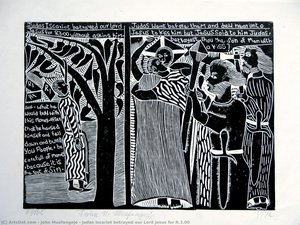
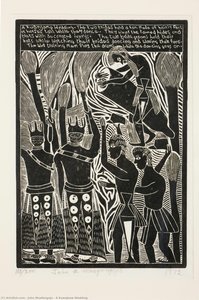
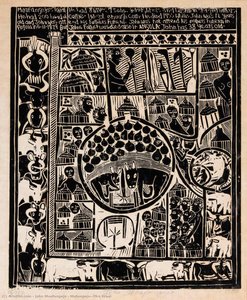
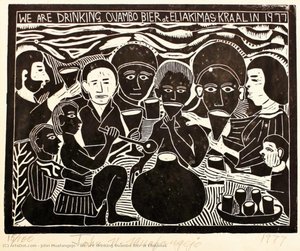
Muafangejo’s artistic output is characterized by a striking, often stark, black and white palette that demands the viewer's full attention. His mastery of the woodcut and linocut mediums allowed him to create dense, meticulously detailed compositions that pulse with life. He did not merely depict scenes; he layered them with meaning, using bold lines and intricate textures to weave together a tapestry of Kwanyama cultural identity. His work often functions as a visual chronicle, where every carved groove tells a story of community, faith, and struggle.
The symbolism within his prints is both profound and accessible, rooted in the everyday experiences of his heritage:
- Cattle and Animals: Recurring motifs of cattle serve as powerful symbols of resilience, wealth, and an unbreakable connection to the ancestral land.
- Spiritual Devotion: Many works explore Christian themes, reflecting his personal history and the role of mission stations in the social fabric of Namibia and Angola.
- Social Commentary: Through his prints, he captured the nuances of community life, from weddings to church meetings, often embedding subtle critiques or celebrations of social cohesion.
Legacy and Historical Significance
The trajectory of Muafangejo’s career was marked by significant milestones that cemented his status as a pivotal figure in contemporary African art. His 1974 Artist-in-Residence Scholarship at Rorke’s Drift provided the platform for his most influential period of development, allowing him to refine the very techniques that would make him a household name in the art world. Even as he transitioned into roles as an educator—teaching at the Odibo School—his commitment to nurturing the next generation of creators remained steadfast.
Though his life was tragically short, ending in 1987 in Katutura, Namibia, his impact remains indelible. His works are held in prestigious collections, including the Museum of Modern Art and the National Gallery of Art, ensuring that his voice continues to resonate far beyond the borders of the Kwanyama territory. Muafangejo did more than create art; he preserved a culture through the permanence of ink and wood, leaving behind a legacy of expressionism and native art that continues to inspire awe and reflection in collectors and historians alike.
John Muafangejo
1943 - 1987 , Namibia
Quick Facts
- Artistic Movement Or Style: Woodcut prints
- Artists Or Movements Influenced By This Artist: ["Rorke's Drift Art and Craft Centre"]
- Artists Who Influenced This Artist: ['Azaria Mbatha']
- Date Of Birth: October 5, 1943
- Date Of Death: November 27, 1987
- Full Name: John Ndevasia Muafangejo
- Nationality: Namibian
- Notable Artworks:
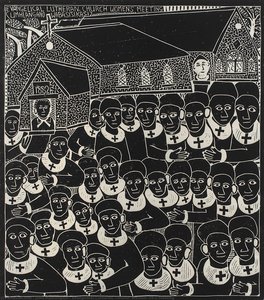
- Evangelical Lutheran. Church, Women’s Meeting
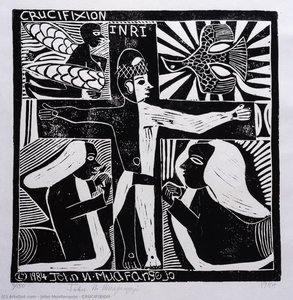
- Crucifixion
- Place Of Birth: Etunda lo Nghadi, Angola