 Preview
 Send
Send Share
Share
 Details

 Download
 Similars
 X-Ray
X-Ray Diaporama
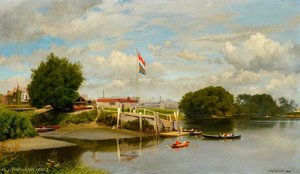
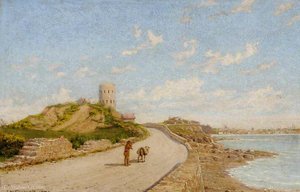
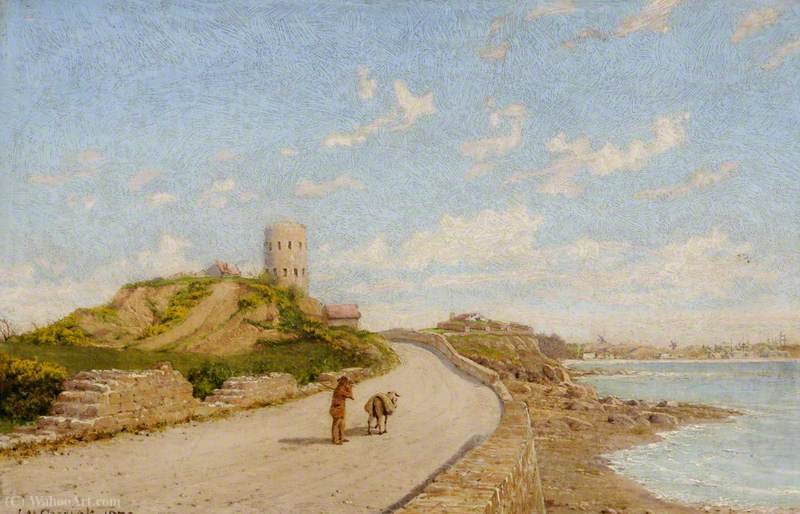
View of First Tower Looking towards St Sampsons
 Read More
Hand Made Oil Reproduction
Hand-painted oil on canvas in your size and frame, made to order by our artists. ( Buy Print Buy Image)




































Pick from our preset sizes that match the artwork's original proportions.

You may enter your own dimensions to fit a specific frame or space. If your selected size does not match the original image's proportions, we will either crop the artwork or extend the painting with additional hand-painted elements. A digital mockup will be sent for your approval before production begins.
Please note that the on-screen preview does not reflect the actual cropping or extension. Only the mockup will accurately show the final composition.
While custom sizes are available, we recommend selecting a dimension from the predefined list to preserve the original proportions.
After order, ArtsDot.com team will email client for instructions and provide a mockup preview
Worldwide Delivery () in 3/4 weeks instead of standard 5 weeks. (22 August). No compromise on quality.

Free Worldwide Express Shipping

High-Quality Linen Canvas

Full Shipping Insurance

Customs Tax Refund Guarantee

True Color Matching Guarantee

60-Day Return Policy (Defects Only)

100% Money-Back Guarantee

Bulk Discount Offer
 Glass option is only available in size under 110 CM

View of First Tower Looking towards St Sampsons
Reproduction Medium
Reproduction Size
-


Total Price
$ 263
Related Artworks

Artist Biography
John Mulcaster Carrick: A Life in Landscape
John Mulcaster Carrick (1833-1896) was a British Victorian painter celebrated for his meticulously detailed landscapes and genre scenes. Working within the aesthetic principles of the Pre-Raphaelite movement, Carrick captured the idyllic beauty of rural life and coastal views with remarkable fidelity.
Early Life and Training
Born in Carlisle in 1833 and baptised on April 9th, Carrick took his surname from his father, Thomas Heathfield Carrick, and his middle name from his mother’s maiden name. His father initially worked as a chemist but later pursued a career as an artist in Newcastle in 1836, likely providing early artistic training for his son. By 1839, the family had relocated to London, where Carrick would spend most of his life dedicated to painting landscapes.
Artistic Development and Influences
Carrick’s early work demonstrated a keen eye for detail and a commitment to representing nature accurately. He first exhibited at the British Institution in 1854 and at the Royal Academy in 1854 with a study, and again in 1855. His paintings quickly garnered attention, particularly from the influential critic John Ruskin. Ruskin’s praise was pivotal in establishing Carrick's reputation.
Key Works and Recognition
Several of Carrick’s works stand out as exemplars of his style and skill:
- The Village Postman (1856): This painting, lauded by Ruskin for its “more than usual fidelity” and “immense labour,” brought Carrick significant recognition.
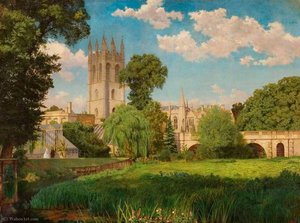
- Magdalen Bridge and College: A romantic depiction of Cambridge showcasing architectural harmony.
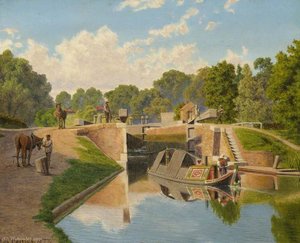
- The Brentford Ferry: A serene landscape capturing idyllic river views in the Pre-Raphaelite style.
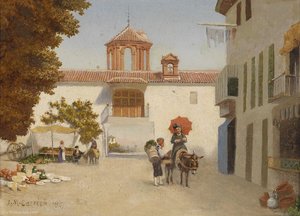
- Spanish Landscapes: Works created around 1870, demonstrating a shift towards “Pre-Raphaelite” sensibilities.
Later Career and Artistic Affiliations
By the 1870s, Carrick’s work was increasingly associated with the Pre-Raphaelite movement. He became involved with the Hogarth Club, a gathering place for artists of that persuasion. He travelled extensively in Switzerland and France, broadening his artistic horizons. In 1871 he worked in Cornwall, later associating with the Newlyn artists by 1883.
Legacy and Historical Significance
Carrick died in his home in Chiswick in 1896 at the age of 63. His paintings are held in public collections in Glasgow and Dumfries and Galloway, ensuring his work continues to be appreciated by art enthusiasts. While not as widely celebrated as some of his Pre-Raphaelite contemporaries, Carrick’s dedication to detailed observation, atmospheric realism, and idyllic subject matter makes him a significant figure in Victorian landscape painting.
Key Characteristics of His Work
- Pre-Raphaelite Influence: A focus on detail, vibrant colors, and moral or narrative themes.
- Landscape Specialization: Primarily known for his depictions of rural and coastal scenes.
- Ruskin’s Approval: Receiving praise from a leading art critic of the time bolstered his career.
- Technical Skill: Demonstrating mastery in oil painting techniques to capture realistic textures and light.
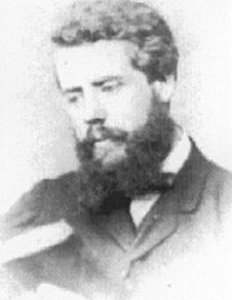
John Mulcaster Carrick
1833 - 1896 , United Kingdom
Quick Facts
- Birth Date: 1833
- Birth Place: Carlisle, United Kingdom
- Death Date: 1896
- Influenced By: John Ruskin
- Movement: Pre-Raphaelite
- Name: John Mulcaster Carrick
- Nationality: British
- Notable Works:
- The Village Postman
- Magdalen Bridge and College
- The Brentford Ferry
- Mosque near Granada