 Preview
 Send
Send Share
Share
 Details

 Download
 Similars
 X-Ray
X-Ray Diaporama
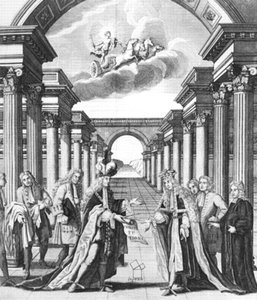
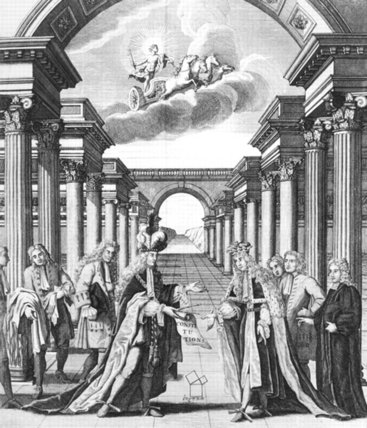
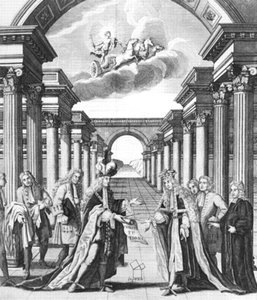
The Constitutions Of Freemasonry By James Anderson
 Read More
Hand Made Oil Reproduction
Hand-painted oil on canvas in your size and frame, made to order by our artists. ( Buy Print Buy Image)




































Pick from our preset sizes that match the artwork's original proportions.

You may enter your own dimensions to fit a specific frame or space. If your selected size does not match the original image's proportions, we will either crop the artwork or extend the painting with additional hand-painted elements. A digital mockup will be sent for your approval before production begins.
Please note that the on-screen preview does not reflect the actual cropping or extension. Only the mockup will accurately show the final composition.
While custom sizes are available, we recommend selecting a dimension from the predefined list to preserve the original proportions.
After order, ArtsDot.com team will email client for instructions and provide a mockup preview
Worldwide Delivery () in 3/4 weeks instead of standard 5 weeks. (27 August). No compromise on quality.

Free Worldwide Express Shipping

High-Quality Linen Canvas

Full Shipping Insurance

Customs Tax Refund Guarantee

True Color Matching Guarantee

60-Day Return Policy (Defects Only)

100% Money-Back Guarantee

Bulk Discount Offer
 Glass option is only available in size under 110 CM

The Constitutions Of Freemasonry By James Anderson
Reproduction Medium
Reproduction Size
-


Total Price
$ 388
Related Artworks





Artist Biography
The Engraver of the Enlightenment: The Life and Legacy of John Pine
In the vibrant, intellectual atmosphere of eighteenth-century London, few figures captured the intersection of scientific precision and artistic elegance as effectively as John Pine. Born in 1690, a period marking the dawn of the British Enlightenment, Pine emerged not merely as an artist, but as a vital conduit for the era's expanding knowledge. While history often remembers the grand painters of the age, it was the engraver’s burin that truly disseminated the visual language of the Newtonian paradigm and the Augustan style to the wider public. Operating from his shop on St Martin's Lane, Pine functioned as a print-seller, publisher, and master cartographer, weaving himself into the very fabric of London's burgeoning commercial and intellectual life.
The early years of Pine’s career were defined by rigorous apprenticeship, a journey that began in the meticulous craft of a goldsmith before leading him to the studio of the renowned French engraver Bernard Picart. This connection to Picart was transformative; it introduced Pine to a sophisticated European tradition of printmaking that emphasized clarity, narrative depth, and a delicate touch. As he honed his skills, Pine became more than just a technician; he became a key figure in the social and professional networks of his time. His close association with William Hogarth—the legendary painter whose work often featured Pine in its very engravings—suggests a symbiotic relationship between the two masters, where the line between fine art and reproducible print blurred to create a new, democratic form of visual culture.
A Cartographer of Empire and Freemasonry
Pine’s technical mastery found its most monumental expression in the realm of cartography. One of his most enduring legacies is his collaboration on John Rocque's magnificent maps of London. The 1746 survey, a sprawling achievement of twenty-four sheets, stands as a testament to Pine’s ability to marry geographical accuracy with aesthetic grandeur. Through his engravings, the complex labyrinth of Georgian London was rendered with such exquisite detail that it became an essential record for both the scholar and the citizen. This work required not only immense physical stamina but also a profound understanding of scale, light, and shadow, ensuring that every street and landmark possessed a sense of place and permanence.
Beyond the maps, Pine’s hand was instrumental in documenting the foundational structures of British society, particularly within the Freemasonry movement. As the principal engraver for the Grand Lodge, he was tasked with elevating the visual prestige of the fraternity. His engraving of the frontispiece for the 1723 Constitutions of the Free-Masons served as a landmark achievement, providing a dignified and symbolic gateway to the organization's history. Through his miniature signs and annual engraved lists, Pine transformed the mundane records of lodge meetings into works of art, using symbolism to communicate the values of brotherhood and architectural order that defined the era.
The Enduring Impression
Though much of his personal biography remains veiled in the mists of the early eighteenth century, the impact of John Pine’s work is undeniably clear. He lived through a period of radical transition, where the scientific discoveries of Newton and the social shifts of the Enlightenment demanded a new way of seeing the world. His ability to translate complex topographical data and intricate social hierarchies into reproducible, beautiful prints allowed for a shared visual experience across different strata of society.
His influence extended through his lineage and professional connections, notably through his son, Robert Edge Pine, who would go on to find success as a portrait painter in both England and America. The legacy of John Pine is found not only in the museums that house his rare prints but in the very way we understand the visual history of London and the spread of Enlightenment ideals. He remains a master of the fine line, an artist who understood that the smallest stroke of an engraver's tool could shape the perception of an entire age.
john pine
1690 - 1756 , United Kingdom
Quick Facts
- Artistic Movement Or Style: Portraiture
- Artists Or Movements Influenced By This Artist: ['Neoclassicism']
- Artists Who Influenced This Artist:
- Joshua Reynolds
- Nicolas Pocock
- Date Of Birth: Maywood, United Kingdom (1690)
- Date Of Death: 1756
- Full Name: John Pine
- Nationality: British
- Notable Artworks:
- The Rev. John Wesley
- Portrait of William Dodd
- Place Of Birth: United Kingdom