 Preview
 Send
Send Share
Share
 Details

 Download
 Similars
 X-Ray
X-Ray Diaporama
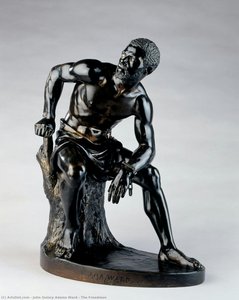
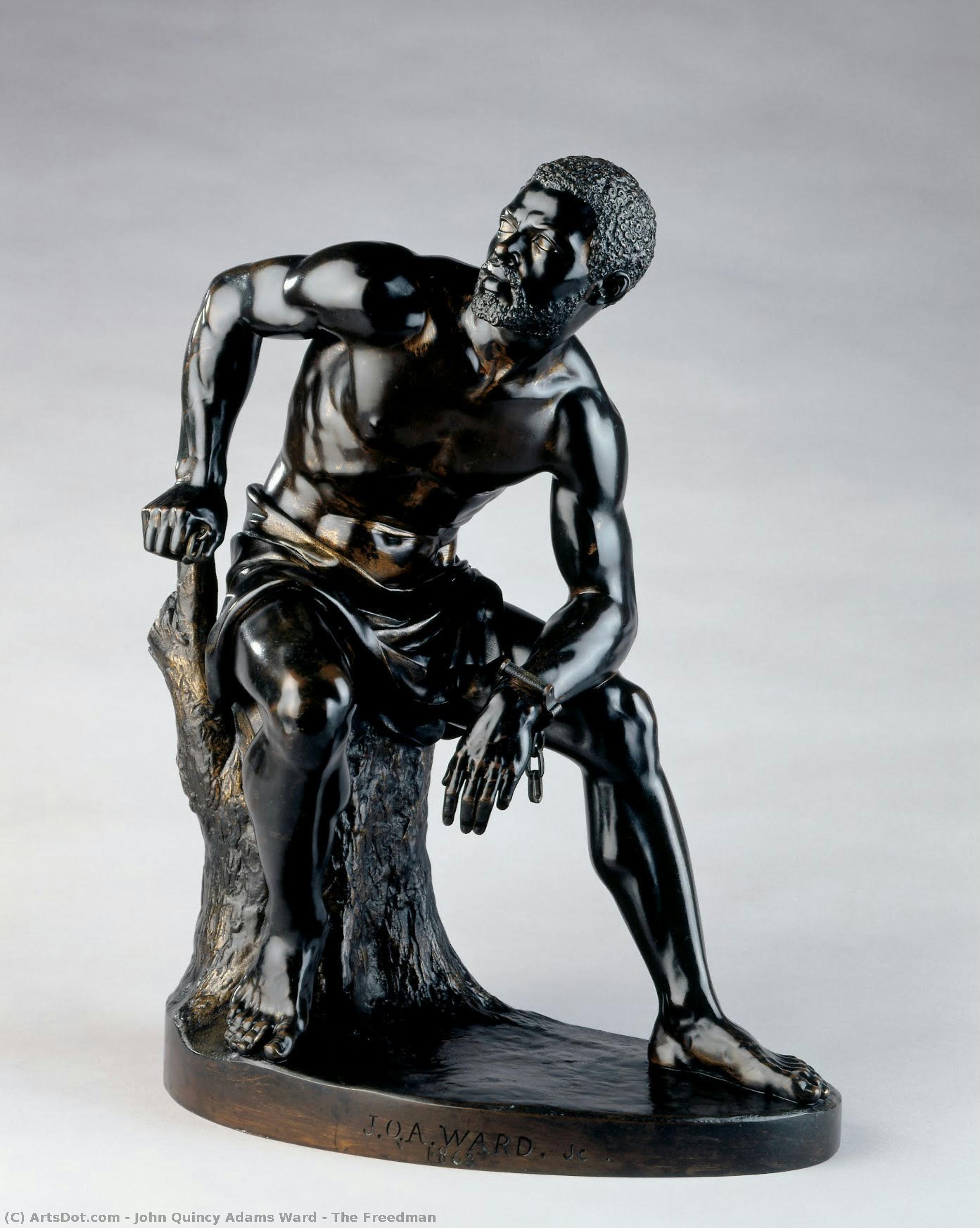
The Freedman
 1863
1863 49.0 x 37.0 cm
 Read More
Giclée / Art Print
Museum-quality giclée or canvas print with fast production and flexible finish options. ( Buy Hand Made Painting Buy Image)




































Pick from our preset sizes that match the artwork's original proportions.

You may enter your own dimensions to fit a specific frame or space. If your selected size does not match the original image's proportions, we will either crop the artwork or extend the image with a mirrored or solid-fill edge. A digital mockup will be sent for your approval before production begins.
Please note that the on-screen preview does not reflect the actual cropping or extension. Only the mockup will accurately show the final composition.
While custom sizes are available, we recommend selecting a dimension from the predefined list to preserve the original proportions.
Worldwide Delivery () in 2 weeks instead of standard 4/5 weeks. (22 August)

Free Worldwide Express Shipping

High-Quality Linen Canvas

Full Shipping Insurance

Customs Tax Refund Guarantee

True Color Matching Guarantee

60-Day Return Policy (Defects Only)

100% Money-Back Guarantee

Bulk Discount Offer
 Glass option is only available in size under 110 CM

The Freedman
Giclée / Art Print
Reproduction Size
-


Total Price
$ 63
Collectible Description
Related Artworks



Artist Biography
The Sculptor of American Identity
In the grand tapestry of nineteenth-century American art, few figures captured the burgeoning spirit of a young nation quite like John Quincy Adams Ward. Born in 1830 in Urbana, Ohio, Ward’s journey from the quiet landscapes of the American Midwest to the monumental heights of New York City’s artistic elite is a testament to the power of classical training met with raw, naturalistic vision. His early fascination with three-dimensional form was ignited not in a prestigious academy, but through the tactile influence of a local potter, Miles Chatfield. This early connection to the earth and clay would later manifest in a sculptural style characterized by an extraordinary attention to anatomical precision and a profound sense of physical presence.
As Ward transitioned from his family farm to the rigorous halls of the National Academy of Design in New York, he began to refine the technical prowess that would become his hallmark. Under the mentorship of the esteemed sculptor Henry Kirke Brown, Ward absorbed the nuances of classical composition while simultaneously pushing toward a more realistic, naturalistic aesthetic. This period of development was crucial; it allowed him to move beyond mere imitation of European traditions, instead seeking to create a uniquely American sculptural language—one that could honor historical figures with both dignity and a palpable, breathing vitality.
Mastery of Form and Historical Resonance
The true brilliance of Ward’s work lies in his ability to breathe life into bronze and stone, transforming static monuments into evocative narratives. His mastery is perhaps most famously realized in the George Washington statue that stands sentinel on the steps of Federal Hall National Memorial in New York City. This larger-than-life figure does not merely represent a historical icon; it embodies the very gravity and leadership of the era. Through meticulous detail and a commanding stance, Ward achieved a sense of monumental permanence that has become an indelible part of the American cityscape.
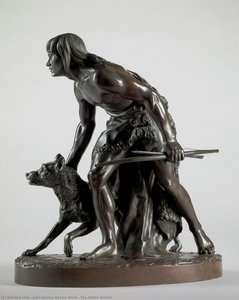
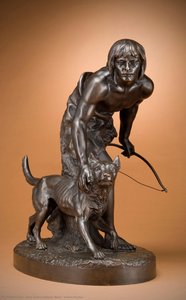
Beyond his patriotic tributes, Ward possessed a remarkable ability to capture the human condition through more intimate, stylized subjects. His work The Indian Hunter serves as a profound example of this duality. In this piece, housed at the Amon Carter Museum of American Art, one sees the artist’s skill in blending anatomical accuracy with a poetic, almost mythic quality. The sculpture reflects a deep engagement with the themes of the American frontier and the ruggedness of its inhabitants, showcasing a level of detail that invites the viewer to contemplate the texture of skin, the tension of muscle, and the quiet intensity of the subject's gaze.
A Lasting Legacy in American Art
The significance of John Quincy Adams Ward extends far beyond the physical dimensions of his statues. He was a pivotal figure in establishing a sculptural tradition that prioritized realism and historical truth, helping to define the visual identity of a nation finding its footing on the world stage. His contributions helped bridge the gap between the rigid neoclassicism of the past and the more expressive, naturalistic movements that would follow in the late nineteenth century.
Today, Ward’s legacy is preserved within the hallowed halls of America's most prestigious institutions. His works continue to inspire awe and reflection, serving as enduring reminders of a period when art was used to forge a collective national memory. To study his oeuvre is to witness the evolution of American sculpture itself—a journey from the humble clay of an Ohio potter to the bronze heights of New York’s most iconic landmarks.
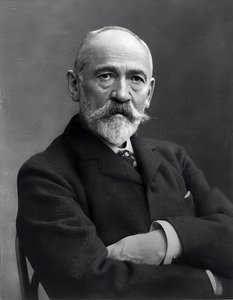
John Quincy Adams Ward
1830 - 1910 , United States of America
Quick Facts
- Artistic Movement Or Style: Naturalism
- Artists Or Movements Influenced By This Artist: ['Daniel Chester French']
- Artists Who Influenced This Artist: ['Henry Kirke Brown']
- Date Of Birth: June 29, 1830
- Date Of Death: May 1, 1910
- Full Name: John Quincy Adams Ward
- Nationality: American
- Notable Artworks:
- The Indian Hunter
- George Washington
- Study for the Apotheosis of Washington
- Place Of Birth: New York City, United States