 Preview
 Send
Send Share
Share
 Details

 Download
 Similars
 X-Ray
X-Ray Diaporama
 Stats
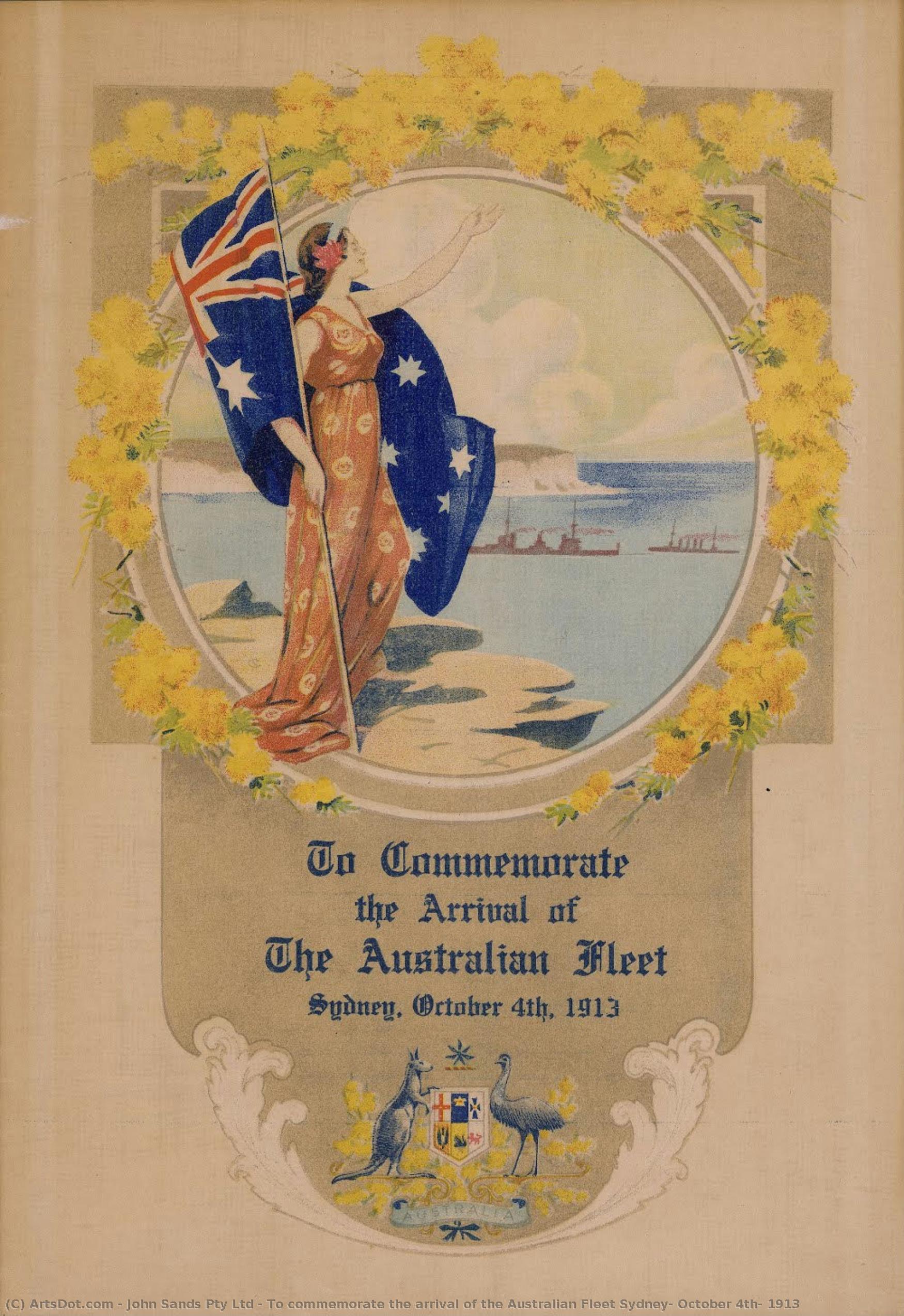
StatsTo commemorate the arrival of the Australian Fleet Sydney, October 4th, 1913

 Read More
Giclée / Art Print
Museum-quality giclée or canvas print with fast production and flexible finish options. ( Buy Hand Made Painting Switch to Digital Image)




































Pick from our preset sizes that match the artwork's original proportions.

You may enter your own dimensions to fit a specific frame or space. If your selected size does not match the original image's proportions, we will either crop the artwork or extend the image with a mirrored or solid-fill edge. A digital mockup will be sent for your approval before production begins.
Please note that the on-screen preview does not reflect the actual cropping or extension. Only the mockup will accurately show the final composition.
While custom sizes are available, we recommend selecting a dimension from the predefined list to preserve the original proportions.
Worldwide Delivery () in 2 weeks instead of standard 4/5 weeks. (13 September)

Free Worldwide Express Shipping

High-Quality Linen Canvas

Full Shipping Insurance

Customs Tax Refund Guarantee

True Color Matching Guarantee

100-Day Return Policy (Defects Only)

100% Money-Back Guarantee

Bulk Discount Offer
 Glass option is only available in size under 110 CM

To commemorate the arrival of the Australian Fleet Sydney, October 4th, 1913
Giclée / Art Print
Reproduction Size
-


Total Price
$ 63
Related Artworks







Artist Biography
Early Life and Artistic Awakening
The story of this artist is one woven from quiet observation and a deep connection to the natural world, though details remain elusive due to a deliberate eschewal of public biography. Born in , their early years were spent immersed in the landscapes that would become the defining subject matter of their work. While formal artistic training was limited—some accounts suggest brief studies at local academies, others none at all—the artist’s education came primarily from direct experience: hours spent sketching en plein air, meticulously studying light and shadow, and absorbing the subtle nuances of color in the changing seasons. This self-directed learning fostered a unique style, characterized by an almost photographic realism tempered with a profound sense of atmosphere. It wasn't about replicating reality, but capturing its *feeling*, its ephemeral beauty before it shifted and faded. The artist’s initial subjects were humble – wildflowers, weathered fences, the play of light on water – reflecting a preference for the overlooked poetry of everyday life. These early works, though rarely exhibited during their lifetime, reveal a nascent talent already grappling with themes of transience, memory, and the power of observation.The Development of a Distinctive Vision
As the artist matured, their technique became increasingly refined. They moved beyond simple representation, developing a mastery of layering glazes to create luminous effects and an extraordinary depth of field. This period saw a shift in focus towards larger compositions featuring expansive landscapes – rolling hills bathed in golden light, dense forests shrouded in mist, and dramatic skies pregnant with weather. Influences, though not explicitly acknowledged by the artist themselves, are often cited as the Barbizon school painters, particularly their emphasis on direct observation and plein air painting, and the American Luminists, whose atmospheric effects resonated deeply with the artist’s own aesthetic goals. However, the artist quickly transcended imitation, forging a path uniquely their own. A key element of this development was a deliberate slowing down of the creative process – each painting often taking months, even years, to complete. This painstaking attention to detail allowed for an unparalleled level of realism and emotional resonance. The artist wasn’t simply *painting* landscapes; they were meticulously constructing them, layer by layer, memory by memory.Major Achievements and Critical Reception
Despite a lifelong reluctance to actively seek recognition, the artist's work gradually gained a following among discerning collectors and critics. While large-scale exhibitions were rare, their paintings were occasionally included in regional shows, where they consistently garnered praise for their technical brilliance and evocative power.- The “Golden Meadow” series (circa ) is considered by many to be the artist’s most significant achievement – a collection of canvases that capture the fleeting beauty of summer light with breathtaking accuracy.
- “Silent Woods,” painted in , exemplifies the artist's ability to convey a sense of solitude and mystery through masterful use of color and composition.
- Their later works, such as “Twilight Reflections” ( ), demonstrate an increasing interest in abstract forms and atmospheric effects, foreshadowing a shift towards greater experimentation.