 Preview
 Send
Send Share
Share
 Details

 Download
 Similars
 X-Ray
X-Ray Diaporama
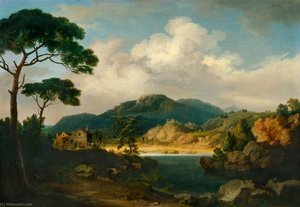
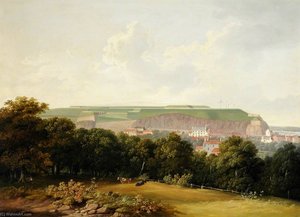
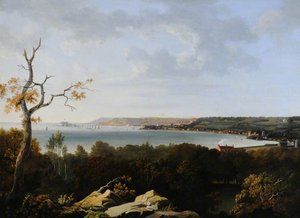
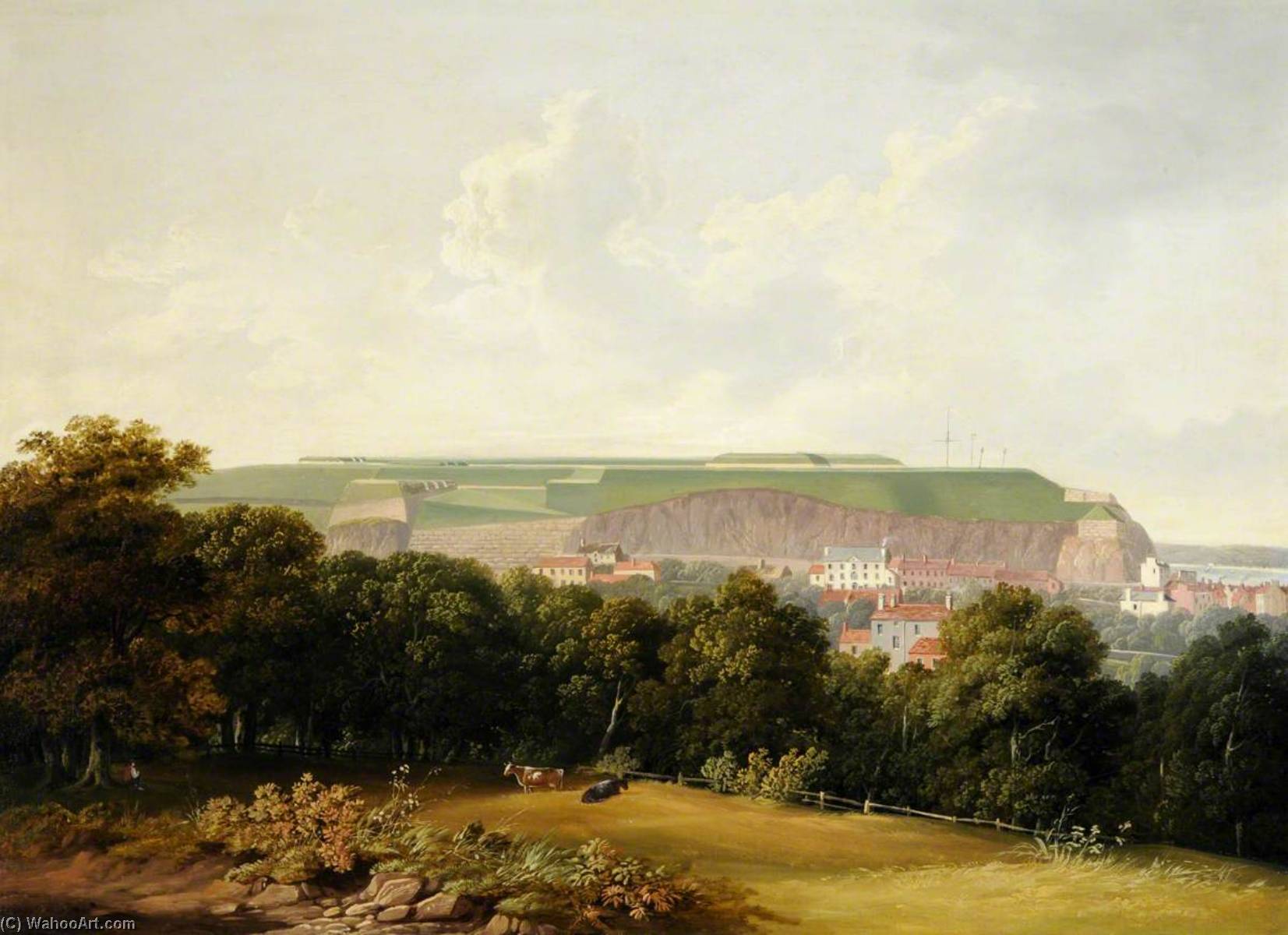
Fort Regent Overlooking St Helier
 1815
1815 54.0 x 75.0 cm
 Read More
Giclée / Art Print
Museum-quality giclée or canvas print with fast production and flexible finish options. ( Buy Hand Made Painting Buy Image)




































Pick from our preset sizes that match the artwork's original proportions.

You may enter your own dimensions to fit a specific frame or space. If your selected size does not match the original image's proportions, we will either crop the artwork or extend the image with a mirrored or solid-fill edge. A digital mockup will be sent for your approval before production begins.
Please note that the on-screen preview does not reflect the actual cropping or extension. Only the mockup will accurately show the final composition.
While custom sizes are available, we recommend selecting a dimension from the predefined list to preserve the original proportions.
Worldwide Delivery () in 2 weeks instead of standard 4/5 weeks. (27 August)

Free Worldwide Express Shipping

High-Quality Linen Canvas

Full Shipping Insurance

Customs Tax Refund Guarantee

True Color Matching Guarantee

60-Day Return Policy (Defects Only)

100% Money-Back Guarantee

Bulk Discount Offer
 Glass option is only available in size under 110 CM

Fort Regent Overlooking St Helier
Giclée / Art Print
Reproduction Size
-


Total Price
$ 63
Collectible Description
Composition and Elements
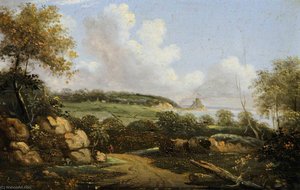
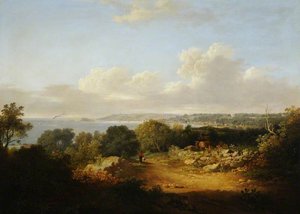
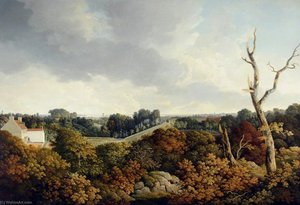
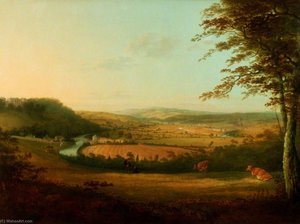
The painting depicts a serene town situated on a hillside overlooking the ocean. The scene features several buildings, including houses and other structures, with two horses present in the foreground. The presence of these animals adds a sense of life and movement to the otherwise tranquil landscape. The large body of water in the distance adds to the picturesque view, creating a sense of depth and atmosphere. Light and color play a crucial role in this painting, with the artist using a range of hues to capture the effects of light on the scene. The overall mood is one of calmness and serenity, inviting the viewer to step into the peaceful world created by John Tobias Young. For more information on the artist, visit John Tobias Young on ArtsDot.Similar Landscapes
Other notable landscapes can be found on ArtsDot, such as Dedham Vale1 by John Constable, which embodies the spirit of Romanticism. Visit Dedham Vale1 to explore more. Additionally, Claude Monet's The Mount Riboudet in Rouen at Spring and The Valley of the Scie at Pouville are excellent examples of Impressionist landscapes.- The Mount Riboudet in Rouen at Spring showcases Monet's ability to capture the essence of nature and human activity in harmony.
- The Valley of the Scie at Pouville exemplifies Monet's unique style and his ability to depict serene natural environments.
For handmade oil painting reproductions of these masterpieces, visit ArtsDot. Our team of skilled artists can recreate Fort Regent Overlooking St Helier and other famous paintings in stunning detail.
Related Artworks









Artist Biography
The Ethereal Vision of John Tobias Young
In the annals of British Romanticism, few names evoke such a poignant sense of fleeting beauty as John Tobias Young. Born around 1786 in the quiet environs of Mildenhall, near Marlborough, Young’s life was a brief but luminous chapter in the history of landscape painting. Though his career was tragically truncated by his death in December 1824 at the young age of thirty-eight, he left behind a visual legacy that transcends the mere documentation of scenery. His work serves as a window into a period where the boundaries between the physical world and the spiritual sublime were perpetually blurred, capturing the very soul of the landscapes he traversed.
Young’s artistic journey was deeply shaped by his early exposure to the theatrical and the atmospheric. Before establishing himself as a master of the canvas, he served as a stage designer for Lord Barrymore’s private theatre at Wargrave. This unique background in scenography—a discipline requiring meticulous attention to depth, light, and emotional resonance—undoubtedly informed his approach to the natural world. He did not merely paint what was visible; he constructed vistas that invited the viewer into a carefully orchestrated emotional experience, much like a stage set designed to evoke wonder or melancholy.
The Spectral Beauty of the Channel Islands
While his roots lay in England, it was the rugged and enchanting landscape of Jersey that became the true muse for Young’s most profound achievements. Between 1816 and 1824, he produced a remarkable series of works often referred to as his "Jersey Paintings." These pieces are far more than topographical records; they are atmospheric meditations on the Channel Islands' dramatic coastline. Through his brush, the cliffs of Jersey become sites of sublime power, where the interplay of light and shadow suggests a haunting, spectral quality.
His technique was heavily influenced by the Luminism movement, a style he refined under the tutelage of the celebrated watercolorist Tobias Ragg. By mastering soft tonal gradations and a delicate atmospheric haze, Young was able to capture the ephemeral qualities of dawn, twilight, and the mist-laden sea. His ability to manipulate color and light allowed him to portray the rugged terrain with a breathtaking realism that felt almost supernatural. In works such as “Castle on a Rocky Road above a Bay,” one can sense the artist's profound desire to convey the spiritual resonance of nature—a hallmark of the Romantic era.
Legacy and Artistic Significance
The significance of John Tobias Young lies in his ability to bridge the gap between the meticulous observation of the landscape and the emotional depth of the Romantic ideal. His work anticipates the grandeur found in the later Hudson River School, sharing a common devotion to the majesty of the natural world. Though much of his reputation was once confined to the Southampton region, where he practiced for many years, his influence resonates through the enduring collections held in institutions such as the Victoria and Albert Museum and the Salisbury Library.
To look upon a Young landscape is to experience a sense of sublime isolation. His paintings remain vital testaments to a period of transition in British art, moving away from Neoclassical rigidity toward a more fluid, emotive expression. Even today, his depictions of the Jersey coastline continue to captivate, reminding us that true art does not just capture a moment in time, but preserves the very feeling of existence within the vast, ever-changing theater of nature.
john tobias young
1786 - 1828
Quick Facts
- Artistic Movement Or Style: Romantic Landscape Painting
- Artists Or Movements Influenced By This Artist: ['Hudson River School']
- Artists Who Influenced This Artist:
- Edwin Young
- Tobias Ragg
- Date Of Death: 1824
- Full Name: John Tobias Young
- Nationality: British
- Notable Artworks: ['Castle on a Rocky Road above a Bay ca. 1811-1822']
- Place Of Birth: Mildenhall, England