 Preview
 Send
Send Share
Share
 Details

 Download
 Similars
 X-Ray
X-Ray Diaporama
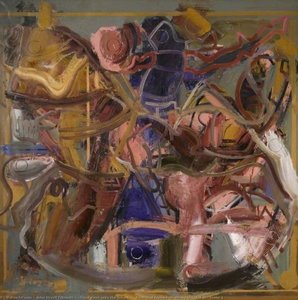
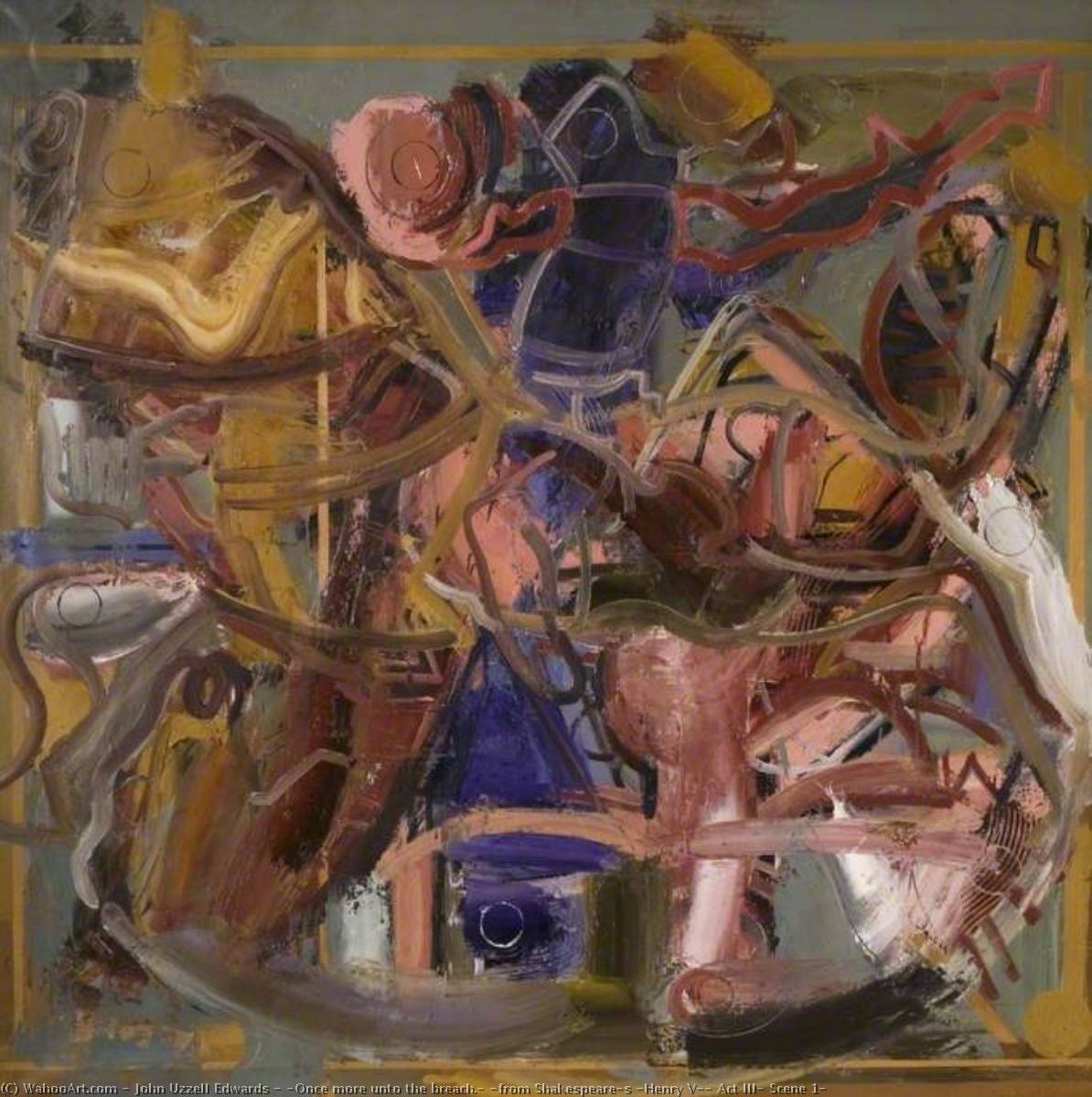
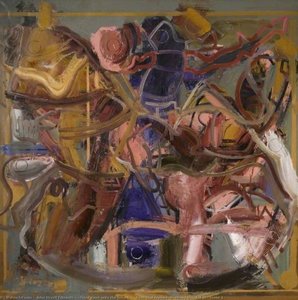
'Once more unto the breach.' (from Shakespeare's 'Henry V', Act III, Scene 1)
 1995
1995 91.0 x 91.0 cm
 University of Birmingham Shakespeare Institute
 Read More
Giclée / Art Print
Museum-quality giclée or canvas print with fast production and flexible finish options. ( Buy Hand Made Painting Buy Image)




































Pick from our preset sizes that match the artwork's original proportions.

You may enter your own dimensions to fit a specific frame or space. If your selected size does not match the original image's proportions, we will either crop the artwork or extend the image with a mirrored or solid-fill edge. A digital mockup will be sent for your approval before production begins.
Please note that the on-screen preview does not reflect the actual cropping or extension. Only the mockup will accurately show the final composition.
While custom sizes are available, we recommend selecting a dimension from the predefined list to preserve the original proportions.
Worldwide Delivery () in 2 weeks instead of standard 4/5 weeks. (25 August)

Free Worldwide Express Shipping

High-Quality Linen Canvas

Full Shipping Insurance

Customs Tax Refund Guarantee

True Color Matching Guarantee

60-Day Return Policy (Defects Only)

100% Money-Back Guarantee

Bulk Discount Offer
 Glass option is only available in size under 110 CM

'Once more unto the breach.' (from Shakespeare's 'Henry V', Act III, Scene 1)
Giclée / Art Print
Reproduction Size
-


Total Price
$ 63
Related Artworks








Artist Biography
The Painter of Shadows and Shakespearean Echoes
Born in the coal-mining village of Deri within the Rhymney Valley, John Uzzell Edwards emerged from the rugged landscapes of Wales to become a profound voice in contemporary painting. His journey was one of both classical discipline and radical exploration, a life shaped by the heavy textures of his heritage and the light of distant European capitals. After honing his skills through formal training—a path nurtured by his father, also a painter—Edwards found himself drawn to the vibrant energy of Paris in 1956. This period of immersion in the galleries and museums of the French capital provided him with a foundational understanding of the visual language, yet it was the deep-rooted traditions of his homeland that would ultimately anchor his creative soul.
His artistic vision was uniquely informed by the intricate patterns of Welsh and Celtic heritage. He drew immense inspiration from the tactile beauty of Welsh quilts, the solemnity of Celtic crosses, and the ancient whispers found in stone inscriptions and medieval tiles. This connection to the past allowed him to develop a technique he described as pure painting—a method focused on the intrinsic essence of the medium rather than mere representational picture-making. Through his brush, the weight of history and the delicate complexity of ancient manuscripts were transformed into modern visual poetry.
A Multidisciplinary Odyssey
While his roots remained firmly planted in the traditions of Wales, Edwards’s spirit was inherently restless and multidisciplinary. He possessed a rare ability to bridge the gap between the high art of the gallery and the raw, anarchic energy of the streets. This duality became most evident through his connection to the burgeoning countercultural movements of the late twentieth century. His work often intersected with the rebellious aesthetics of graffiti, a fascination that saw him exploring urban spaces and collaborating on projects that challenged the boundaries of traditional fine art.
Beyond the canvas, Edwards’s creativity flowed into the ethereal realms of sound. As an explorer of electronic ambient music, he released evocative albums such as Octopus and Dada under the moniker Drum Machine Circle. His sonic collaborations with figures like Pete Namlook and Tetsu Inoue mirrored his visual approach: a search for texture, atmosphere, and a deeper consciousness. This seamless blend of the visual and the auditory solidified his reputation as an artist who did not merely observe the world but sought to create entire sensory environments.
Legacy and Literary Resonance
One of the most captivating chapters of Edwards’s career was his profound engagement with the works of William Shakespeare. In 1996, commissioned by the Shakespeare Institute at the University of Birmingham, he undertook the monumental task of translating dramatic characters into visual forms. This endeavor allowed him to act as a poet of graffiti and a scholar of the stage simultaneously, using his brush to interpret the psychological depth and philosophical weight of Shakespearean tragedy and triumph. His ability to weave literary themes into his abstract and textured compositions gave his work a haunting, intellectual resonance.
Throughout his life, Edwards remained a figure of immense compassion and dedication. Whether through establishing his own gallery in Shoreditch or initiating fundraising efforts for the victims of the Tohoku earthquake, his art was always tethered to human experience. His legacy lives on not only in the museums and collections that house his paintings but also in the continued artistic journey of his son, Charles Uzzell-Edwards. John Uzzell Edwards remains a singular figure—a master of texture, a lover of sound, and a painter who found the eternal within the ephemeral.
john uzzell edwards
1934 - 2014
Quick Facts
- Artistic Movement Or Style: Pure painting
- Artists Or Movements Influenced By This Artist: ['Experimental music']
- Artists Who Influenced This Artist: ['Andy Warhol']
- Date Of Birth: October 10, 1934
- Date Of Death: March 5, 2014
- Full Name: John Uzzell Edwards
- Nationality: Welsh
- Notable Artworks:
- Once more unto the breach.
- When I was born.
- Welsh Wedding
- Place Of Birth: Wales