 Preview
 Send
Send Share
Share
 Details

 Download
 Similars
 X-Ray
X-Ray Diaporama
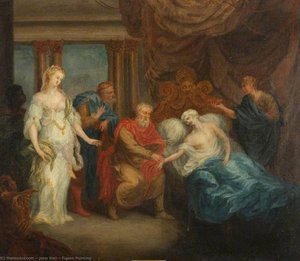
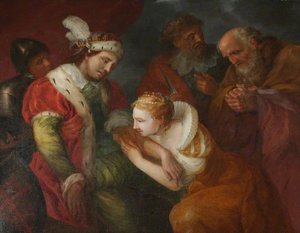
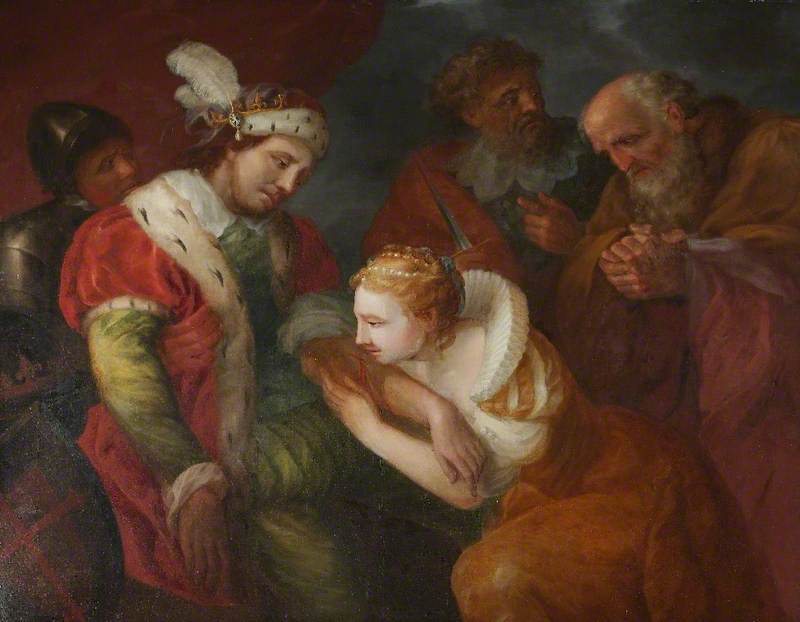
Queen Eleanor Sucking the Poison from the Arm of Edward I
 1760
1760 100.0 x 120.0 cm
 Read More
Giclée / Art Print
Museum-quality giclée or canvas print with fast production and flexible finish options. ( Buy Hand Made Painting Buy Image)




































Pick from our preset sizes that match the artwork's original proportions.

You may enter your own dimensions to fit a specific frame or space. If your selected size does not match the original image's proportions, we will either crop the artwork or extend the image with a mirrored or solid-fill edge. A digital mockup will be sent for your approval before production begins.
Please note that the on-screen preview does not reflect the actual cropping or extension. Only the mockup will accurately show the final composition.
While custom sizes are available, we recommend selecting a dimension from the predefined list to preserve the original proportions.
Worldwide Delivery () in 2 weeks instead of standard 4/5 weeks. (27 August)

Free Worldwide Express Shipping

High-Quality Linen Canvas

Full Shipping Insurance

Customs Tax Refund Guarantee

True Color Matching Guarantee

60-Day Return Policy (Defects Only)

100% Money-Back Guarantee

Bulk Discount Offer
 Glass option is only available in size under 110 CM

Queen Eleanor Sucking the Poison from the Arm of Edward I
Giclée / Art Print
Reproduction Size
-


Total Price
$ 63
Related Artworks









Artist Biography
The Alchemist of Art and Science: The Life of John Wall
In the vibrant, intellectually charged atmosphere of Georgian England, few figures embodied the era's spirit of discovery quite like John Wall. Born around 1708, Wall was a man whose life refused to be confined by the boundaries of a single discipline. He existed at a fascinating crossroads where the empirical rigor of medical science met the expressive beauty of the fine arts. While history often remembers him through the lens of his scientific pursuits or his industrial contributions, his artistic soul provided the vital spark that illuminated his diverse achievements. His journey was one of profound observation, whether he was peering through a microscope at mineral waters or capturing the dramatic interplay of light and shadow on a canvas.
Wall’s early years were marked by an intense intellectual curiosity, a trait nurtured during his medical studies at Oxford University. This period of formal education instilled in him a deep respect for anatomical precision and the nuances of physical form. It was this very foundation in science that would later breathe life into his paintings; his ability to render the human figure with meticulous detail was not merely a technical skill, but a direct result of his training in medical observation. To Wall, the study of the body and the study of art were two sides of the same coin—both required an unwavering commitment to seeing the world as it truly is, stripped of superficiality and revealed through truth.
A Legacy of Porcelain and Pigment
Beyond the walls of the clinic and the studio, Wall’s ambitions reached into the very fabric of English industry. In 1760, he achieved a monumental feat by founding the Royal Worcester Porcelain Manufactory. This was not merely a commercial venture but an artistic crusade. Wall understood that true innovation required a marriage between skilled craftsmanship and visionary design. By transforming Worcestershire into a burgeoning center for ceramic artistry, he created a sanctuary where artists and artisans could collaborate, pushing the boundaries of what porcelain could express. His influence helped establish a standard of excellence that would resonate through the centuries, proving that the industrial and the aesthetic could flourish in tandem.
His artistic style was deeply rooted in the Baroque aesthetic, a movement characterized by its emotional intensity and dramatic flair. Drawing inspiration from masters such as Rembrandt and Rubens, Wall mastered the use of chiaroscuro—the striking contrast between light and dark—to create depth and psychological tension within his works. His paintings often possess a palpable sense of realism, achieved through a rich, layered color palette and an emphasis on the tactile qualities of his subjects. Whether depicting a quiet portrait or a sweeping landscape, there is an underlying sense of drama that speaks to the turbulent yet enlightened nature of the age in which he lived.
The Intersection of Discovery and Expression
The true significance of John Wall lies in his refusal to separate the analytical from the creative. His groundbreaking research into the therapeutic properties of Malvern Water was driven by a humanist conviction that scientific progress should serve the betterment of human life. This same empathy is visible in his art, where the meticulousness of a physician meets the passion of a painter. He saw no conflict between the empirical study of mineral springs and the pursuit of aesthetic perfection; to him, both were methods of uncovering the hidden wonders of the natural world.
As we reflect on his contributions, we see a legacy that spans multiple realms:
- Scientific Inquiry: His pioneering medical research in Worcestershire and his dedication to understanding the healing powers of nature.
- Industrial Innovation: The founding of the Royal Worcester Porcelain Manufactory, which revolutionized English ceramics.
- Artistic Mastery: A painterly style that brought the dramatic intensity of the Baroque tradition to 18th-century English portraiture and landscape.
- Cultural Synthesis: An enduring example of how the pursuit of knowledge and the pursuit of beauty can merge to create a lasting historical impact.
John Wall remains a singular figure in the annals of British history—a polymath who navigated the complexities of the Enlightenment with grace and vision. His life serves as a testament to the idea that the most profound discoveries often occur when we allow our scientific minds to dream and our artistic hearts to observe.

Quick Facts
- Artistic Movement Or Style: Baroque
- Date Of Death: Living
- Full Name: John Wall
- Nationality: English
- Notable Artworks: ['The Head of John the Baptist']