 Preview
 Send
Send Share
Share
 Details

 Download
 Similars
 X-Ray
X-Ray Diaporama
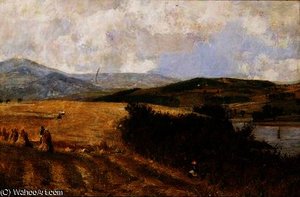
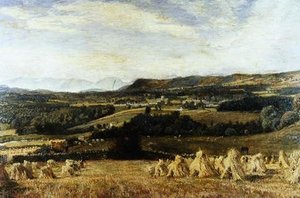
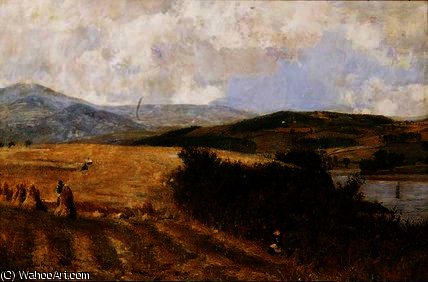
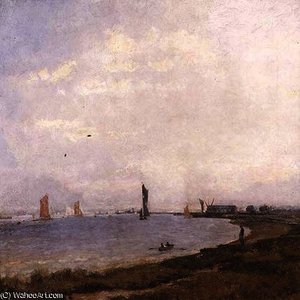
Harvest Time on the Conway River
 Read More
Hand Made Oil Reproduction
Hand-painted oil on canvas in your size and frame, made to order by our artists. ( Buy Print Buy Image)




































Pick from our preset sizes that match the artwork's original proportions.

You may enter your own dimensions to fit a specific frame or space. If your selected size does not match the original image's proportions, we will either crop the artwork or extend the painting with additional hand-painted elements. A digital mockup will be sent for your approval before production begins.
Please note that the on-screen preview does not reflect the actual cropping or extension. Only the mockup will accurately show the final composition.
While custom sizes are available, we recommend selecting a dimension from the predefined list to preserve the original proportions.
After order, ArtsDot.com team will email client for instructions and provide a mockup preview
Worldwide Delivery () in 3/4 weeks instead of standard 5 weeks. (20 August). No compromise on quality.

Free Worldwide Express Shipping

High-Quality Linen Canvas

Full Shipping Insurance

Customs Tax Refund Guarantee

True Color Matching Guarantee

60-Day Return Policy (Defects Only)

100% Money-Back Guarantee

Bulk Discount Offer
 Glass option is only available in size under 110 CM

Harvest Time on the Conway River
Reproduction Medium
Reproduction Size
-


Total Price
$ 263
Related Artworks
Artist Biography
The Soul of the English Landscape: The Life and Legacy of John William Buxton Knight
In the golden age of Victorian landscape painting, few artists possessed the ability to translate the fleeting whispers of the British countryside into enduring visual poetry quite like John William Buxton Knight. Born in 1843 in the picturesque surroundings of Sevenoaks, Kent, Knight was a child of the very landscapes he would later immortalize. Raised by his father, William Knight—an accomplished artist and teacher himself—the young painter’s education began not within the sterile confines of a studio, but amidst the vibrant, living textures of nature. This early immersion in the open air instilled in him a lifelong devotion to plein air painting, a practice that would become the heartbeat of his creative existence.
Knight’s journey from a schoolmaster to a celebrated member of the Royal Society of British Artists is a testament to a profound, singular passion. While he initially pursued teaching, the call of the canvas proved irresistible. By 1861, his talent had already begun to command attention, with his first work hung at the prestigious Royal Academy. His approach was fundamentally rooted in an unyielding truth to nature; he eschewed the temptation of fashionable artifice in favor of a rigorous, observational honesty. This commitment to the authentic atmosphere of the outdoors allowed him to capture the subtle shifts in light and the heavy, moisture-laden air of the English coast and rural meadows with unparalleled sensitivity.
Mastery of Light and Atmosphere
The brilliance of Knight’s oeuvre lies in his sophisticated command of luminism and tonal gradation. Influenced by the sweeping vistas of Frederic Church and the delicate harmonies found in the works of George Frederic Leighton, Knight developed a technique that emphasized the emotional weight of light. He was a master of the "golden hour," that ephemeral moment when the sun dips low, bathing fields and harbors in warm, amber hues. His palette, while often leaning toward the muted greens, deep blues, and earthy browns characteristic of the British landscape, frequently erupted with sudden, breathtaking splashes of orange and red to mark a sunset or a break in the clouds.
His technical execution was equally remarkable for its versatility. In his expansive meadow scenes, one finds a meticulous attention to detail—the delicate sway of wildflowers and the intricate textures of grass. Conversely, when depicting the rugged coastlines of Dorset or the bustling serenity of Poole Harbour, Knight employed looser, more expressive brushstrokes. This stylistic fluidity allowed him to convey the palpable movement of water and the shifting mists of the sea, creating a sense of depth and motion that draws the viewer directly into the scene. His work does not merely represent a place; it evokes the very feeling of standing within it.
A Lasting Impression on British Art
Throughout his prolific career, which saw the creation of over 300 paintings, Knight remained a steadfast observer of the English spirit. His ability to find the sublime in the everyday—whether in the starkness of a winter field or the tranquil reflection of a twilight sea—earned him a place among the great exponents of English landscape art. Critics of his time often drew comparisons to the legendary John Constable, noting that while Knight may not have sought to imitate the master, he shared a similar spirit of unconventionality and an intense, intelligent connection to the land.
The historical significance of Knight’s work is preserved in the permanent collections of some of the world's most esteemed institutions, including the Tate and the British Museum. His legacy is defined by a refusal to succumb to mere trend, choosing instead to document the enduring beauty of his homeland with a sincerity that transcends the Victorian era. Today, his paintings serve as luminous windows into a bygone landscape, reminding us of the profound emotional resonance found in the quiet, unadorned corners of the natural world.
john william buxton knight
1843 - 1908 , United Kingdom
Quick Facts
- Artistic Movement Or Style: Victorian Watercolor
- Date Of Birth: 1843
- Full Name: John William Buxton Knight
- Nationality: British
- Notable Artworks:
- Portsmouth Harbour
- Poole harbour
- Meadow Scene
- Place Of Birth: County Kent, United Kingdom