

 Preview
 Send
Send Share
Share
 Details

 Download
 Similars
 X-Ray
X-Ray Diaporama
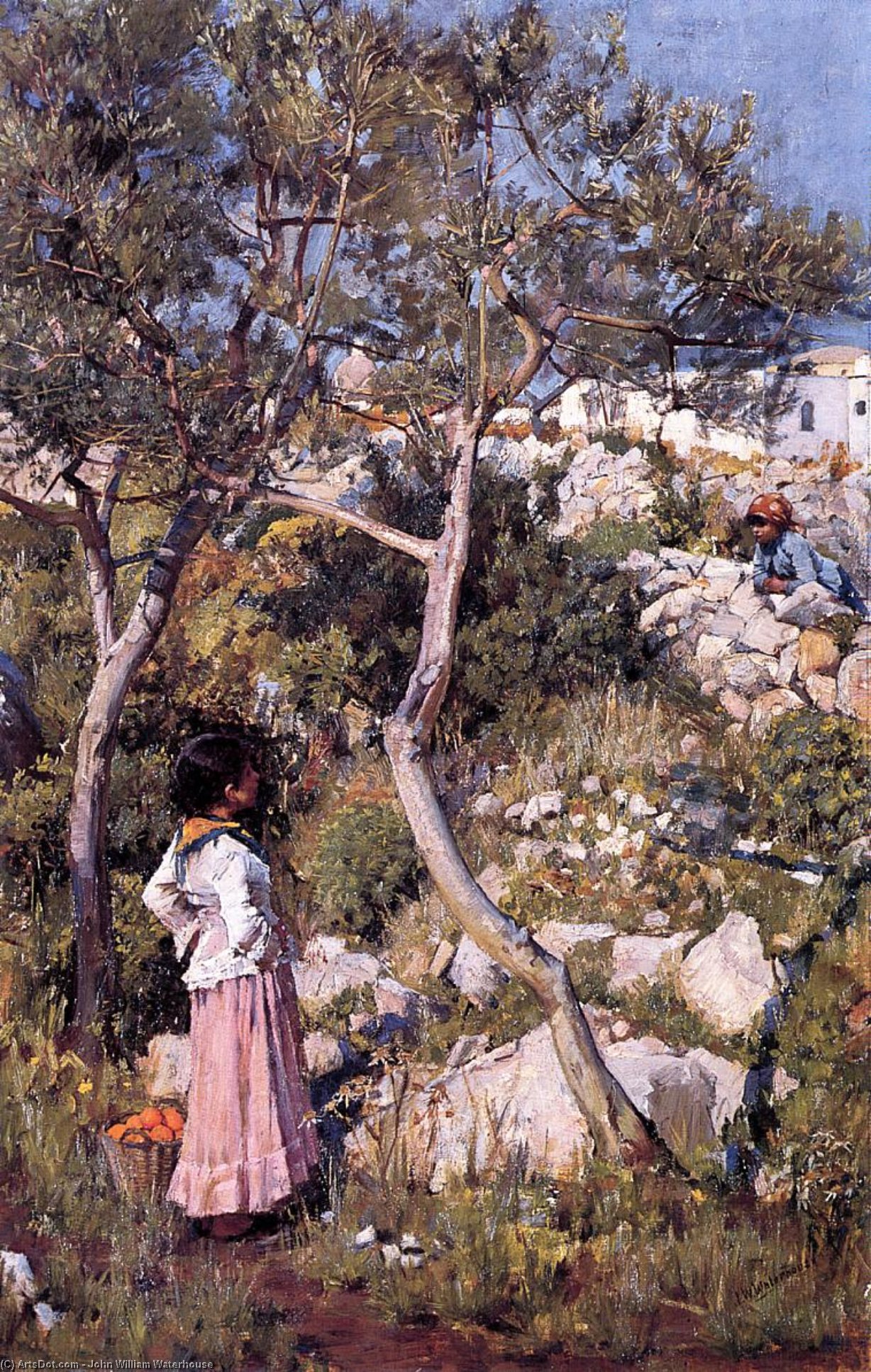
Two Little Italian Girls by a Village
 Oil On Canvas
- WallArt
- Pre-Raphaelite
 1889
1889- 19th Century
 60.0 x 38.0 cm
 Read More
Purchase a high-resolution, enhanced digital image, far superior to the online preview.
Each file is meticulously prepared by our in-house specialists using advanced tools and expert manual retouching. We ensure every image has exceptional clarity, precise color accuracy, and fine detail.
The final file is delivered via email within 72 hours, optimized for immediate use in professional, editorial, and print environments. This is the same quality trusted by top-tier design studios, publishers, and galleries.
Digital Image
Download a high-resolution file for personal display, printing, and creative projects. ( Buy Print Buy Hand Made Painting)
Included in Every Digital Image Order
Expert Digital Delivery, Guaranteed
When you choose ArtsDot.com, you're not just getting an image - you're receiving a professionally enhanced digital artwork, crafted with precision and backed by a satisfaction guarantee. Here's everything that comes with your order, automatically:

Fast Email Delivery
Your high-resolution digital image file will be emailed to you within 72 hours of ordering - ready for immediate use.

AI-Enhanced Digital File
Your artwork is professionally optimized using advanced AI tools and manual editing, ensuring maximum detail, clarity, and color accuracy.

Free Lifetime Re-Delivery
Accidentally deleted or lost your file? No worries - we'll resend it to you anytime, free of charge.

No Import Fees - Ever
Enjoy your artwork instantly with zero customs, duties, or delivery fees - digital downloads are always tax-free.

Color Accuracy Guarantee
We ensure your digital image reflects the original colors as closely as possible using professional tools and color management.

60-Day Satisfaction Guarantee
If you're not satisfied with your digital image, we'll revise it or refund 100% within 60 days - no questions asked.

100% Money-Back Guarantee
Not satisfied? Get a full refund within 60 days of receiving your digital file - no questions asked.

Bulk Order Discounts
Buy 3 images, save 10% - Buy 5, save 15% - Buy 10+, save 20%. Great for creative projects, galleries, and agencies.
A Moment of Italian Serenity: John William Waterhouse’s “Two Little Italian Girls by a Village”
John William Waterhouse's "Two Little Italian Girls by a Village," painted in 1889, is more than just a picturesque scene; it’s a carefully constructed evocation of Romanticism and a testament to the enduring appeal of classical beauty. Measuring 60 x 38 cm, this oil on canvas captures two young girls amidst a tranquil Italian landscape, inviting the viewer into a world of gentle leisure and timeless charm. The painting's strength lies in its ability to transport us – a skill honed by Waterhouse’s deep engagement with Pre-Raphaelite ideals and his own profound connection to the artistic heritage of Italy.
- Subject Matter: The central figures, two young girls, are presented as emblems of innocence and rural grace. Their presence within the idyllic setting immediately establishes a mood of serenity and nostalgia.
- Composition & Style: Waterhouse employs a classic compositional structure, utilizing vertical lines to emphasize the height of the olive tree – a deliberate choice that elevates the scene and draws the eye upwards. The flattened perspective creates a sense of depth through layered elements, from the wildflowers in the foreground to the distant hills.
- Color Palette: The muted greens, browns, and blues dominate the canvas, reflecting the natural light and atmosphere of the Italian countryside. These colors aren’t merely descriptive; they contribute significantly to the painting's overall mood of tranquility and warmth.
The Pre-Raphaelite Echoes and Classical Influences
Waterhouse was deeply influenced by the Pre-Raphaelite Brotherhood, a group dedicated to reviving the artistic styles of the early Italian Renaissance – specifically, before Raphael. This movement rejected the academic conventions of the time, favoring instead a return to detail, vibrant color, and emotional intensity. The painting’s subject matter—young girls in a rural setting—aligns perfectly with Pre-Raphaelite themes of innocence and beauty. Furthermore, Waterhouse's Roman upbringing is evident in his meticulous attention to classical motifs, most notably the distant dome of Capri’s Santo Stefano church, a subtle nod to the grandeur of ancient Italy.
The inclusion of the small boat and basket of oranges adds layers of narrative detail, suggesting a scene of everyday life – perhaps a moment of respite before returning home. These seemingly minor elements contribute significantly to the painting's overall sense of realism and its ability to evoke a specific time and place.
Technique and Symbolism: A Masterful Blend
Waterhouse’s brushwork is characterized by loose, expressive strokes that capture the light and texture of the scene with remarkable skill. The rough bark of the olive tree, the uneven surface of the rocks, and the delicate folds of the girls' clothing are rendered with a sensitivity to detail that speaks to the artist’s technical mastery. The olive tree itself is laden with symbolism – representing peace, wisdom, and longevity—themes deeply rooted in Mediterranean art and culture. The painting’s impressionistic leanings, prioritizing atmosphere over precise representation, further enhance its evocative power.
Owning a Piece of Art History
Handmade oil painting reproductions of “Two Little Italian Girls by a Village” are now available at ArtsDot.com, offering art enthusiasts the opportunity to bring this timeless masterpiece into their homes or offices. This reproduction captures not only the visual beauty of Waterhouse’s original but also the emotional resonance that has captivated viewers for over a century. It's an investment in artistry, history, and a touch of Italian serenity.
Related Artworks
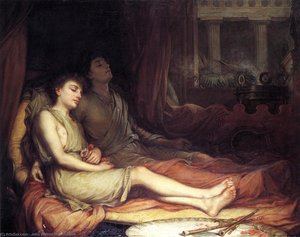
Artist Biography
A Roman Beginning: The Early Life and Influences of John William Waterhouse
John William Waterhouse, a name synonymous with the romantic allure of Pre-Raphaelite painting, began his artistic journey far from the fog-laden landscapes often associated with the movement. Born in Rome in 1849 to English parents, his earliest years were steeped in the classical beauty of Italy – an environment that would profoundly shape his aesthetic sensibilities. This formative period instilled within him a deep appreciation for ancient Roman art and mythology, themes that would recur throughout his prolific career. The Waterhouse family returned to England in 1854, settling in South Kensington, London, a location strategically chosen for its proximity to the burgeoning Victoria and Albert Museum. Here, young John was exposed to an unparalleled collection of classical sculpture and decorative arts, further nurturing his fascination with antiquity. His initial training was conventional, encompassing studies at the Royal Academy Schools, where he honed his technical skills in drawing and painting, but it was the atmosphere of intellectual curiosity and artistic innovation that truly ignited his passion. Even early works reveal a meticulous attention to detail and a commitment to historical accuracy, qualities that would become hallmarks of his style.Embracing the Pre-Raphaelite Brotherhood
While Waterhouse’s initial work displayed classical leanings reminiscent of artists like Alma-Tadema and Frederic Leighton, he gradually gravitated towards the ideals of the Pre-Raphaelite Brotherhood. This artistic collective, founded in 1848, championed a return to the detailed observation of nature and the vibrant colors found in early Italian Renaissance art – before what they perceived as the stylistic decline initiated by Raphael. Waterhouse didn’t join the brotherhood itself, but he wholeheartedly embraced its principles, infusing his paintings with a lyrical beauty and emotional depth that resonated deeply with audiences. His 1874 painting, Sleep and his Half-Brother Death, exhibited at the Royal Academy, marked a turning point, demonstrating his growing mastery of symbolic narrative and atmospheric effects. This success paved the way for consistent inclusion in the annual exhibitions, establishing him as a rising star within the London art scene. He wasn’t merely replicating Pre-Raphaelite techniques; he was interpreting them through his own unique lens, blending classical precision with romantic sensibility.Mythological Visions and Arthurian Echoes
Waterhouse's most celebrated works are those that draw inspiration from mythology and Arthurian legend. He possessed a remarkable ability to breathe life into ancient stories, portraying goddesses, nymphs, and tragic heroines with an exquisite blend of beauty and pathos. The Lady of Shalott, perhaps his most iconic painting, exists in three versions (1888, 1894, and 1916), each a testament to his enduring fascination with Tennyson’s poem. The image of the doomed lady, adrift on her river barge, became emblematic of Victorian romanticism and the plight of artistic isolation. Similarly, his depictions of Ophelia, capturing the moment before her tragic demise, are imbued with a haunting melancholy. He didn't simply illustrate these tales; he explored their psychological depths, focusing on the emotional states of his subjects. Hylas and the Nymphs, Ariadne, and Penelope and the Suitors are further examples of his ability to transform classical narratives into visually stunning and emotionally resonant works of art. His paintings weren’t just beautiful; they were imbued with a sense of narrative power, inviting viewers to contemplate the complexities of human experience.Legacy and Lasting Influence
John William Waterhouse continued to paint prolifically until his death in 1917, achieving widespread recognition and acclaim during his lifetime. He was elected a full Academician in 1895 and dedicated time to teaching at the St. John's Wood Art School, nurturing the next generation of artists. While his popularity waned somewhat after World War I, there has been a significant resurgence of interest in his work in recent decades. Today, Waterhouse is celebrated as one of the most important figures of the Pre-Raphaelite movement and a master of Victorian painting. His paintings continue to captivate audiences with their exquisite beauty, emotional depth, and timeless appeal. He left behind a legacy of romantic visions, mythological interpretations, and tragic heroines that continue to inspire artists and art lovers alike. The enduring power of his work lies in its ability to transport viewers to another world – a realm of myth, legend, and profound human emotion.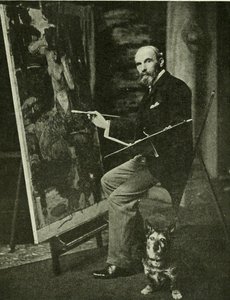
John William Waterhouse
1849 - 1917 , Italy
Quick Facts
- Artistic Movement Or Style: Pre-Raphaelite, Victorian
- Artists Who Influenced This Artist:
- Alma-Tadema
- Frederic Leighton
- Date Of Birth: 1849
- Date Of Death: 1917
- Full Name: John William Waterhouse
- Nationality: English
- Notable Artworks:
- The Lady of Shalott
- Ophelia
- Hylas and the Nymphs
- Ariadne
- Place Of Birth: Rome, Italy

