 Preview
 Send
Send Share
Share
 Details

 Download
 Similars
 X-Ray
X-Ray Diaporama
 Stats
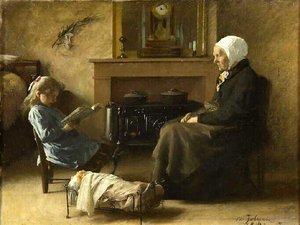
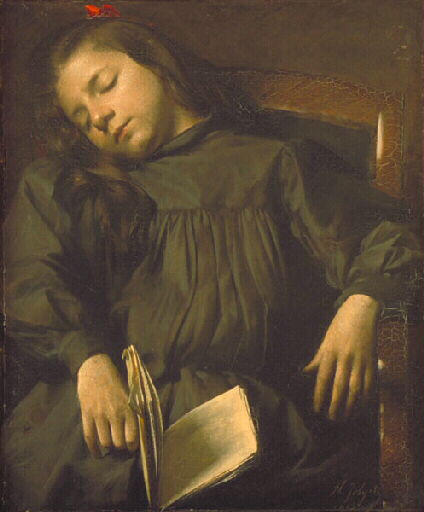
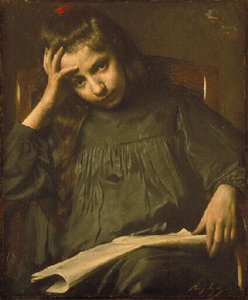
StatsLa leçon peu intéressante
 Read More
Giclée / Art Print
Museum-quality giclée or canvas print with fast production and flexible finish options. ( Buy Hand Made Painting Switch to Digital Image)




































Pick from our preset sizes that match the artwork's original proportions.

You may enter your own dimensions to fit a specific frame or space. If your selected size does not match the original image's proportions, we will either crop the artwork or extend the image with a mirrored or solid-fill edge. A digital mockup will be sent for your approval before production begins.
Please note that the on-screen preview does not reflect the actual cropping or extension. Only the mockup will accurately show the final composition.
While custom sizes are available, we recommend selecting a dimension from the predefined list to preserve the original proportions.
Worldwide Delivery () in 2 weeks instead of standard 4/5 weeks. (8 September)

Free Worldwide Express Shipping

High-Quality Linen Canvas

Full Shipping Insurance

Customs Tax Refund Guarantee

True Color Matching Guarantee

100-Day Return Policy (Defects Only)

100% Money-Back Guarantee

Bulk Discount Offer
 Glass option is only available in size under 110 CM

La leçon peu intéressante
Giclée / Art Print
Reproduction Size
-


Total Price
$ 63
Related Artworks



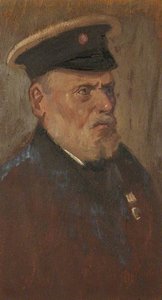



Artist Biography
The Soul of the French Landscape: The Life and Art of Philippe Jolyet
In the grand tapestry of nineteenth-century French art, few threads are as delicately woven as those left by Philippe Jolyet. Born in 1832 in the serene landscapes of Pierre-de-Bresse, Burgundy, Jolyet emerged from a lineage of tradition to become a master of realism, capturing the quiet, breathing essence of the French countryside. His journey was one of profound observation, moving from the academic rigor of Dijon’s École nationale des beaux-arts to the prestigious halls of Paris, always guided by an eye that sought the truth in both light and shadow.
The foundation of Jolyet's technique was laid under the watchful mentorship of Léon Cogniet, a formidable figure whose influence bridged the gap between classical grandeur and the burgeoning nuances of modern observation. From Cogniet, Jolyet inherited a respect for meticulous detail and a capacity for historical weight, yet he possessed the unique sensitivity to blend these academic roots with an appreciation for the atmospheric softness found in the works of masters like Corot. This synthesis allowed him to move beyond mere imitation, creating canvases that felt less like static images and more like captured moments of time.
A Mastery of Light and Regional Spirit
While his training was rooted in the classical traditions of Paris, Jolyet’s heart found its most profound expression in the rugged beauty of the Basque Country. He possessed an extraordinary ability to translate the geological drama and the shifting atmospheric conditions of this region onto canvas. His landscapes are not merely topographical records; they are emotional landscapes where the weight of a mountain or the mist over a valley conveys a sense of enduring presence. In works such as "La suite au prochain numéro," one can witness his unparalleled ability to use muted blues and greens to evoke the quiet dignity of rural life, demonstrating a mastery of tonal modulation that breathes life into every brushstroke.
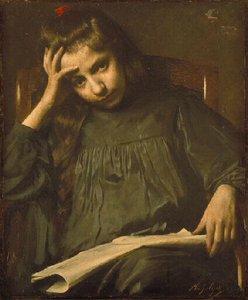
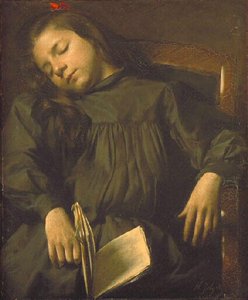
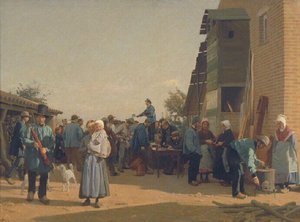
Beyond the sweeping vistas, Jolyet’s repertoire extended into the intimate realms of genre painting and portraiture. He often explored theatrical scenes and the simple, poignant moments of everyday existence, such as in "La leçon peu intéressante." His portraits, particularly those of young women, were celebrated for a "soft" style that captured a gentle, luminous quality, making his subjects appear both present and ethereal. Whether depicting a bustling market scene like "Vente mobilière en Bresse"* or the stillness of a solitary reader, Jolyet maintained an unwavering commitment to realism that honored the subject's inherent character.
Legacy and Artistic Recognition
The trajectory of Jolyet’s career was marked by significant milestones within the French art establishment. Since his debut at the Salon des artistes français in 1863, he became a consistent and respected presence in the Parisian art world. His dedication to excellence was formally recognized through several prestigious accolades:
- Honorable Mentions: Earned during his regular exhibitions at the Salon, signaling his rising status among his peers.
- Bronze Medal (1889): Awarded at the Exposition Universelle, a crowning achievement that solidified his reputation on an international stage.
- Institutional Leadership: Beyond his studio, Jolyet contributed to the preservation of art as the director of the municipal school of drawing and painting and as the first curator of the Musée Bonnat-Helleu in Bayonne.
Today, the works of Philippe Jolyet reside in esteemed collections such as the Louvre, the Musée de Bayonne, and various museums across France, serving as a testament to his enduring significance. He remains a pivotal figure for those studying the evolution of French Realism, reminding us that true artistry lies in the ability to see the extraordinary within the ordinary, and to find the eternal within a single, fleeting moment of light.
jolyet philippe
1832 - 1908
Quick Facts
- Artistic Movement Or Style: Realism
- Artists Or Movements Influenced By This Artist: ['Camille Jean Baptiste Corot']
- Artists Who Influenced This Artist: ['Léon Cogniet']
- Date Of Death: 1908
- Full Name: Philippe Jolyet
- Nationality: French
- Notable Artworks:
- La suite au prochain numéro
- Vente mobilière en Bresse
- La Lecture
- Place Of Birth: Pierre-de-Bresse, France