

 Preview
 Send
Send Share
Share
 Details

 Download
 Similars
 X-Ray
X-Ray Diaporama
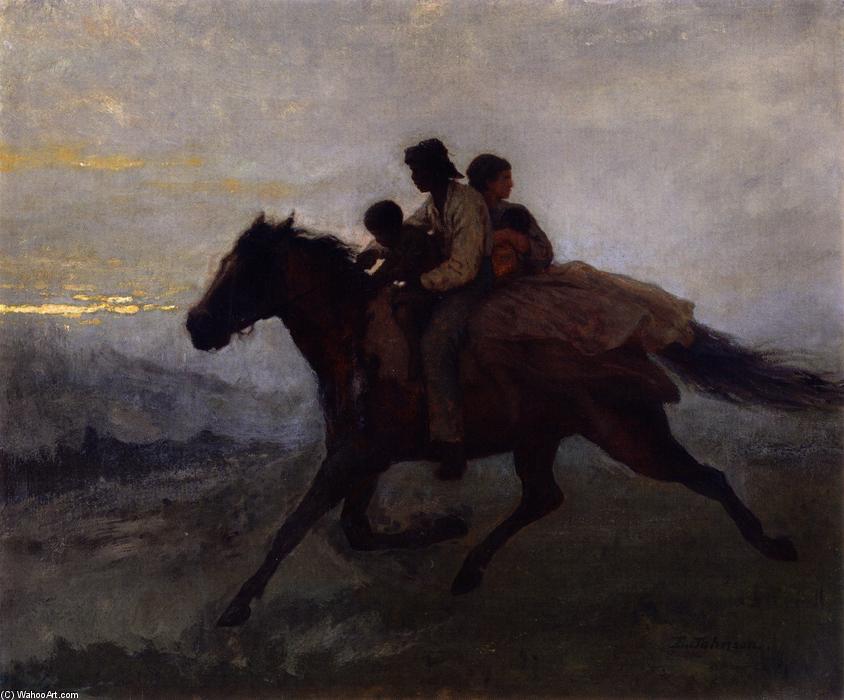
A Ride for Liberty - The Fugitive Slaves


 Read More
Purchase a high-resolution, enhanced digital image, far superior to the online preview.
Each file is meticulously prepared by our in-house specialists using advanced tools and expert manual retouching. We ensure every image has exceptional clarity, precise color accuracy, and fine detail.
The final file is delivered via email within 72 hours, optimized for immediate use in professional, editorial, and print environments. This is the same quality trusted by top-tier design studios, publishers, and galleries.
Digital Image
Download a high-resolution file for personal display, printing, and creative projects. ( Buy Print Buy Hand Made Painting)
Included in Every Digital Image Order
Expert Digital Delivery, Guaranteed
When you choose ArtsDot.com, you're not just getting an image - you're receiving a professionally enhanced digital artwork, crafted with precision and backed by a satisfaction guarantee. Here's everything that comes with your order, automatically:

Fast Email Delivery
Your high-resolution digital image file will be emailed to you within 72 hours of ordering - ready for immediate use.

AI-Enhanced Digital File
Your artwork is professionally optimized using advanced AI tools and manual editing, ensuring maximum detail, clarity, and color accuracy.

Free Lifetime Re-Delivery
Accidentally deleted or lost your file? No worries - we'll resend it to you anytime, free of charge.

No Import Fees - Ever
Enjoy your artwork instantly with zero customs, duties, or delivery fees - digital downloads are always tax-free.

Color Accuracy Guarantee
We ensure your digital image reflects the original colors as closely as possible using professional tools and color management.

60-Day Satisfaction Guarantee
If you're not satisfied with your digital image, we'll revise it or refund 100% within 60 days - no questions asked.

100% Money-Back Guarantee
Not satisfied? Get a full refund within 60 days of receiving your digital file - no questions asked.

Bulk Order Discounts
Buy 3 images, save 10% - Buy 5, save 15% - Buy 10+, save 20%. Great for creative projects, galleries, and agencies.
Collectible Description
A Window Into Victorian America: Exploring Jonathan Eastman Johnson’s “A Ride for Liberty”
The painting "A Ride for Liberty – The Fugitive Slaves" by Jonathan Eastman Johnson stands as a poignant emblem of the American Civil War era, capturing not merely a picturesque scene but also the profound anxieties and aspirations simmering beneath the surface of Victorian society. Completed in 1862, this oil on panel masterpiece resides within the Virginia Museum of Fine Arts’ collection, offering viewers an unparalleled glimpse into a moment defined by moral reckoning and the fervent pursuit of freedom. Johnson's artistic vision was firmly rooted in realism—a stylistic choice that prioritized truthful representation over idealized beauty. He eschewed theatrical grandeur, opting instead for a muted palette dominated by earthy tones – browns, greens, and ochres – reflecting the rural landscape through which the family traversed. This deliberate restraint serves to heighten the emotional impact of the composition, forcing the viewer to confront the stark realities of the time without resorting to sentimental embellishment. The brushstrokes themselves are visible, conveying a sense of immediacy and capturing the texture of horsehair and weathered clothing—details that speak volumes about Johnson’s meticulous craftsmanship. The narrative unfolds with quiet dignity as a family – father, mother, and two children – embark on horseback through a sunlit meadow. Their posture exudes confidence and determination, mirroring the spirit of those advocating for emancipation during the Civil War. The man skillfully maneuvers the horse, while his wife watches attentively, her gaze conveying both concern and unwavering support. Two young children cling to their father’s shoulders, embodying innocence amidst turbulent circumstances. This depiction isn't merely a snapshot of daily life; it’s imbued with symbolic significance. The horse itself represents strength and mobility—essential qualities in the struggle for liberation—while the meadow symbolizes hope and renewal. Beyond its stylistic merits, “A Ride for Liberty” resonates deeply with themes prevalent throughout Victorian art and literature. It reflects the burgeoning interest in depicting ordinary individuals confronting moral dilemmas, mirroring the broader societal debates surrounding slavery and abolitionism. The painting’s melancholic undertones subtly convey the pervasive sense of loss associated with the institution of slavery—a loss felt acutely by those who championed its demise. Simultaneously, it celebrates the resilience of the human spirit and the unwavering belief in a brighter future. The Virginia Museum of Fine Arts' acquisition of this artwork underscores its enduring appeal to collectors and interior designers alike. Its understated elegance lends itself beautifully to creating serene spaces infused with historical resonance—a testament to Johnson’s ability to distill complex emotions into a single, unforgettable image. Furthermore, reproductions crafted by skilled artisans like ArtsDot allow enthusiasts worldwide to experience the beauty and depth of “A Ride for Liberty” firsthand, preserving its legacy for generations to come.Technical Considerations: Impressionistic Brushwork & Atmospheric Depth
Johnson’s technique exemplifies the burgeoning influence of Impressionism on American painting during this period. Rather than meticulously blending colors to achieve photographic accuracy—a hallmark of academic art—he employed loose, visible brushstrokes to capture fleeting moments of light and atmosphere. This approach prioritizes capturing the sensory experience of observing a scene rather than presenting an idealized representation. The artist skillfully utilized glazing techniques – applying thin layers of translucent paint over thicker underlayers – to build up tonal depth and create a luminous effect that mimics the dappled sunlight filtering through the meadow foliage. Detailed observation of the painting reveals subtle nuances in color and texture—evidence of Johnson’s painstaking attention to detail. Note particularly how he renders the horsehair, capturing its roughness and sheen with delicate brushstrokes. Similarly, the artist skillfully portrays the folds of clothing, conveying a sense of realism that transcends mere visual representation. The atmospheric perspective – achieved through gradual diminution of color intensity as objects recede into the distance – contributes significantly to the painting’s overall mood, evoking a feeling of tranquility and contemplation.Symbolism Beyond the Surface: Hope Amidst Uncertainty
The seemingly simple composition of “A Ride for Liberty” is laden with symbolic meaning that extends far beyond its literal depiction. As previously mentioned, the horse represents strength and mobility—essential attributes in the fight for emancipation—while the meadow symbolizes hope and renewal. However, deeper analysis reveals connections to broader Victorian philosophical concepts concerning faith and moral responsibility. The family’s unwavering gaze toward the horizon embodies a steadfast belief in divine providence—a conviction that underpinned much of Victorian spiritual life. Furthermore, the painting subtly acknowledges the pervasive anxieties surrounding the Civil War. Despite the idyllic setting, there's an unspoken awareness of the dangers inherent in their journey—a recognition that freedom is rarely achieved without sacrifice and hardship. This duality – juxtaposing beauty with apprehension – reflects the complex moral landscape of the era and underscores Johnson’s artistic sensitivity to the psychological dimensions of human experience.Emotional Resonance: A Portrait of Victorian Values
Ultimately, “A Ride for Liberty” succeeds in conveying a profound emotional resonance that transcends time and cultural boundaries. The painting captures the essence of Victorian values—characterized by compassion, duty, and unwavering faith—while simultaneously acknowledging the pervasive anxieties surrounding social upheaval. Viewing this artwork evokes feelings of serenity, contemplation, and admiration for the resilience of the human spirit. It serves as a powerful reminder of the importance of confronting moral dilemmas with courage and conviction—values that continue to inspire artists and audiences alike.Reproductions & Preservation: Bringing Victorian Beauty Home
High-quality reproductions crafted by artisans like ArtsDot offer art lovers worldwide an opportunity to experience the enduring allure of “A Ride for Liberty.” These meticulously executed prints capture the painting’s luminous palette and textural nuances—preserving its legacy for future generations. When selecting a reproduction, consider factors such as archival quality paper and pigment inks to ensure that the artwork remains vibrant and stable over time—a testament to Johnson's artistic vision and the enduring power of Impressionistic technique.Further Exploration: The Virginia Museum of Fine Arts Collection
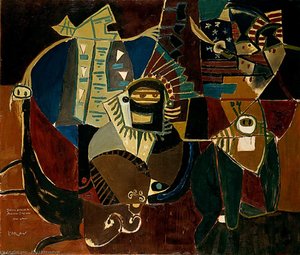
For those interested in delving deeper into Victorian art history, a visit to the Virginia Museum of Fine Arts is highly recommended. Alongside “A Ride for Liberty,” the museum houses an impressive collection of artworks spanning diverse styles and periods—including Shipyard Society by George Wesley Bellows—providing invaluable insights into the artistic landscape of the era.Related Artworks
![Indian Tobacco Shop Sign [reverse, Indian Facing Right] — Winslow Homer, Contemporary Realism](/media/artworks/images-thumb/74/22/7422432cafc295265ef3b7f7fa62d35d.jpg)
Artist Biography
A Life Etched in American Realism
Jonathan Eastman Johnson, a name resonating with the quiet dignity of 19th-century American life, was more than just a painter; he was a visual chronicler of his era. Born in Lovell, Maine, in 1824, Johnson’s path to artistic prominence wasn't one of immediate acclaim but rather a gradual unfolding shaped by familial connections, rigorous training, and an unwavering dedication to portraying the world as he saw it – with honesty, nuance, and a touch of melancholic beauty. His father, Philip Carrigan Johnson, held positions in business and fraternal organizations, instilling in young Eastman a sense of community engagement that would later permeate his artistic subjects. Early exposure to life in Fryeburg and Augusta, Maine, provided the foundational experiences that informed his understanding of everyday existence, an understanding he’d translate onto canvas with remarkable sensitivity. His formal training began as an apprenticeship with a Boston lithographer in 1840, marking the initial step in a career defined by meticulous observation and technical skill. A move to Washington D.C. alongside his family, due to his father's naval appointment, broadened his horizons, exposing him to diverse subjects and experiences that would subtly influence his artistic vision.From Dutch Masters to American Scenes
Johnson’s artistic development was a fascinating interplay of influences. Initially drawn to portraiture, he quickly expanded his repertoire to encompass genre painting – scenes depicting everyday life. This wasn't merely about representation; it was about capturing the essence of American society, offering glimpses into the lives of ordinary people often overlooked by more grandiose historical narratives. A pivotal moment arrived during the 1850s when Johnson journeyed to The Hague and immersed himself in the works of 17th-century Dutch masters. This encounter proved transformative. He absorbed their mastery of composition, lighting, and realism, earning him the affectionate moniker "The American Rembrandt." This influence is palpable in his paintings – a subdued palette, dramatic chiaroscuro, and an almost photographic attention to detail characterize his mature style. However, Johnson didn’t simply imitate; he synthesized these European techniques with his uniquely American sensibility, creating works that were both technically brilliant and deeply rooted in the social fabric of his time. He aligned himself with the burgeoning Realist movement, rejecting idealized representations in favor of accurate depictions of everyday life, a commitment that would define his artistic legacy.Bearing Witness to an Era
Johnson’s oeuvre is remarkably diverse, encompassing portraits of prominent figures like Abraham Lincoln, Nathaniel Hawthorne, Ralph Waldo Emerson, and Henry Wadsworth Longfellow alongside intimate scenes of domesticity and rural life. However, some works stand out as particularly significant for their social commentary and artistic innovation. Negro Life at the South (1859) remains one of his most celebrated – and controversial – paintings. Depicting African Americans enjoying leisure time, it sparked intense debate regarding race relations and the realities of slavery in the antebellum South. The ambiguity inherent in the scene—was it a romanticized portrayal or a subtle critique?—fueled discussions that resonated far beyond the art world. His response to the Civil War was equally poignant. Rather than focusing on battlefield heroics, Johnson turned his attention to the impact of conflict on civilian life, creating haunting images of anxious families and scenes away from the front lines. Ride For Liberty (1862), depicting an enslaved family escaping to freedom, is a powerful testament to his commitment to social justice. His depictions of New England rural life – maple sugar harvesting, cranberry picking – celebrated traditional American values and craftsmanship with a quiet reverence.A Legacy Beyond the Canvas
Beyond his artistic achievements, Johnson played a crucial role in shaping the American art landscape. His dedication to genre painting elevated it as a respected form of artistic expression, challenging prevailing notions of what constituted “high art.” He wasn’t merely an artist; he was a cultural advocate. His commitment extended beyond his own practice, culminating in his co-founding of the Metropolitan Museum of Art in New York City – a testament to his belief in the power of art to educate and inspire. His name is inscribed at its entrance, a permanent recognition of his significant contribution to the nation’s artistic heritage. Johnson's influence on American Realism is undeniable; his dedication to depicting everyday life with honesty and detail paved the way for future generations of artists who sought to capture the complexities of the human experience. Today, Jonathan Eastman Johnson is remembered not only as a technically gifted painter but also as a thoughtful observer of American society, whose works continue to resonate with their enduring relevance and emotional depth.Enduring Significance
Johnson’s legacy extends beyond specific paintings or institutional contributions. He was a pioneer in bridging the gap between European artistic traditions and uniquely American subject matter. His ability to imbue ordinary scenes with profound meaning, his willingness to engage with complex social issues, and his unwavering commitment to realism cemented his place as a pivotal figure in 19th-century American art. He wasn’t simply recording life; he was interpreting it, prompting viewers to reflect on their own values and beliefs. His work serves as a powerful reminder that true artistry lies not just in technical skill but also in the ability to connect with the human spirit and illuminate the world around us. He died in New York City in 1906, leaving behind a body of work that continues to captivate and inspire, ensuring his enduring recognition as a significant figure in American art history.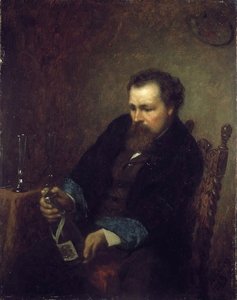
Jonathan Eastman Johnson
1824 - 1906 , United Kingdom
Quick Facts
- Artistic Movement Or Style: Realism, Genre painting
- Artists Or Movements Influenced By This Artist: ['American Realism']
- Artists Who Influenced This Artist:
- Dutch Masters
- Jean-François Millet
- Date Of Birth: July 29, 1824
- Date Of Death: April 5, 1906
- Full Name: Jonathan Eastman Johnson
- Nationality: American
- Notable Artworks:
- Negro Life at the South
- Ride For Liberty
- Woman Reading
- Place Of Birth: Lovell, United Kingdom

