 Preview
 Send
Send Share
Share
 Details

 Download
 Similars
 X-Ray
X-Ray Diaporama
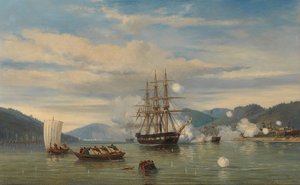
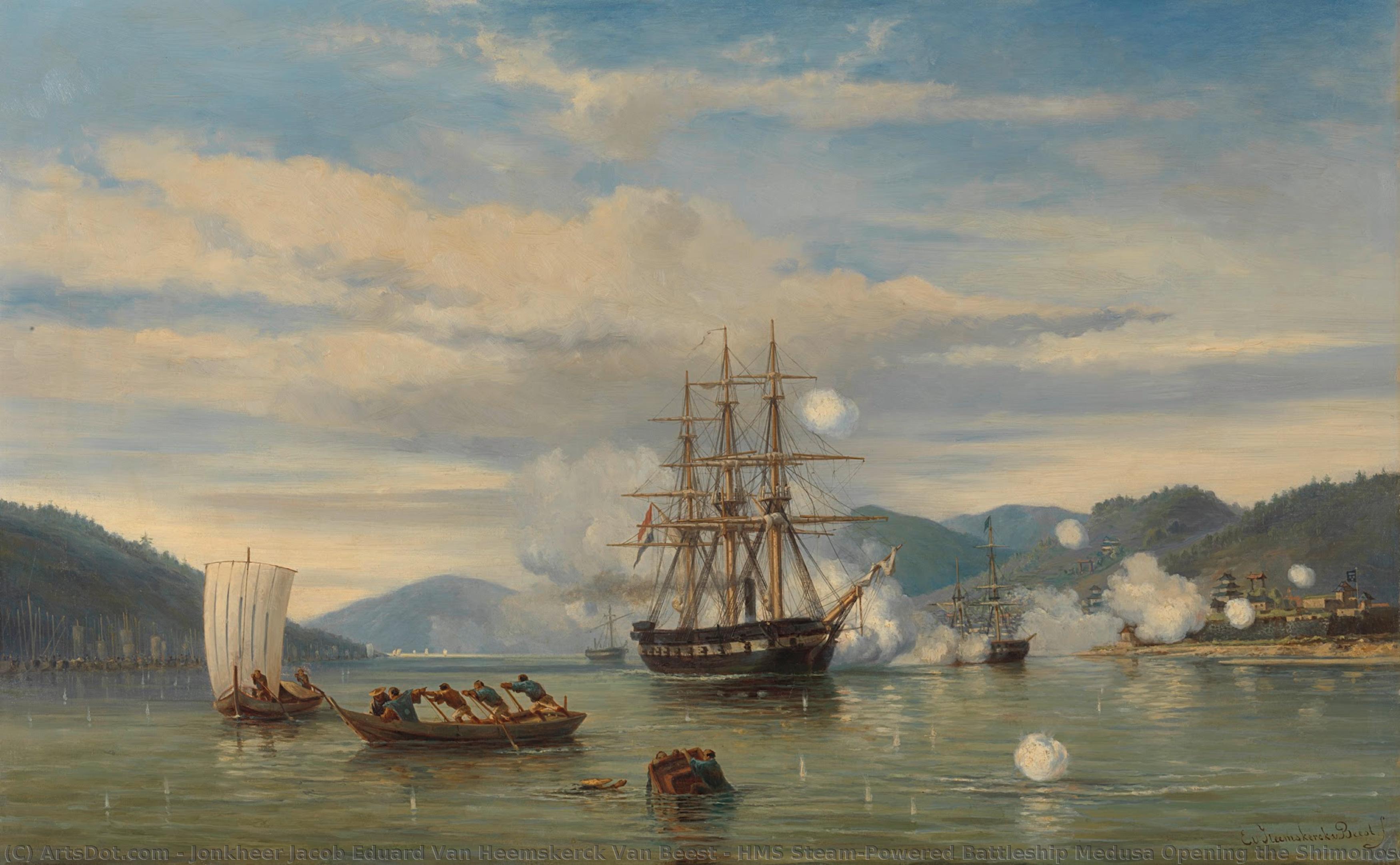
HMS Steam-Powered Battleship Medusa Opening the Shimonoseki Straits, jonkheer Jacob Eduard van Heemskerck van Beest, 1864
 1864
1864 68.0 x 107.0 cm
 Read More
Giclée / Art Print
Museum-quality giclée or canvas print with fast production and flexible finish options. ( Buy Hand Made Painting Buy Image)




































Pick from our preset sizes that match the artwork's original proportions.

You may enter your own dimensions to fit a specific frame or space. If your selected size does not match the original image's proportions, we will either crop the artwork or extend the image with a mirrored or solid-fill edge. A digital mockup will be sent for your approval before production begins.
Please note that the on-screen preview does not reflect the actual cropping or extension. Only the mockup will accurately show the final composition.
While custom sizes are available, we recommend selecting a dimension from the predefined list to preserve the original proportions.
Worldwide Delivery () in 2 weeks instead of standard 4/5 weeks. (2 September)

Free Worldwide Express Shipping

High-Quality Linen Canvas

Full Shipping Insurance

Customs Tax Refund Guarantee

True Color Matching Guarantee

60-Day Return Policy (Defects Only)

100% Money-Back Guarantee

Bulk Discount Offer
 Glass option is only available in size under 110 CM

HMS Steam-Powered Battleship Medusa Opening the Shimonoseki Straits, jonkheer Jacob Eduard van Heemskerck van Beest, 1864
Giclée / Art Print
Reproduction Size
-


Total Price
$ 63
Related Artworks









Artist Biography
A Life Painted by the Sea: The World of Jacob Eduard van Heemskerck van Beest
Jacob Eduard van Heemskerck van Beest, born in the bustling port city of Kampen, Netherlands, in 1828, was an artist inextricably linked to the maritime world. His life, much like his canvases, was shaped by the ebb and flow of tides, the distant horizons beckoning adventure, and the intricate dance between humanity and the sea. The son of a sea captain, young Jacob absorbed tales of faraway lands and daring voyages – stories that would later become the very heart of his artistic expression. While initially receiving instruction from Dirk van Lokhorst, it was perhaps the atmosphere of Kampen itself, steeped in naval tradition, that proved to be his most formative education. He didn’t merely observe ships; he *felt* their power, understood their purpose, and internalized the lives they carried within their wooden hulls. This early immersion would define his career, establishing him as a chronicler of maritime life during a period of significant change and global exploration.From Dutch Shores to Detailed Depictions
Van Heemskerck van Beest’s artistic journey wasn't one of radical stylistic shifts but rather a deepening commitment to his chosen subject matter. His early works, while demonstrating technical proficiency, were relatively conventional in their approach. However, as he matured, his paintings began to exhibit an extraordinary level of detail and accuracy. He possessed a remarkable ability to capture the nuances of light on water, the texture of sails billowing in the wind, and the complex rigging of 18th and 19th-century vessels. In 1867, a move to The Hague marked a turning point, bringing him into contact with a vibrant artistic community and leading to his membership in the prestigious ‘De Witte’ society in 1872. This association fostered a greater recognition of his talent and allowed him to refine his skills further. Later, a period spent in Dalfsen between 1879 and 1885 provided a quieter environment for focused work, allowing him to fully explore the intricacies of his chosen themes. He wasn’t simply painting ships; he was meticulously documenting a way of life, preserving it on canvas with an almost photographic precision that foreshadowed later developments in realism.A Legacy Etched in Naval History
Van Heemskerck van Beest's oeuvre is dominated by maritime scenes – depictions of naval expeditions, bustling harbors, and solitary ships braving stormy seas. His paintings are not grandiose historical narratives filled with dramatic battles; instead, they offer a more intimate perspective, focusing on the everyday realities of life aboard ship and the challenges faced by sailors. He had an exceptional eye for composition, often employing a low horizon line to emphasize the vastness of the ocean and the smallness of human endeavors in comparison. His color palette, while generally restrained, effectively conveys the atmosphere of each scene – from the bright sunshine of a calm sea to the ominous grays of an approaching storm. He wasn’t afraid to tackle complex subjects, as evidenced by his detailed rendering of the 1864 Japanese fleet, a testament to his ability to research and accurately portray vessels from different cultures. Beyond simply recording visual details, Van Heemskerck van Beest imbued his work with a sense of authenticity, capturing the spirit of an era defined by exploration, trade, and naval power.Influence and Artistic Development
While not directly associated with any particular artistic movement, Van Heemskerck van Beest’s work reflects the growing interest in realism that characterized 19th-century painting. His meticulous attention to detail aligns with the principles of the Hague School, a Dutch art movement known for its realistic depictions of everyday life and landscapes. However, he remained largely focused on his maritime subjects, developing a unique style that blended accuracy with artistic sensitivity. He also played an important role as a teacher, most notably mentoring his own daughter, jkhr. Jacob Eduard van Heemskerck van Beest, who would go on to become a successful painter in her own right. This familial connection highlights the importance of passing down knowledge and preserving artistic traditions within the Van Heemskerck family. His influence can be seen not only in his daughter’s work but also in the broader tradition of Dutch maritime painting, inspiring generations of artists to capture the beauty and power of the sea.Historical Significance and Enduring Appeal
Jacob Eduard van Heemskerck van Beest passed away in 1894, leaving behind a substantial body of work that continues to captivate audiences today. His paintings offer a valuable glimpse into the maritime world of the 19th century, providing detailed documentation of ships, naval practices, and the lives of sailors. They are not merely historical artifacts; they are evocative works of art that transport viewers back in time, allowing them to experience the sights, sounds, and emotions of a bygone era. His commitment to accuracy, combined with his artistic sensitivity, makes his paintings particularly appealing to both art enthusiasts and maritime history buffs.- Preservation of Maritime History: Van Heemskerck van Beest’s detailed depictions serve as invaluable historical records.
- Realistic Style: His work exemplifies the growing trend towards realism in 19th-century painting.
- Influence on Daughter: He mentored his daughter, jkhr. Jacob Eduard van Heemskerck van Beest, fostering a family artistic legacy.
- Evocative Atmosphere: His paintings capture the spirit and emotions of life at sea.
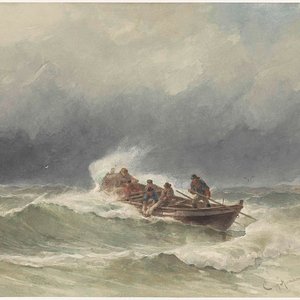
jonkheer jacob eduard van heemskerck van beest
1828 - 1894 , Netherlands
Quick Facts
- Artistic Movement Or Style: Maritime painting
- Artists Or Movements Influenced By This Artist: ['Jkhr. Jacob van Beest']
- Artists Who Influenced This Artist: ['Dirk van Lokhorst']
- Date Of Birth: 1828
- Date Of Death: 1894
- Full Name: Jacob Eduard van Heemskerck van Beest
- Nationality: Dutch
- Notable Artworks: ['Ships & naval expeditions']
- Place Of Birth: Kampen, Netherlands