

 Preview
 Send
Send Share
Share
 Details

 Download
 Similars
 X-Ray
X-Ray Diaporama
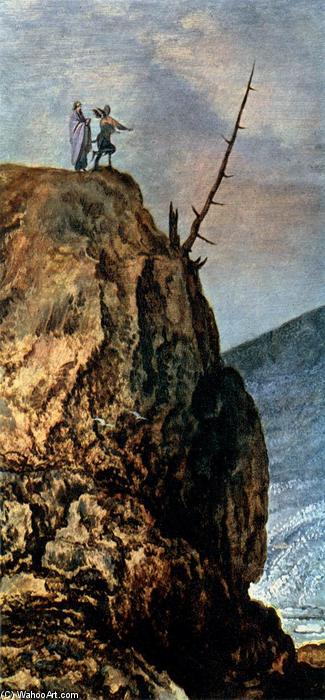
Landscape with the Temptation of Christ (detail)


 Read More
Purchase a high-resolution, enhanced digital image, far superior to the online preview.
Each file is meticulously prepared by our in-house specialists using advanced tools and expert manual retouching. We ensure every image has exceptional clarity, precise color accuracy, and fine detail.
The final file is delivered via email within 72 hours, optimized for immediate use in professional, editorial, and print environments. This is the same quality trusted by top-tier design studios, publishers, and galleries.
Digital Image
Download a high-resolution file for personal display, printing, and creative projects. ( Buy Print Buy Hand Made Painting)
Included in Every Digital Image Order
Expert Digital Delivery, Guaranteed
When you choose ArtsDot.com, you're not just getting an image - you're receiving a professionally enhanced digital artwork, crafted with precision and backed by a satisfaction guarantee. Here's everything that comes with your order, automatically:

Fast Email Delivery
Your high-resolution digital image file will be emailed to you within 72 hours of ordering - ready for immediate use.

AI-Enhanced Digital File
Your artwork is professionally optimized using advanced AI tools and manual editing, ensuring maximum detail, clarity, and color accuracy.

Free Lifetime Re-Delivery
Accidentally deleted or lost your file? No worries - we'll resend it to you anytime, free of charge.

No Import Fees - Ever
Enjoy your artwork instantly with zero customs, duties, or delivery fees - digital downloads are always tax-free.

Color Accuracy Guarantee
We ensure your digital image reflects the original colors as closely as possible using professional tools and color management.

60-Day Satisfaction Guarantee
If you're not satisfied with your digital image, we'll revise it or refund 100% within 60 days - no questions asked.

100% Money-Back Guarantee
Not satisfied? Get a full refund within 60 days of receiving your digital file - no questions asked.

Bulk Order Discounts
Buy 3 images, save 10% - Buy 5, save 15% - Buy 10+, save 20%. Great for creative projects, galleries, and agencies.
A Moment Frozen in Time: Deconstructing ‘Landscape with the Temptation of Christ’
Joos de Momper the Younger's “Landscape with the Temptation of Christ” – a detail from a larger composition – isn’t merely a depiction of a serene vista; it’s a carefully constructed tableau brimming with symbolic weight and reflecting the anxieties and spiritual inquiries of 17th-century Flanders. The painting, likely executed around 1605, offers a glimpse into a world grappling with religious reformation, political instability, and the enduring tension between earthly desires and divine judgment. The scene unfolds on a rugged cliffside, overlooking what appears to be a vast expanse of water – perhaps the Scheldt or another significant waterway of the region – its surface reflecting the muted tones of the sky above. The composition immediately draws the eye to two figures engaged in a hushed conversation; one gesturing emphatically towards the other who sits pensively on a rock, their postures suggesting a weighty exchange.
De Momper’s mastery lies not just in his technical skill but in his ability to evoke atmosphere and imbue the landscape with profound meaning. The artist was deeply influenced by the Dutch Golden Age painters of the time, particularly those who specialized in topographical views – paintings that aimed to accurately represent specific locations. However, de Momper transcends mere realism; he employs a subtle, almost melancholic palette dominated by earthy browns, ochres, and muted greens, creating a sense of quiet contemplation. The dramatic interplay of light and shadow, skillfully rendered through meticulous brushwork, adds depth and volume to the scene, highlighting the textures of the rocks, foliage, and even the figures’ clothing. Notice how the sunlight catches the edges of the cliff face, casting long shadows that emphasize its imposing presence – a visual metaphor for the challenges and temptations faced by humanity.
The Weight of Symbolism: Temptation and Redemption
The title itself, “Landscape with the Temptation of Christ,” immediately establishes a theological framework. While the full narrative is contained within the larger composition, this detail powerfully suggests the moment of temptation – not necessarily in a dramatic, overtly confrontational way, but rather through a subtle exchange between two individuals. The gesture of the figure on the left could represent the allure of worldly pleasures or sinful desires, while the seated figure embodies contemplation and perhaps even regret. The rocky terrain beneath them reinforces this sense of precariousness; it’s a landscape fraught with danger and uncertainty. The inclusion of a solitary tree branch extending horizontally across the composition acts as a visual anchor, providing balance to the scene and subtly hinting at the enduring presence of nature – a constant reminder of God's creation and his ultimate authority.
Furthermore, the setting itself carries symbolic weight. Cliffsides often represent thresholds or transitions—the boundary between the earthly realm and the divine. The water, frequently associated with both life and death, adds another layer of complexity to the scene. The muted colors and subdued light contribute to a sense of solemnity, inviting viewers to reflect on themes of morality, faith, and the struggle between good and evil. De Momper’s skill lies in his ability to convey these complex ideas through deceptively simple imagery.
A Master of Flemish Detail: Technique and Legacy
Joos de Momper the Younger was a pivotal figure in the development of Flemish landscape painting, building upon the traditions established by his father and grandfather. He was renowned for his meticulous attention to detail, particularly in rendering naturalistic elements – trees, rocks, water, and foliage – with astonishing accuracy. His work demonstrates a deep understanding of perspective and atmospheric effects, creating a sense of depth and realism that was highly valued during the 17th century. De Momper’s technique involved layering thin glazes of oil paint to achieve luminous colors and subtle gradations of tone. He also employed a dry brush technique to create textural variations in the rocks and foliage, adding visual interest and complexity to the composition.
Despite his considerable talent, de Momper's name has often been overshadowed by that of his more famous contemporaries. However, his contributions to the development of Flemish landscape painting are undeniable. His “Landscape with the Temptation of Christ” – this intimate detail – stands as a testament to his artistic skill and his ability to imbue a seemingly simple landscape with profound symbolic meaning. Reproductions of this piece offer a captivating glimpse into the world of 17th-century Flanders, inviting viewers to contemplate the timeless themes of temptation, redemption, and the enduring beauty of nature.
Related Artworks
Artist Biography
A Pioneer of the Flemish Landscape: The World of Joos de Momper
Joos de Momper the Younger, a name perhaps less instantly recognizable than those of his contemporaries like Bruegel or Rubens, nevertheless occupies a crucial position in the evolution of Flemish landscape painting. Born in Antwerp in 1564 into an artistic family—his grandfather was also a landscape painter and his father, Bartholomeus de Momper, a painter, print publisher, and art dealer—the younger de Momper inherited not just a lineage but a deep immersion in the visual world. He became a master within the Antwerp Guild of St. Luke remarkably early, at only seventeen years old in 1581, signaling an immediate recognition of his talent. While documented details of his formal training remain somewhat scarce, it’s clear he benefited from the vibrant artistic atmosphere of Antwerp, a city then grappling with religious and political upheaval but still a powerhouse of creative energy.
The assumption that de Momper traveled to Italy in the 1580s, though not definitively proven, speaks volumes about his ambition and the prevailing artistic currents of the time. The influence of Italianate landscapes—particularly those depicting dramatic Alpine scenery—is undeniably present in his work. However, it was Pieter Bruegel the Elder who cast the longest shadow over de Momper’s artistic development. Bruegel's panoramic vistas, populated with bustling figures and imbued with a sense of narrative detail, served as a foundational inspiration. De Momper didn’t merely copy Bruegel; he absorbed his spirit, adapting it to his own vision and forging a style that bridged the gap between the Mannerist conventions of the late 16th century and the burgeoning realism of the 17th.
A Master Collaborator and Prolific Creator
De Momper’s career flourished during a period when landscape painting was gaining increasing prominence, moving beyond its traditional role as a backdrop for religious or historical scenes. He quickly established himself as a sought-after artist, even attracting the attention of Archduchess Isabella Clara Eugenia, the governor of Flanders, who in 1616 petitioned on his behalf for tax exemptions—a testament to his standing and importance. His productivity was astonishing; it’s estimated that around 500 paintings are attributed to him, though relatively few bear his signature or a date. This high output suggests a substantial workshop operation, with assistants contributing to various stages of the painting process.
A defining characteristic of de Momper's practice was collaboration. He frequently partnered with other prominent artists, most notably figure painters like Frans Francken II, Peter Snayers, and both Jan Brueghel the Elder and his son. These collaborations typically involved de Momper creating the expansive landscape—often mountainous and dramatic—while his colleagues populated it with figures engaged in various activities, adding narrative depth and human interest. These joint efforts were not simply a division of labor; they represented a synergistic exchange of skills, resulting in richly detailed and visually compelling compositions that graced the collections of discerning patrons.
Stylistic Evolution and Artistic Legacy
De Momper’s landscapes can be broadly categorized into two distinct types. The first features fantastical vistas viewed from elevated vantage points, employing a Mannerist color scheme—dark browns in the foreground gradually transitioning to greens and blues in the distance. These compositions often evoke a sense of grandeur and otherworldliness. The second type demonstrates a more naturalistic approach, with lower viewpoints, more realistic coloration, and a greater emphasis on atmospheric perspective. Regardless of style, his panoramas are consistently populated with small figures, adding scale and inviting the viewer to explore the depicted world.
While highly regarded during his lifetime, de Momper’s reputation suffered a decline in subsequent centuries. Critics often dismissed his work as formulaic and repetitive, lacking the innovative spirit of artists like those emerging from the Dutch Republic. Some viewed his large-scale landscapes as mere imitations of Joachim Patinir's earlier world landscapes. However, modern scholarship has begun to reassess de Momper’s contribution, recognizing him as a pivotal figure in the development of Flemish landscape painting—a crucial link between Bruegel’s visionary panoramas and the more refined naturalism of later artists. He represents not necessarily an innovator but a masterful interpreter and synthesizer of existing traditions, creating works that continue to captivate with their dramatic beauty and intricate detail.
Beyond the Canvas: Recognition and Influence
De Momper’s influence extended beyond his paintings. He was acknowledged by Karel van Mander in his influential Schilder-boeck (Book of Painters), a key source for understanding 17th-century Flemish art, and his portrait was even engraved by Anthony van Dyck—a rare honor that underscores his status within the artistic community. He also trained several pupils, including Louis de Caullery and his son Philippe de Momper, ensuring the continuation of his artistic legacy. His followers included Frans de Momper and Hercules Seghers, further disseminating his style and techniques.
Today, Joos de Momper’s paintings can be found in museums and private collections around the world, offering a glimpse into the rich visual culture of 17th-century Flanders. His work serves as a reminder that artistic progress is not always about radical innovation but often involves skillful adaptation, collaboration, and a deep understanding of existing traditions. He was a master craftsman who brought to life breathtaking landscapes, inviting viewers to lose themselves in their beauty and contemplate the wonders of the natural world.

Joos de Momper
1564 - 1635 , Belgium
Quick Facts
- Artistic Movement Or Style: Baroque landscape
- Artists Or Movements Influenced By This Artist:
- Frans de Momper
- Hercules Seghers
- Artists Who Influenced This Artist:
- Pieter Bruegel the Elder
- Lodewijk Toeput
- Date Of Birth: 1564
- Date Of Death: 1635
- Full Name: Joos de Momper the Younger
- Nationality: Flemish
- Notable Artworks:
- Village at Full Moon
- Women on the Edge
- Tobias' journey
- Place Of Birth: Antwerp, Belgium

