

 Preview
 Send
Send Share
Share
 Details

 Download
 Similars
 X-Ray
X-Ray Diaporama
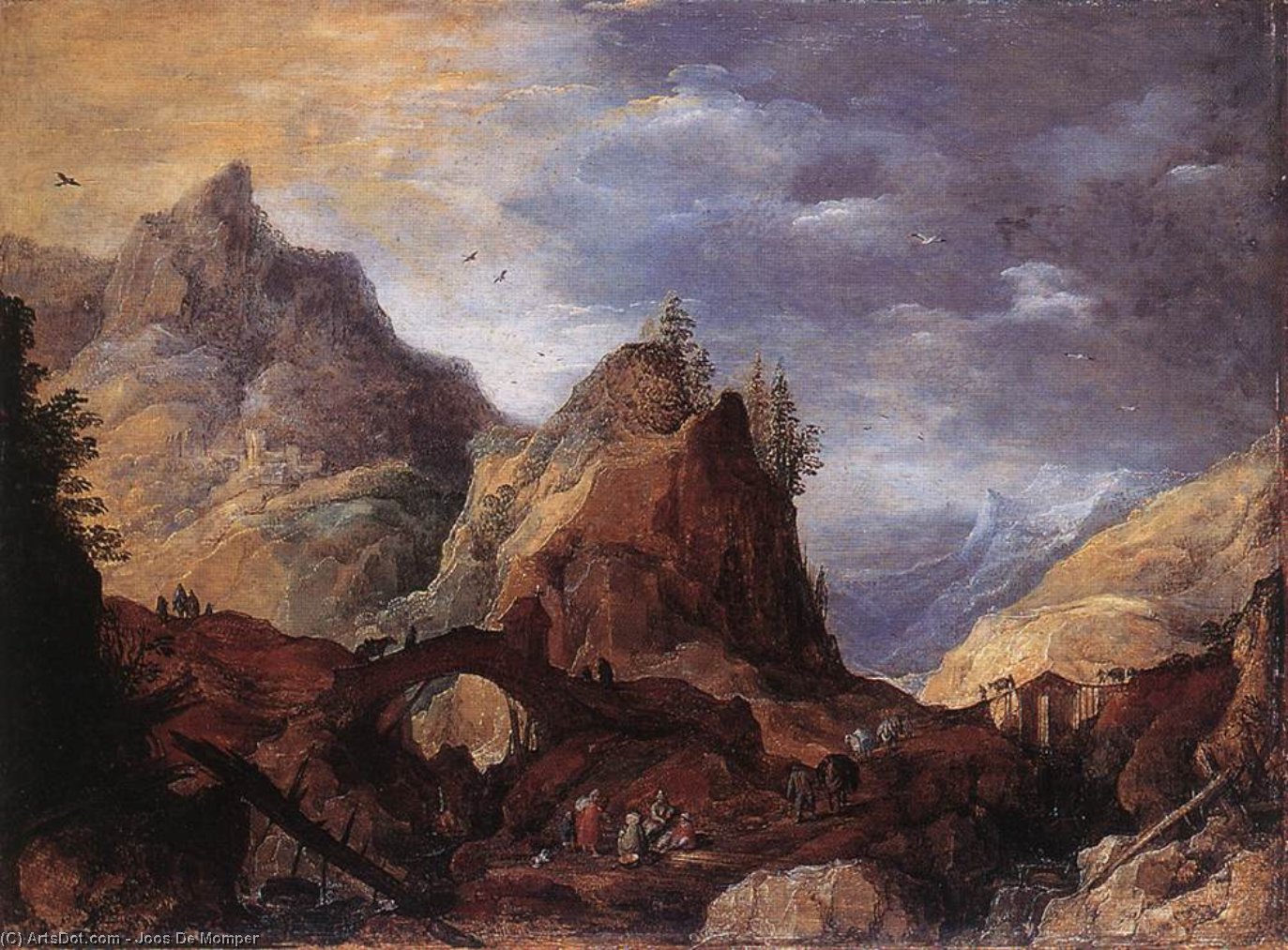
Mountain Scene with Bridges
 Oil On Panel
- Flemish Landscape
 1600
1600 53.0 x 71.0 cm
 Wallraf-Richartz-Museum
 Read More
Purchase a high-resolution, enhanced digital image, far superior to the online preview.
Each file is meticulously prepared by our in-house specialists using advanced tools and expert manual retouching. We ensure every image has exceptional clarity, precise color accuracy, and fine detail.
The final file is delivered via email within 72 hours, optimized for immediate use in professional, editorial, and print environments. This is the same quality trusted by top-tier design studios, publishers, and galleries.
Digital Image
Download a high-resolution file for personal display, printing, and creative projects. ( Buy Print Buy Hand Made Painting)
Included in Every Digital Image Order
Expert Digital Delivery, Guaranteed
When you choose ArtsDot.com, you're not just getting an image - you're receiving a professionally enhanced digital artwork, crafted with precision and backed by a satisfaction guarantee. Here's everything that comes with your order, automatically:

Fast Email Delivery
Your high-resolution digital image file will be emailed to you within 72 hours of ordering - ready for immediate use.

AI-Enhanced Digital File
Your artwork is professionally optimized using advanced AI tools and manual editing, ensuring maximum detail, clarity, and color accuracy.

Free Lifetime Re-Delivery
Accidentally deleted or lost your file? No worries - we'll resend it to you anytime, free of charge.

No Import Fees - Ever
Enjoy your artwork instantly with zero customs, duties, or delivery fees - digital downloads are always tax-free.

Color Accuracy Guarantee
We ensure your digital image reflects the original colors as closely as possible using professional tools and color management.

60-Day Satisfaction Guarantee
If you're not satisfied with your digital image, we'll revise it or refund 100% within 60 days - no questions asked.

100% Money-Back Guarantee
Not satisfied? Get a full refund within 60 days of receiving your digital file - no questions asked.

Bulk Order Discounts
Buy 3 images, save 10% - Buy 5, save 15% - Buy 10+, save 20%. Great for creative projects, galleries, and agencies.
Collectible Description
A Panoramic Vision of Alpine Majesty – Joos de Momper’s “Mountain Scene with Bridges”
Joos de Momper the Younger's "Mountain Scene with Bridges" is not merely a landscape painting; it’s an invitation to step into a vast, meticulously rendered realm of alpine grandeur. Completed around 1600, this oil-on-oak-panel masterpiece resides within the Wallraf–Richartz Museum in Cologne, yet its influence and evocative power extend far beyond the confines of that institution. De Momper, a pivotal figure bridging the late Mannerist and burgeoning Baroque periods in Flemish art, masterfully captures a dramatic mountain vista—a scene brimming with both serene beauty and subtle, almost imperceptible tension. The painting’s immediate impact lies in its sheer scale; it's a panoramic sweep of rugged peaks, crystalline streams, and distant, hazy horizons, creating an illusion of limitless space. The composition is carefully balanced, drawing the eye through a series of receding planes—from the foreground bridges, worn and weathered, to the towering summits that seem to pierce the very heavens.A Masterclass in Atmospheric Perspective and Color
De Momper’s technical skill is immediately apparent in his nuanced approach to atmospheric perspective. He employs a sophisticated layering of color – a gradual shift from warm browns and ochres in the foreground to cooler greens, blues, and violets in the distant mountains—to convincingly simulate depth and distance. This technique, rooted in the principles of linear perspective but imbued with a distinctly Flemish sensibility, is not simply about creating visual accuracy; it’s about evoking a profound sense of atmosphere and mood. The subtle gradations of light and shadow imbue the scene with an almost palpable sense of airiness and vastness. Notice how he uses broken color—small patches of vibrant hue interspersed within larger areas of muted tones—to suggest reflected light on distant surfaces, adding to the illusion of depth and realism. The brushwork itself is remarkably controlled, yet retains a delicate quality that prevents the scene from feeling overly rigid or artificial.Echoes of Bruegel and the Rise of the Flemish Landscape
De Momper’s work stands as a crucial link between the more emotionally charged landscapes of Pieter Brueghel the Elder and the emerging realism of the early 17th century. Like Brueghel, he frequently depicted scenes of human activity within the vastness of nature—in this case, four figures traversing the bridges, suggesting a journey or perhaps a moment of contemplation amidst the grandeur of the mountains. However, unlike Bruegel’s often satirical and overtly dramatic depictions, de Momper's landscapes possess a quieter, more contemplative quality. He was heavily influenced by Joachim Patinir, whose monumental mountain scenes had set the standard for landscape composition in the preceding century. De Momper builds upon this tradition, refining the techniques of perspective and atmospheric rendering to create an image that is both visually stunning and psychologically resonant.Symbolism and Emotional Resonance
Beyond its technical brilliance, “Mountain Scene with Bridges” resonates with a subtle symbolic depth. The mountains themselves—ancient, enduring symbols of strength, stability, and spiritual aspiration—dominate the composition, reminding us of our own smallness in the face of nature’s immensity. The bridges, worn and weathered by time, represent connection – both physical and metaphorical – between different points in space and perhaps even between different realms of experience. The figures traversing these bridges invite us to consider our own journeys through life, our aspirations, and our relationship with the natural world. The overall effect is one of serene contemplation—a reminder of the beauty and power that can be found in the quiet moments of connection with nature. It’s a painting that speaks not just to the eye but also to the soul, inviting viewers to lose themselves in its vastness and contemplate their place within it.A Timeless Masterpiece – Reproductions and Beyond
Reproductions of “Mountain Scene with Bridges” offer an accessible way to experience the profound beauty and technical mastery of this remarkable painting. Whether displayed as a statement piece in a grand salon or incorporated into a more intimate interior space, its panoramic scale and evocative atmosphere will undoubtedly captivate viewers. Consider framing it within a classic wooden frame to further enhance its historical resonance, or exploring options for digitally enhancing the image to create a truly immersive experience. This painting is not merely decoration; it’s an investment in art—a timeless masterpiece that speaks to the enduring power of nature and the human spirit.Related Artworks
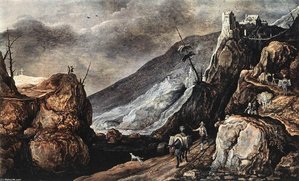
Artist Biography
A Pioneer of the Flemish Landscape: The World of Joos de Momper
Joos de Momper the Younger, a name perhaps less instantly recognizable than those of his contemporaries like Bruegel or Rubens, nevertheless occupies a crucial position in the evolution of Flemish landscape painting. Born in Antwerp in 1564 into an artistic family—his grandfather was also a landscape painter and his father, Bartholomeus de Momper, a painter, print publisher, and art dealer—the younger de Momper inherited not just a lineage but a deep immersion in the visual world. He became a master within the Antwerp Guild of St. Luke remarkably early, at only seventeen years old in 1581, signaling an immediate recognition of his talent. While documented details of his formal training remain somewhat scarce, it’s clear he benefited from the vibrant artistic atmosphere of Antwerp, a city then grappling with religious and political upheaval but still a powerhouse of creative energy.
The assumption that de Momper traveled to Italy in the 1580s, though not definitively proven, speaks volumes about his ambition and the prevailing artistic currents of the time. The influence of Italianate landscapes—particularly those depicting dramatic Alpine scenery—is undeniably present in his work. However, it was Pieter Bruegel the Elder who cast the longest shadow over de Momper’s artistic development. Bruegel's panoramic vistas, populated with bustling figures and imbued with a sense of narrative detail, served as a foundational inspiration. De Momper didn’t merely copy Bruegel; he absorbed his spirit, adapting it to his own vision and forging a style that bridged the gap between the Mannerist conventions of the late 16th century and the burgeoning realism of the 17th.
A Master Collaborator and Prolific Creator
De Momper’s career flourished during a period when landscape painting was gaining increasing prominence, moving beyond its traditional role as a backdrop for religious or historical scenes. He quickly established himself as a sought-after artist, even attracting the attention of Archduchess Isabella Clara Eugenia, the governor of Flanders, who in 1616 petitioned on his behalf for tax exemptions—a testament to his standing and importance. His productivity was astonishing; it’s estimated that around 500 paintings are attributed to him, though relatively few bear his signature or a date. This high output suggests a substantial workshop operation, with assistants contributing to various stages of the painting process.
A defining characteristic of de Momper's practice was collaboration. He frequently partnered with other prominent artists, most notably figure painters like Frans Francken II, Peter Snayers, and both Jan Brueghel the Elder and his son. These collaborations typically involved de Momper creating the expansive landscape—often mountainous and dramatic—while his colleagues populated it with figures engaged in various activities, adding narrative depth and human interest. These joint efforts were not simply a division of labor; they represented a synergistic exchange of skills, resulting in richly detailed and visually compelling compositions that graced the collections of discerning patrons.
Stylistic Evolution and Artistic Legacy
De Momper’s landscapes can be broadly categorized into two distinct types. The first features fantastical vistas viewed from elevated vantage points, employing a Mannerist color scheme—dark browns in the foreground gradually transitioning to greens and blues in the distance. These compositions often evoke a sense of grandeur and otherworldliness. The second type demonstrates a more naturalistic approach, with lower viewpoints, more realistic coloration, and a greater emphasis on atmospheric perspective. Regardless of style, his panoramas are consistently populated with small figures, adding scale and inviting the viewer to explore the depicted world.
While highly regarded during his lifetime, de Momper’s reputation suffered a decline in subsequent centuries. Critics often dismissed his work as formulaic and repetitive, lacking the innovative spirit of artists like those emerging from the Dutch Republic. Some viewed his large-scale landscapes as mere imitations of Joachim Patinir's earlier world landscapes. However, modern scholarship has begun to reassess de Momper’s contribution, recognizing him as a pivotal figure in the development of Flemish landscape painting—a crucial link between Bruegel’s visionary panoramas and the more refined naturalism of later artists. He represents not necessarily an innovator but a masterful interpreter and synthesizer of existing traditions, creating works that continue to captivate with their dramatic beauty and intricate detail.
Beyond the Canvas: Recognition and Influence
De Momper’s influence extended beyond his paintings. He was acknowledged by Karel van Mander in his influential Schilder-boeck (Book of Painters), a key source for understanding 17th-century Flemish art, and his portrait was even engraved by Anthony van Dyck—a rare honor that underscores his status within the artistic community. He also trained several pupils, including Louis de Caullery and his son Philippe de Momper, ensuring the continuation of his artistic legacy. His followers included Frans de Momper and Hercules Seghers, further disseminating his style and techniques.
Today, Joos de Momper’s paintings can be found in museums and private collections around the world, offering a glimpse into the rich visual culture of 17th-century Flanders. His work serves as a reminder that artistic progress is not always about radical innovation but often involves skillful adaptation, collaboration, and a deep understanding of existing traditions. He was a master craftsman who brought to life breathtaking landscapes, inviting viewers to lose themselves in their beauty and contemplate the wonders of the natural world.

Joos de Momper
1564 - 1635 , Belgium
Quick Facts
- Artistic Movement Or Style: Baroque landscape
- Artists Or Movements Influenced By This Artist:
- Frans de Momper
- Hercules Seghers
- Artists Who Influenced This Artist:
- Pieter Bruegel the Elder
- Lodewijk Toeput
- Date Of Birth: 1564
- Date Of Death: 1635
- Full Name: Joos de Momper the Younger
- Nationality: Flemish
- Notable Artworks:
- Village at Full Moon
- Women on the Edge
- Tobias' journey
- Place Of Birth: Antwerp, Belgium

