 Preview
 Send
Send Share
Share
 Details

 Download
 Similars
 X-Ray
X-Ray Diaporama
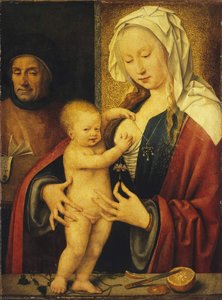
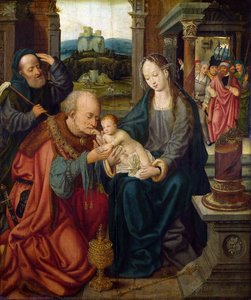
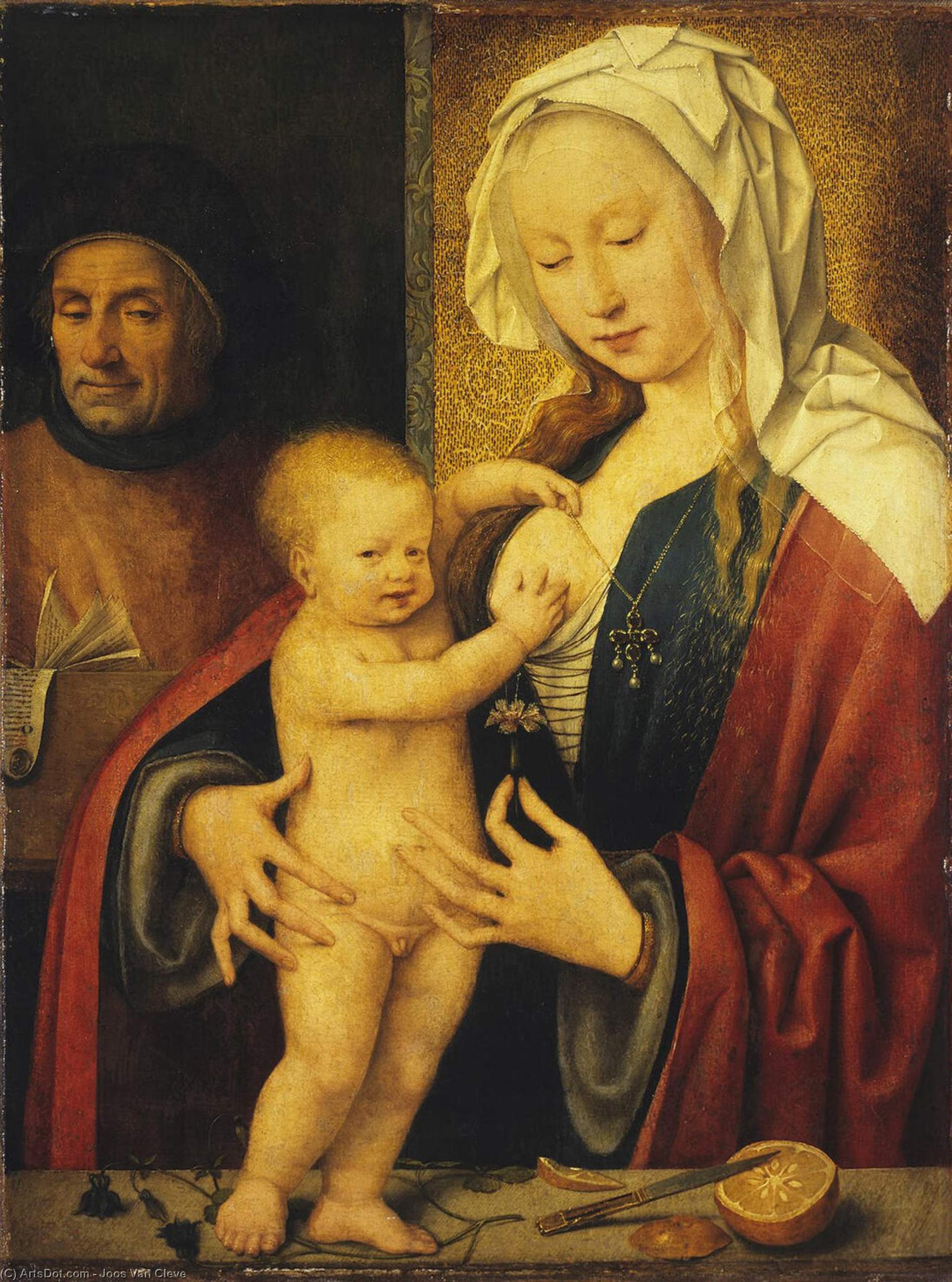
The Holy Family
 Oil On Canvas
- WallArt
- Northern Renaissance
 43.0 x 32.0 cm
 Hermitage Museum
 Read More
Hand Made Oil Reproduction
Hand-painted oil on canvas in your size and frame, made to order by our artists. ( Buy Print Buy Image)




P118B $10

P118H $10

P118W $10

P438Z $10

P508JH $12

P508YH $12

P805H $10

P805Z $10

P919BZ $10

P919G $10

P919XJ $10

P959ZH $10

P968JZ $12

W106C $8

W218G $10

W218JH $8

W218Y $10

W307PJ $10

W316G $10

W316PJ $8

W316Y $10

W398PJ $8

W4111J $10

W500HY $15

W500JH $15

W692G $12

W849H $8

W940BG $15

W953PJ $8




Pick from our preset sizes that match the artwork's original proportions.

You may enter your own dimensions to fit a specific frame or space. If your selected size does not match the original image's proportions, we will either crop the artwork or extend the painting with additional hand-painted elements. A digital mockup will be sent for your approval before production begins.
Please note that the on-screen preview does not reflect the actual cropping or extension. Only the mockup will accurately show the final composition.
While custom sizes are available, we recommend selecting a dimension from the predefined list to preserve the original proportions.
After order, ArtsDot.com team will email client for instructions and provide a mockup preview
Worldwide Delivery () in 3/4 weeks instead of standard 5 weeks. (16 August). No compromise on quality.

Free Worldwide Express Shipping

High-Quality Linen Canvas

Full Shipping Insurance

Customs Tax Refund Guarantee

True Color Matching Guarantee

60-Day Return Policy (Defects Only)

100% Money-Back Guarantee

Bulk Discount Offer
 Glass option is only available in size under 110 CM

The Holy Family
Reproduction Medium
Reproduction Size
-


Total Price
$ 263
Artwork Description
A Window into Northern Renaissance Devotion
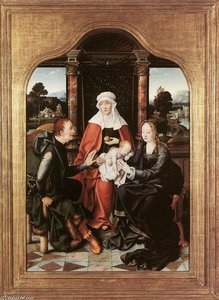
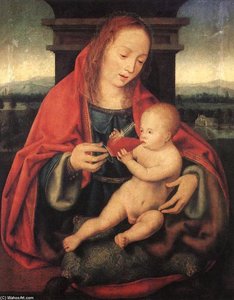
Joos van Cleve’s “The Holy Family,” a captivating oil painting on canvas measuring 43 x 32 cm, isn't merely a depiction of Christ, Mary, and Joseph; it’s a profound meditation on family, faith, and the burgeoning humanist ideals of the Northern Renaissance. Created around 1515-20, this work resides within the hallowed halls of the Hermitage Museum in St. Petersburg, Russia, a testament to its enduring artistic merit and historical significance. Van Cleve, a pivotal figure bridging the gap between late Gothic traditions and the innovations of Italian Renaissance art, masterfully synthesized these influences into a distinctly personal style – one characterized by meticulous detail, luminous light, and an intimate portrayal of familial bonds.
The painting immediately draws the eye to Mary, positioned centrally within the composition. Dressed in a rich crimson robe, a color signifying royalty and divine grace, she embodies maternal tenderness while simultaneously projecting an aura of serene authority. Her gaze is directed towards her infant son, Jesus, who reaches out with a delicate hand, suggesting a nascent connection and a profound love that transcends earthly boundaries. Joseph, standing to Mary’s right, holds a book – a potent symbol of knowledge, scripture, and the role of faith in guiding family life. The dark background, likely representing an interior space, serves not as a distraction but rather to intensify the figures' presence, highlighting their emotional depth and drawing the viewer into this sacred tableau.
The Language of Symbolism
Beyond its aesthetic beauty, “The Holy Family” is rich in symbolic meaning. The golden hair of the infant Jesus, a detail frequently emphasized in Northern Renaissance depictions, speaks to his divine nature and foreshadows his future glory. The carefully rendered details – the folds of Mary’s robe, the texture of Joseph's garment, the subtle expressions on their faces – all contribute to a sense of realism that was revolutionary for its time. The inclusion of elements like the wine and grapes, referencing the Eucharist, subtly reinforces the painting’s religious context and elevates the familial scene into a sacred ritual. The walnut and fruit further add layers of symbolism, often associated with fertility, abundance, and the promise of new life – themes deeply resonant within the context of family.
A Masterclass in Technique
Van Cleve’s technical skill is immediately apparent in his masterful use of oil paint. The application creates a remarkable depth and luminosity, particularly evident in the rendering of Mary's robe and the soft glow surrounding the infant Jesus. The artist’s meticulous attention to detail – from the delicate folds of fabric to the subtle shading on the figures’ faces – demonstrates a deep understanding of anatomy and perspective. This painstaking approach, combined with his ability to capture fleeting expressions of emotion, elevates “The Holy Family” beyond a simple portrait; it becomes a powerful representation of faith, love, and family unity. The painting's dimensions (43 x 32 cm) are perfectly scaled for intimate contemplation, inviting viewers to connect with the scene on a deeply personal level.
Replicas and Legacy
Today, faithful reproductions of “The Holy Family” by Joos van Cleve are available through platforms like ArtsDot.com, offering art enthusiasts the opportunity to own a piece of this iconic Renaissance masterpiece. These meticulously crafted replicas capture the essence of Van Cleve’s original work – its luminous colors, intricate details, and profound symbolism – ensuring that this timeless depiction of the Holy Family continues to inspire and uplift generations to come. The painting's enduring popularity speaks volumes about its ability to resonate with viewers across cultures and time periods, solidifying Joos van Cleve’s place as a true master of Northern Renaissance art.
Related Artworks

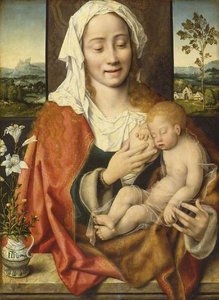
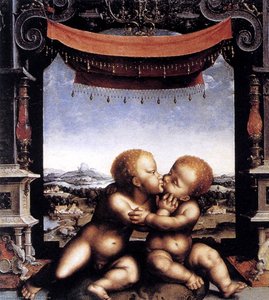
Artist Biography
The Master of Antwerp: The Life and Legacy of Joos van Cleve
In the bustling, mercantile heart of sixteenth-century Antwerp, a new era of visual storytelling was unfolding, driven by the brush of Joos van Cleve. Born around 1485 in Krefeld, Germany, this Flemish Renaissance master emerged not merely as a painter of great skill, but as a visionary bridge between two worlds. His career, which flourished from approximately 1511 until his death in 1540, represents a profound moment in art history where the meticulous, detailed traditions of the Netherlandish masters met the sweeping, atmospheric innovations flowing from the Italian Renaissance. To look upon a work by van Cleve is to witness a delicate dance between the tactile reality of Northern Europe and the idealized grace of the South.
The foundations of his genius were laid during his formative years under the tutelage of Jan Joest. This rigorous apprenticeship provided him with more than just technical proficiency; it immersed him in the monumental traditions of late Gothic art. One of his most significant early experiences involved assisting Joest on the high altar of the Kalkar Nikolaikirche, a project that demanded an understanding of grand scale and spiritual gravity. Through this work, van Clecept mastered the complex alchemy of pigment preparation and the painstaking layering of glazes—techniques that would later allow him to imbue his portraits with a lifelike luminosity and his religious scenes with a palpable sense of divinity.
A Synthesis of Northern Detail and Italian Grace
What truly distinguishes Joos van Cleve from his contemporaries was his restless, experimental spirit. While many artists of the period remained tethered to the rigid stylistic dogmas of their local guilds, van Cleve looked toward the horizon. He became a pioneer of Flemish Mannerism, a style characterized by an exceptional sensitivity to color and a remarkable unity of figures within a composition. Perhaps his most enduring contribution to the Northern Renaissance was his revolutionary use of landscape. Rather than utilizing static or symbolic backdrops, he introduced expansive, atmospheric vistas that breathed life into his subjects, creating a sense of depth and continuity between the human figure and the natural world.
This stylistic evolution was deeply influenced by the burgeoning trends in Italy. By integrating elements of Italianate perspective and a more fluid, rhythmic approach to anatomy, he transformed the traditional Flemish portrait into something far more psychologically complex. His subjects were no longer mere icons of status; they possessed an inner life, an emotional resonance that invited the viewer into a silent dialogue. This ability to convey profound human emotion through subtle facial expressions and delicate hand gestures remains one of his most celebrated achievements.
Historical Significance and Artistic Triumph
The legacy of Joos van Cleve is etched into the very fabric of Antwerp’s golden age. As a central figure in the city's artistic community, his workshop became a beacon of innovation, influencing generations of painters who followed. His ability to blend the following elements ensured his lasting impact on the history of European art:
- Technical Mastery: The seamless application of Netherlandish glazing techniques to achieve unparalleled texture and light.
- Compositional Innovation: The integration of vast, panoramic landscapes that expanded the narrative scope of religious and secular painting.
- Psychological Depth: A shift from purely symbolic representation toward a more humanistic, emotive portrayal of his subjects.
- Cultural Synthesis: The successful marriage of Northern European precision with the grace and movement of the Italian Renaissance.
Though his life ended in 1540, the echoes of his artistry continue to resonate. Joos van Cleve did not simply follow the trends of his time; he helped define them, leaving behind a body of work that serves as a testament to the transformative power of artistic synthesis. His paintings remain enduring windows into a period of immense cultural transition, capturing the moment when the medieval world began to dissolve into the light of the modern era.
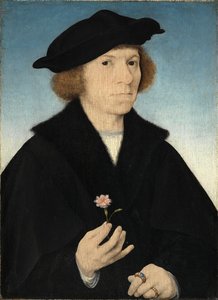
Joos van Cleve
1485 - 1540 , Germany
Quick Facts
- Artistic Movement Or Style: Renaissance Mannerism
- Artists Or Movements Influenced By This Artist: Italian Renaissance
- Artists Who Influenced This Artist: Jan Joest
- Date Of Birth: c. 1485
- Date Of Death: 1540
- Full Name: Joos van Cleve
- Nationality: Flemish
- Notable Artworks:
- The Adoration of the Magi - Left Wing
- The Holy Family
- Portrait of Henry VIII
- Place Of Birth: Krefeld, Germany
Related Articles
Van Gogh's Masterpieces: Explore 25 Iconic Paintings & Art for Your Home
Journey through Vincent van Gogh's 25 most iconic paintings! Explore 'Starry Night', 'Sunflowers,' and more—discover the stories, techniques & emotions behind these Post-Impressionist masterpieces. Find museum-quality art reproductions for your home at ArtsDot.com.

Rembrandt's Masterpieces: Explore 25 Iconic Paintings & Prints | ArtsDot
Journey through Rembrandt van Rijn's 25 most iconic paintings & etchings. Explore Dutch Golden Age masterpieces, dramatic chiaroscuro, and timeless portraits. Find museum-quality art reproductions to elevate your home decor on ArtsDot.com.

Early Netherlandish Masters: 10 Paintings That Revolutionized Art & Decor
Journey into the world of Early Netherlandish painting! Explore 10 masterpieces by Jan van Eyck, Rogier van der Weyden & more. Discover stunning detail, symbolism & Renaissance art for your home decor. Find museum-quality reproductions on ArtsDot.com

Oil on Canvas: A Historical & Technical Exploration of a Timeless Artistic Medium
Explore the rich history & enduring techniques of oil painting on canvas. Discover the science behind its longevity, conservation practices, and contemporary relevance. Expert insights for art enthusiasts.
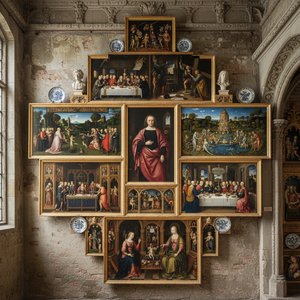
Early Netherlandish Masters: 10 Paintings That Revolutionized Art & Decor
Journey into the Early Netherlandish Renaissance! Explore 10 iconic paintings by Jan van Eyck, Rogier van der Weyden & more. Discover stunning detail, symbolism, and oil painting techniques. Find museum-quality art reproductions for your home at ArtsDot.com.