 Preview
 Send
Send Share
Share
 Details

 Download
 Similars
 X-Ray
X-Ray Diaporama
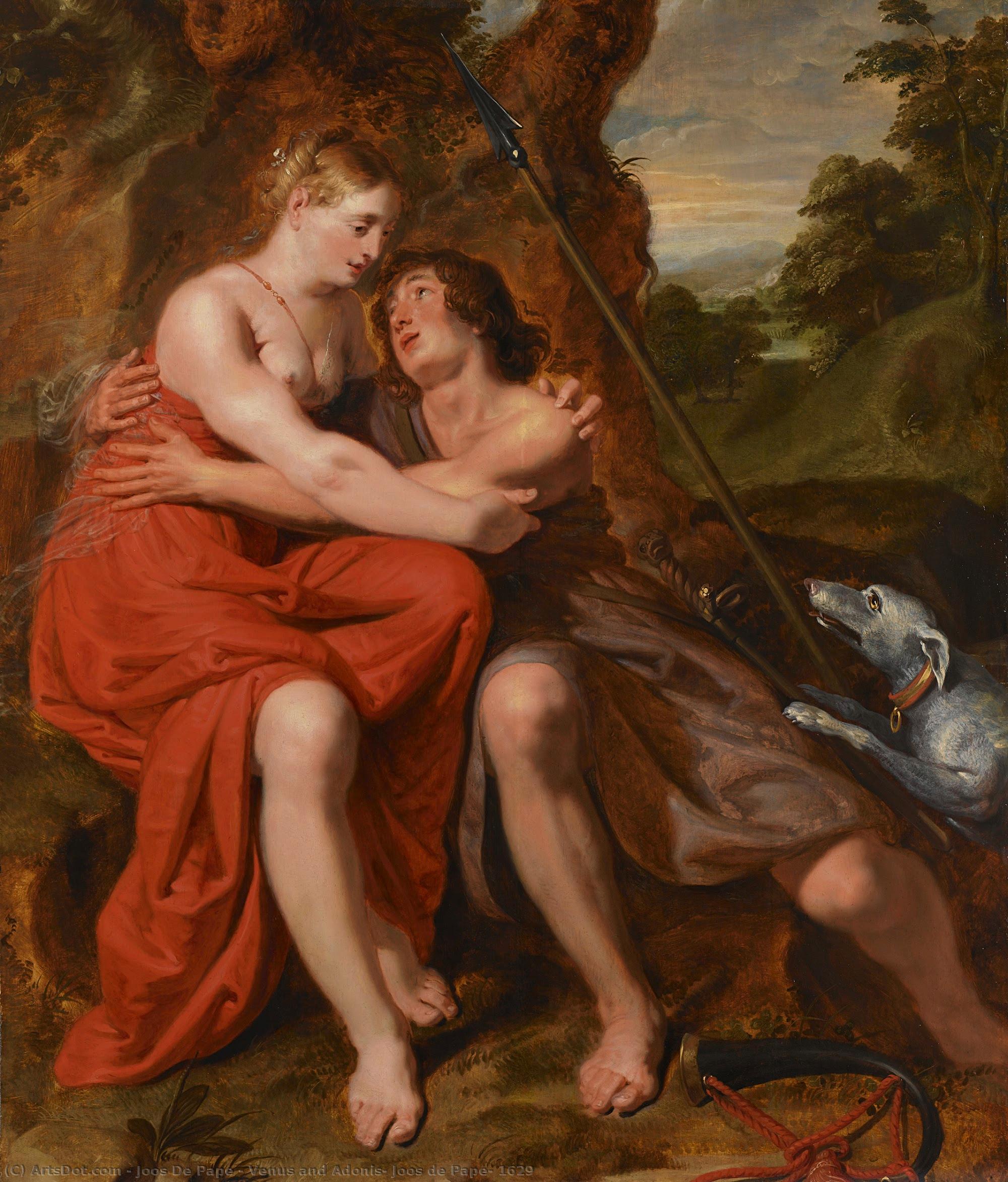
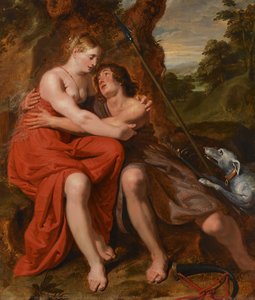
Venus and Adonis, Joos de Pape, 1629
 1629
1629 123.0 x 105.0 cm
 Read More
Hand Made Oil Reproduction
Hand-painted oil on canvas in your size and frame, made to order by our artists. ( Buy Print Buy Image)




































Pick from our preset sizes that match the artwork's original proportions.

You may enter your own dimensions to fit a specific frame or space. If your selected size does not match the original image's proportions, we will either crop the artwork or extend the painting with additional hand-painted elements. A digital mockup will be sent for your approval before production begins.
Please note that the on-screen preview does not reflect the actual cropping or extension. Only the mockup will accurately show the final composition.
While custom sizes are available, we recommend selecting a dimension from the predefined list to preserve the original proportions.
After order, ArtsDot.com team will email client for instructions and provide a mockup preview
Worldwide Delivery () in 3/4 weeks instead of standard 5 weeks. (28 August). No compromise on quality.

Free Worldwide Express Shipping

High-Quality Linen Canvas

Full Shipping Insurance

Customs Tax Refund Guarantee

True Color Matching Guarantee

60-Day Return Policy (Defects Only)

100% Money-Back Guarantee

Bulk Discount Offer
 Glass option is only available in size under 110 CM

Venus and Adonis, Joos de Pape, 1629
Reproduction Medium
Reproduction Size
-


Total Price
$ 263
Related Artworks





Artist Biography
A Flemish Master of the Baroque Era
The short but luminous career of Joost de Pape (1618–1646) offers a captivating glimpse into the heart of the Flemish Baroque movement. Born in Oudenarde, Belgium, De Pape emerged from the vibrant artistic ecosystem of Antwerp, a city that served as a crucible for some of the most profound innovations in European art. His journey began in the prestigious Antwerp Guild of Saint Luke, where he was registered as an apprentice as early as 1618/19. This rigorous training within the guild system provided him with a foundation of classical ideals and technical precision that would define his later works. Though his life was tragically brief, spanning only twenty-eight years, De Pape managed to leave an indelible mark on the tradition of Flemish painting through his ability to weave together mythological grandeur and dramatic narrative.
The artistic identity of De Pape was shaped by the powerful stylistic currents flowing through the Low Countries during the seventeenth century. While much of his early life remains shrouded in mystery, his brushwork reveals a profound dialogue with the masters of his age. His manner of painting bears the unmistakable influence of Peter Paul Rubens, whose monumental compositions and energetic vitality set the standard for the Baroque era. Furthermore, the stylistic nuances of Gaspar de Crayer appear to have informed his approach to form and light. This synthesis of influences allowed De Pape to master a style that was both deeply rooted in tradition and vibrantly alive with the tension and movement characteristic of the Caravaggisti influence.
Mythology, Emotion, and Technical Mastery
De Pape’s oeuvre is most celebrated for its evocative depictions of religious and mythological subjects, where he sought to capture the psychological depth of his protagonists. His most significant surviving achievement, the painting ‘Venus and Adonis’ (1629), serves as a profound testament to his technical skill. In this work, De Pape draws upon the rich literary traditions of Ovid’s Metamorphoses to present a scene of both tenderness and impending tragedy. Through a masterful command of color palettes and meticulous attention to detail, he transforms a classical legend into a palpable human drama. The composition is not merely a retelling of myth but an exploration of emotion, utilizing the interplay of light and shadow to heighten the sense of grandeur.
Beyond his canvases, De Pape demonstrated remarkable versatility as a draughtsman and engraver. His ability to translate complex narratives into the precise medium of printmaking highlights a technical proficiency that was rare for an artist of such a young age. In his engravings, one can observe:
- A commitment to intricate detail that mirrors the complexity of his paintings.
- An ability to utilize line and tone to create depth and atmospheric perspective.
- A deep understanding of classical iconography, allowing him to communicate complex stories through visual shorthand.
Legacy within the Flemish Tradition
Though Joost de Pape’s life was cut short before he could reach the zenith of his potential, his contribution to the Flemish Baroque movement remains significant. He represents a vital link in the chain of artistic innovation that connected the heavy, muscular style of Rubens with the more refined and dramatic sensibilities of the mid-seventeenth century. His work embodies the era's obsession with dynamism—the idea that art should not merely represent a moment in time but capture the very essence of movement and transformation. By infusing mythological subjects with such palpable psychological depth, De Pape helped solidify the role of the artist as a storyteller capable of bridging the gap between the divine and the human experience.
Today, the study of De Pape’s work allows historians to better understand the interconnectedness of the Antwerp school. His ability to draw inspiration from contemporary prints, such as those by Antonio Tempesta, and to reinterpret them through a uniquely Flemish lens, showcases the collaborative and evolutionary nature of Baroque art. His legacy survives in the enduring power of his imagery, reminding us of a period when the brush was used to navigate the delicate boundaries between myth, reality, and the eternal.
joost de pape
1646 , Belgium
Quick Facts
- Artistic Movement Or Style: Baroque and Caravaggisti
- Artists Or Movements Influenced By This Artist: ['David Teniers II']
- Artists Who Influenced This Artist: ['Caravaggio']
- Date Of Birth: Oudenarde, Belgium ()
- Date Of Death: 1646
- Full Name: Joost de Pape
- Nationality: Flemish
- Notable Artworks: ['Venus and Adonis']
- Place Of Birth: Belgium