 Preview
 Send
Send Share
Share
 Details

 Download
 Similars
 X-Ray
X-Ray Diaporama
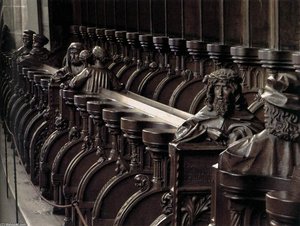
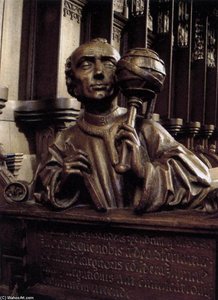
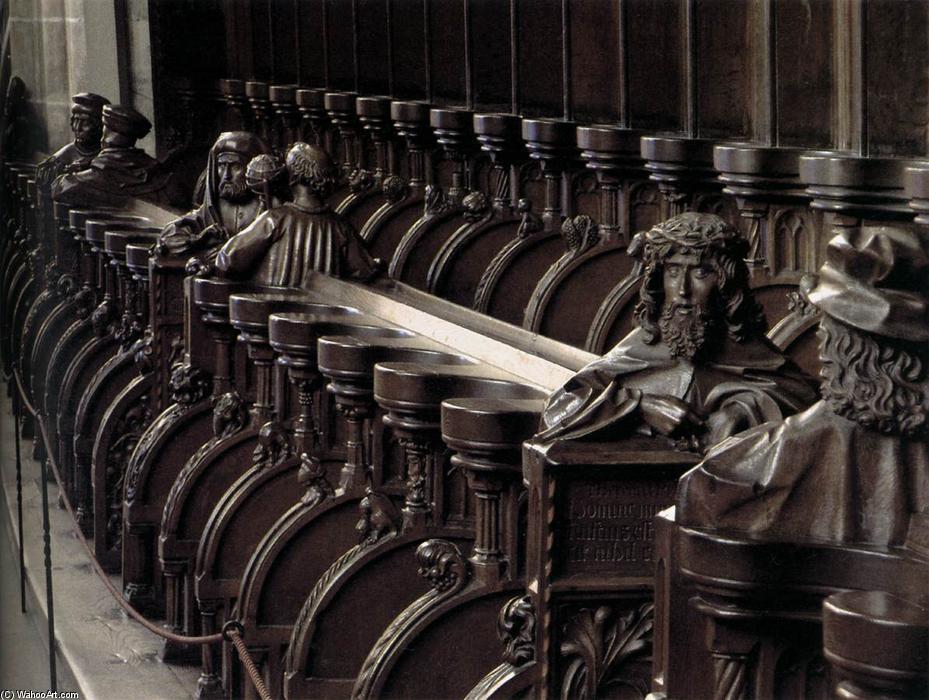
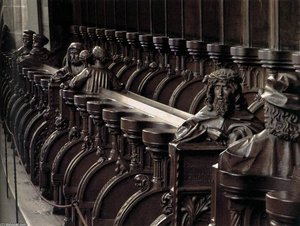
Choir stalls


 Read More
Hand Made Oil Reproduction
Hand-painted oil on canvas in your size and frame, made to order by our artists. ( Buy Print Buy Image)




































Pick from our preset sizes that match the artwork's original proportions.

You may enter your own dimensions to fit a specific frame or space. If your selected size does not match the original image's proportions, we will either crop the artwork or extend the painting with additional hand-painted elements. A digital mockup will be sent for your approval before production begins.
Please note that the on-screen preview does not reflect the actual cropping or extension. Only the mockup will accurately show the final composition.
While custom sizes are available, we recommend selecting a dimension from the predefined list to preserve the original proportions.
After order, ArtsDot.com team will email client for instructions and provide a mockup preview
Worldwide Delivery () in 3/4 weeks instead of standard 5 weeks. (5 September). No compromise on quality.

Free Worldwide Express Shipping

High-Quality Linen Canvas

Full Shipping Insurance

Customs Tax Refund Guarantee

True Color Matching Guarantee

60-Day Return Policy (Defects Only)

100% Money-Back Guarantee

Bulk Discount Offer
 Glass option is only available in size under 110 CM

Choir stalls
Reproduction Medium
Reproduction Size
-


Total Price
$ 263
Related Artworks







Artist Biography
The Master of Ulm: The Life and Legacy of Jörg Syrlin the Elder
In the heart of the German Renaissance, amidst the bustling workshops of Ulm, a master was shaping the very fabric of spiritual expression through wood and stone. Jörg Syrlin the Elder, born around 1425, emerged not merely as a craftsman but as a visionary sculptor whose hands breathed life into the sacred narratives of his era. His journey began within the disciplined traditions of Ulm’s woodworking guild, an apprenticeship forged alongside his father and brother. This early immersion in the tactile realities of timber and grain instilled in him a profound understanding of material properties—a meticulous attention to detail that would later allow him to push the boundaries of what could be achieved with a chisel and mallet.
Syrlin’s artistry was characterized by a remarkable ability to bridge two worlds: the intricate, soaring elegance of the late Gothic style and the burgeoning humanism of the Renaissance. While his roots remained firmly planted in the local traditions of Swabia, his creative spirit reached toward the innovations of Italy. He drew significant inspiration from the Florentine masters, most notably Lorenzo Ghiberti, whose revolutionary work on the Baptistery doors in Florence offered a blueprint for integrating realistic anatomical depth with narrative complexity. By blending these emerging Renaissance principles—such as subtle modeling and expressive dynamism—with the traditional Gothic emphasis on intricate drapery and spiritual intensity, Syrlin developed a signature style that felt both timeless and strikingly modern for the 15th century.
A Monumental Achievement: The Ulm Minster Choir Stalls
The zenith of Syrlin’s career, and perhaps one of the greatest triumphs of German sculpture, is found within the Ulm Minster. Commissioned in 1469 by Bishop Georg Gemboldt, the choir stalls represent a breathtaking synthesis of technical mastery and theological depth. These are not merely seats for clergy; they are a sprawling, carved epic. Each panel serves as a window into the biblical world, where figures emerge from the dark wood with an unparalleled realism. The way Syrlin manipulated light and shadow through deep, complex folds in drapery and the subtle, lifelike modeling of facial expressions creates a sense of movement that captivates the viewer.
The significance of these stalls lies in their ability to communicate the divine through the earthly. Through his work, the heavy, static nature of traditional woodcarving was transformed into something fluid and emotive. This achievement cemented Syrlin's reputation as a leader of the Ulm School, a movement that would continue to flourish under his influence. His workshop became a beacon of excellence, producing works that were sought after by ecclesiastical patrons across Bavaria and Württemberg, ranging from monumental altarpieances to solemn tomb sculptures.
Legacy and the Continuation of a Dynasty
The historical significance of Jörg Syrlin the Elder extends far beyond his individual lifetime. He did more than create art; he established a lineage of excellence. Upon his passing in 1491, the mantle of leadership fell to his son, Jörg Syrlin the Younger, who ensured that the workshop’s high standards and innovative spirit endured into the next century. This continuity allowed the Ulm school to remain a vital force in German art, maintaining a standard of craftsmanship that balanced local piety with international sophistication.
Today, when we look upon the remnants of Syrlin's work, we see more than just historical artifacts; we witness the dawn of a new era in European art. His ability to harmonize the spiritual weight of the Middle Ages with the human-centric focus of the Renaissance remains a profound testament to his genius. Through his hands, the wood of Ulm was transformed into a lasting legacy of faith, beauty, and human emotion.
jörg the elder syrlin
1425 - 1491 , Germany
Quick Facts
- Artistic Movement Or Style: Ulm School
- Artists Or Movements Influenced By This Artist: ['Blaubeuren Altarpiece']
- Artists Who Influenced This Artist: ['Ptolemy']
- Date Of Birth: 1425
- Full Name: Jörg Syrlin
- Nationality: German
- Notable Artworks: ['Choir Stalls of Ulm Minster']
- Place Of Birth: Ulm, Germany