 Preview
 Send
Send Share
Share
 Details

 Download
 Similars
 X-Ray
X-Ray Diaporama
 Stats
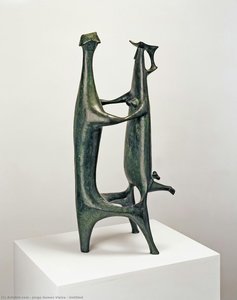
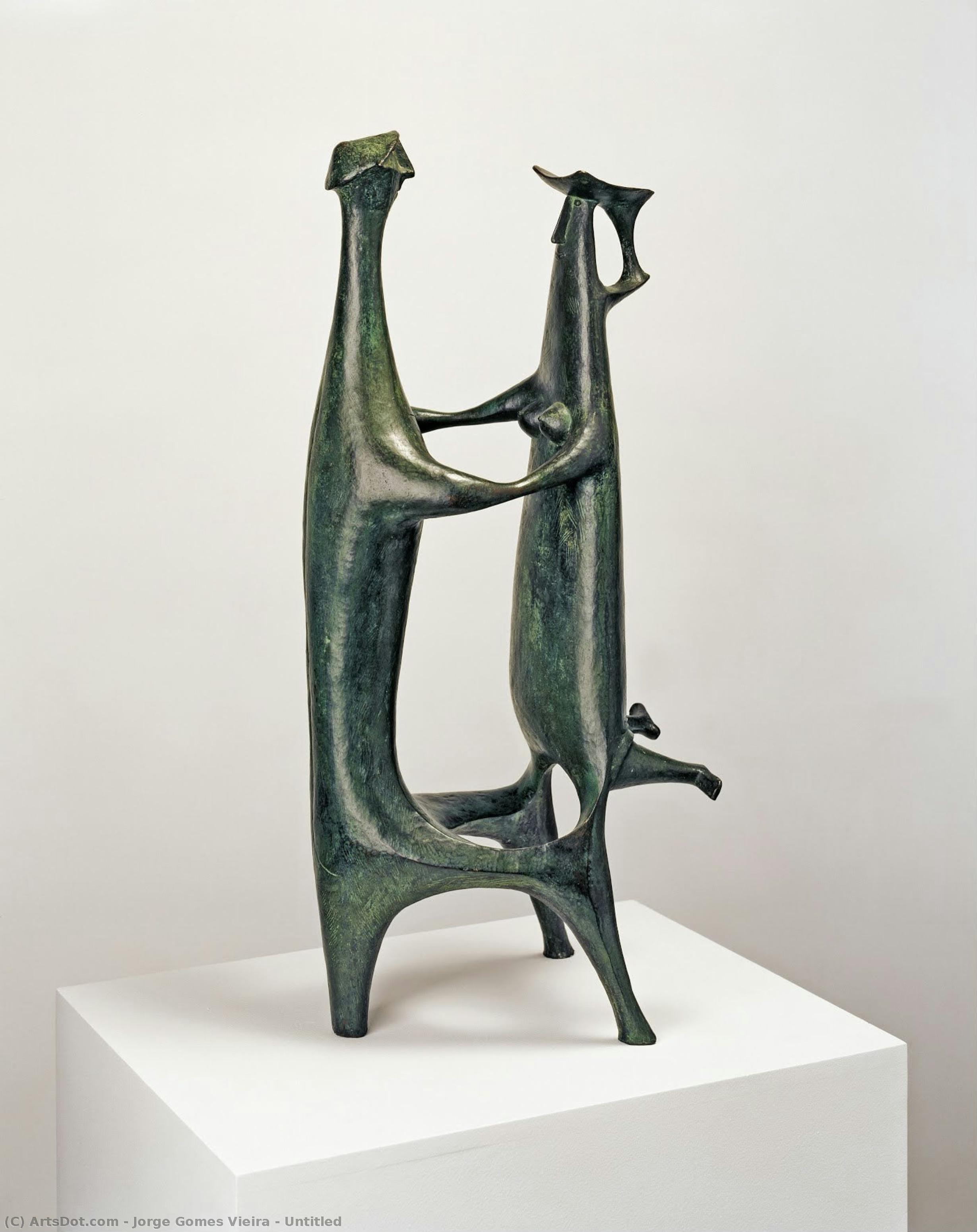
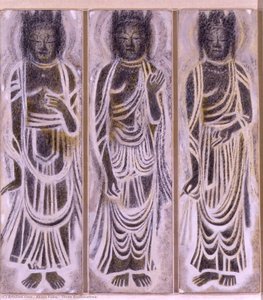
StatsUntitled
 1955
1955 84.0 x 38.0 cm
 Culturgest - Fundação Caixa Geral de Depósitos
 Read More
Hand Made Oil Reproduction
Hand-painted oil on canvas in your size and frame, made to order by our artists. ( Switch to Print Switch to Digital Image)




































Pick from our preset sizes that match the artwork's original proportions.

You may enter your own dimensions to fit a specific frame or space. If your selected size does not match the original image's proportions, we will either crop the artwork or extend the painting with additional hand-painted elements. A digital mockup will be sent for your approval before production begins.
Please note that the on-screen preview does not reflect the actual cropping or extension. Only the mockup will accurately show the final composition.
While custom sizes are available, we recommend selecting a dimension from the predefined list to preserve the original proportions.
After order, ArtsDot.com team will email client for instructions and provide a mockup preview
Worldwide Delivery () in 3/4 weeks instead of standard 5 weeks. (12 September). No compromise on quality.

Free Worldwide Express Shipping

High-Quality Linen Canvas

Full Shipping Insurance

Customs Tax Refund Guarantee

True Color Matching Guarantee

100-Day Return Policy (Defects Only)

100% Money-Back Guarantee

Bulk Discount Offer
 Glass option is only available in size under 110 CM

Untitled
Reproduction Medium
Reproduction Size
-


Total Price
$ 263
Related Artworks







Artist Biography
The Sculptor of Light and Memory
Jorge Gomes Vieira, a name synonymous with the evolution of Portuguese modernism, emerged as a transformative force in mid-century sculpture. Born in Lisbon on November 18, 1922, his artistic journey was rooted in a profound understanding of structure and space, shaped by early architectural studies at Lisbon University. This foundational knowledge of volume and proportion would later become the bedrock of his sculptural language. His formal training continued at the prestigious Escola de Belas Artes, where he honed his technical mastery over materials. However, it was his move to London in 1954 to study at the Slade School of Fine Art that truly expanded his horizons. Immersed in an international dialogue alongside luminaries such as Henry Moore, Vieira began to synthesize a vision that bridged the gap between classical form and the burgeoning abstractions of the twentieth century.
The evolution of Vieira’s work is a captivating study of metamorphosis. In the late 1940s, he stood at the vanguard of a movement, often recognized as perhaps the first Portuguese abstract sculptor. His early career was marked by a rigorous exploration of geometric purity, utilizing spheres and cubes to evoke deep emotional resonance through simplicity. As his practice matured through the 1950s, a remarkable shift occurred; his sculptures began to shed their traditional pedestals, descending to touch the ground and interact directly with the earth. This period saw the birth of what critics have called "delicate bodies"—reticulated, almost human structures that seemed to breathe within their environments. These works, often cast in bronze or carved from stone, possessed a fluid, organic quality that suggested a state of constant becoming, where metal and mineral appeared to morph into living, embracing forms.
A Legacy Carved in Bronze and Stone
Vieira’s artistic philosophy was deeply intertwined with the principles of Surrealism, finding beauty in the exploration of the subconscious and the dreamlike. He possessed a unique ability to manipulate materials like terracotta, bronze, and stone to capture both primal energy and a sense of contemplative stillness. His work often functioned as an affective map of urban space, creating landmarks that resonated with the collective memory of Lisbon. One might recall his presence in the streets of Rua Braamcamp, where his sculptures acted as silent sentinels, or his monumental contribution to Expo’98 with the Homem-sol, a giant figure designed to guard and welcome those seeking shade within the city's embrace.
The significance of Jorge Vieira’s contribution to the art world is cemented by both his critical acclaim and his enduring influence on Portuguese sculpture. His career was punctuated by prestigious recognitions, most notably receiving the First Prize for Sculpture at the II Exposição de artes plásticas by the Fundação Calouste Gulbenkian in 1961. Beyond his individual accolades, his legacy lives on through the preservation of his extensive archive, which includes sketches, manuscripts, and models that offer a window into his creative process. His work remains a vital touchstone for understanding the transition from traditional figuration to the abstract, humanistic modernism that defined an era.
To reflect on the breadth of his impact, one can look at the core elements of his artistic identity:
- Materiality and Texture: A masterful use of bronze, stone, and terracotta to create tactile contrasts.
- Geometric Abstraction: The use of fundamental shapes to communicate complex emotional truths.
- Urban Integration: Creating sculptures that inhabit and transform public spaces into sites of memory.
- Humanistic Form: The transition from rigid geometry to delicate, reticulated bodies that mirror human anatomy.

jorge gomes vieira
1922 - 1998 , Portugal
Quick Facts
- Artistic Movement Or Style: Minimalist & Abstract Stone Art
- Artists Or Movements Influenced By This Artist: ['Cubism']
- Artists Who Influenced This Artist: ['Henry Moore']
- Date Of Birth: November 18, 1922
- Date Of Death: July 24, 1998
- Full Name: Jorge Gomes Vieira
- Nationality: Portuguese
- Notable Artworks: ['Untitled']
- Place Of Birth: Lisbon, Portugal