

![Proportions Of The Most Essential Measurements [...] For The Building Of Ships And Warships — José Antonio De Gaztañeta E Iturribalzaga](/media/artworks/images-full/a0/40/a040c7968ba7c22b7d18ea2c2c40b23e.jpg)
 Preview
 Send
Send Share
Share
 Details

 Download
 Similars
 X-Ray
X-Ray Diaporama
Proportions of the Most Essential Measurements [...] for the Building of Ships and Warships

 Read More
Giclée / Art Print
Museum-quality giclée or canvas print with fast production and flexible finish options. ( Buy Hand Made Painting Buy Image)




































Pick from our preset sizes that match the artwork's original proportions.

You may enter your own dimensions to fit a specific frame or space. If your selected size does not match the original image's proportions, we will either crop the artwork or extend the image with a mirrored or solid-fill edge. A digital mockup will be sent for your approval before production begins.
Please note that the on-screen preview does not reflect the actual cropping or extension. Only the mockup will accurately show the final composition.
While custom sizes are available, we recommend selecting a dimension from the predefined list to preserve the original proportions.
Worldwide Delivery () in 2 weeks instead of standard 4/5 weeks. (6 September)

Free Worldwide Express Shipping

High-Quality Linen Canvas

Full Shipping Insurance

Customs Tax Refund Guarantee

True Color Matching Guarantee

100-Day Return Policy (Defects Only)

100% Money-Back Guarantee

Bulk Discount Offer
 Glass option is only available in size under 110 CM

Proportions of the Most Essential Measurements [...] for the Building of Ships and Warships
Giclée / Art Print
Reproduction Size
-


Total Price
$ 63
Related Artworks







Artist Biography
The Architect of the Waves: The Legacy of José Antonio de Gaztañeta
In the annals of maritime history, few names resonate with the same transformative power as José Antonio de Gaztañeta e Iturribalzaga. Born in the rugged coastal town of Mutriku, Gipuzkoa, around 1656, Gaztañeta was a man whose destiny was inextricably linked to the salt and spray of the Atlantic. As the son of a Basque sailor who braved the treacherous routes to the Americas, his childhood was not one of quiet study in ivory towers, but of practical lessons learned amidst the creaking timber and billowing sails of great vessels. By the tender age of twelve, he had already begun to understand the profound language of the sea, an education that would eventually allow him to translate the abstract principles of mathematics into the physical reality of invincible warships.
Gazta tañeta’s journey was a rare fusion of the scientific mind and the seafaring soul. While many of his contemporaries relied on tradition and ancestral intuition to guide their shipwrights, Gaztañeta sought a more rigorous truth. He possessed a brilliant command of mathematics and architecture, disciplines that allowed him to approach naval construction with an unprecedented level of precision. His early years were marked by a relentless pursuit of structural integrity, applying the foundational laws of physics—most notably Archimedes' principle—to the very hulls of the Spanish fleet. This methodical approach was not merely about building stronger ships; it was about reimagining the vessel as a masterpiece of engineering, where every curve and measurement served a calculated purpose in navigating the unpredictable currents of the global oceans.
A Visionary of Naval Engineering
The true brilliance of Gaztañeta emerged through his ability to codify innovation. In 1688, he published his seminal treatise, “Arte de fabricar reales,” a work that served as both a manual and a manifesto for the modern age of shipbuilding. Within its pages, he documented the meticulous proportions and essential measurements required to construct warships that were not only formidable in battle but superior in performance. He championed the use of scientific calculations to optimize hull design, a revolutionary step that moved Spanish naval architecture away from trial-and-error toward a standardized, predictable excellence. His influence was felt far beyond the drafting tables; he spearheaded the reorganization of naval administration, establishing academies to ensure that the next generation of officers and engineers were steeped in these same rigorous standards.
However, his life was not without its moments of profound tragedy and testing. During the War of the Quadruple Alliance, Gaztañeta commanded the Spanish Mediterranean fleet at the Battle of Cape Passaro in 1718. The encounter against the British Royal Navy was a devastating defeat that left the Spanish maritime prestige in tatters. Yet, it is precisely here that his historical significance reaches its zenith. Rather than retreating into obsolescence, Gaztañeta used the wreckage of defeat as the foundation for renewal. He recognized that the vulnerabilities exposed at Cape Passaro were symptoms of an outdated system, and he dedicated the remainder of his career to a comprehensive reconstruction of the Spanish Navy’s technical and administrative fabric.
The Lasting Impression of a Maritime Reformer
The historical significance of José Antonio de Gaztañeta lies in his role as the architect of a naval renaissance. His work ensured that the Spanish Navy could emerge from the shadows of the early 18th century with renewed strength and modernized capabilities. Through his leadership in shipyards across the Basque Country—including Amorebieta, Pasajes, and Orio—he implemented standardized designs that became the hallmark of Spanish maritime power. His ability to guide fleets through even the most daunting challenges, such as the British blockade of Porto Bello in Panama, stands as a testament to his tactical brilliance and his unwavering commitment to the security of his nation's waters.
To look upon the history of naval architecture is to see the fingerprints of Gaztañeta on every well-calculated hull and every scientifically optimized sail. He remains a towering figure whose life bridged the gap between the ancient traditions of the sea and the burgeoning scientific revolution. His legacy is not found in mere monuments of stone, but in the enduring strength of the vessels that once carried the Spanish flag across the world's most turbulent oceans, built upon the mathematical certainty and engineering foresight of a man who truly understood the soul of the ship.
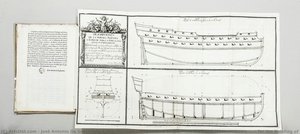
josé antonio de gaztañeta e iturribalzaga
1656 - 1728 , Spain
Quick Facts
- Artistic Movement Or Style: Shipbuilding Innovation
- Date Of Death: 1728
- Full Name: José Antonio de Gaztañeta e Iturribalzaga
- Nationality: Spanish
- Notable Artworks: ['Proportions of the Most Essential Measurements [...] for the Building of Ships and Warships']
- Place Of Birth: Spain
![Proportions of the Most Essential Measurements [...] for the Building of Ships and Warships](/media/artworks/images-thumb/65/e1/65e13a809dab82a0f1472e837b7ad500.jpg)