 Send
Send Share
Share
 Details

 Download
 Similars
 Diaporama
Slave men


 Read More
Hand Made Oil Reproduction
Hand-painted oil on canvas in your size and frame, made to order by our artists. ( Buy Print Buy Image)




































Pick from our preset sizes that match the artwork's original proportions.

You may enter your own dimensions to fit a specific frame or space. If your selected size does not match the original image's proportions, we will either crop the artwork or extend the painting with additional hand-painted elements. A digital mockup will be sent for your approval before production begins.
Please note that the on-screen preview does not reflect the actual cropping or extension. Only the mockup will accurately show the final composition.
While custom sizes are available, we recommend selecting a dimension from the predefined list to preserve the original proportions.
After order, ArtsDot.com team will email client for instructions and provide a mockup preview
Worldwide Delivery () in 3/4 weeks instead of standard 5 weeks. (17 August). No compromise on quality.

Free Worldwide Express Shipping

High-Quality Linen Canvas

Full Shipping Insurance

Customs Tax Refund Guarantee

True Color Matching Guarantee

60-Day Return Policy (Defects Only)

100% Money-Back Guarantee

Bulk Discount Offer
 Glass option is only available in size under 110 CM

Slave men
Reproduction Medium
Reproduction Size
-


Total Price
$ 263
Artwork Description
A Glimpse Through the Veils of Time
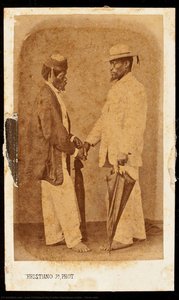
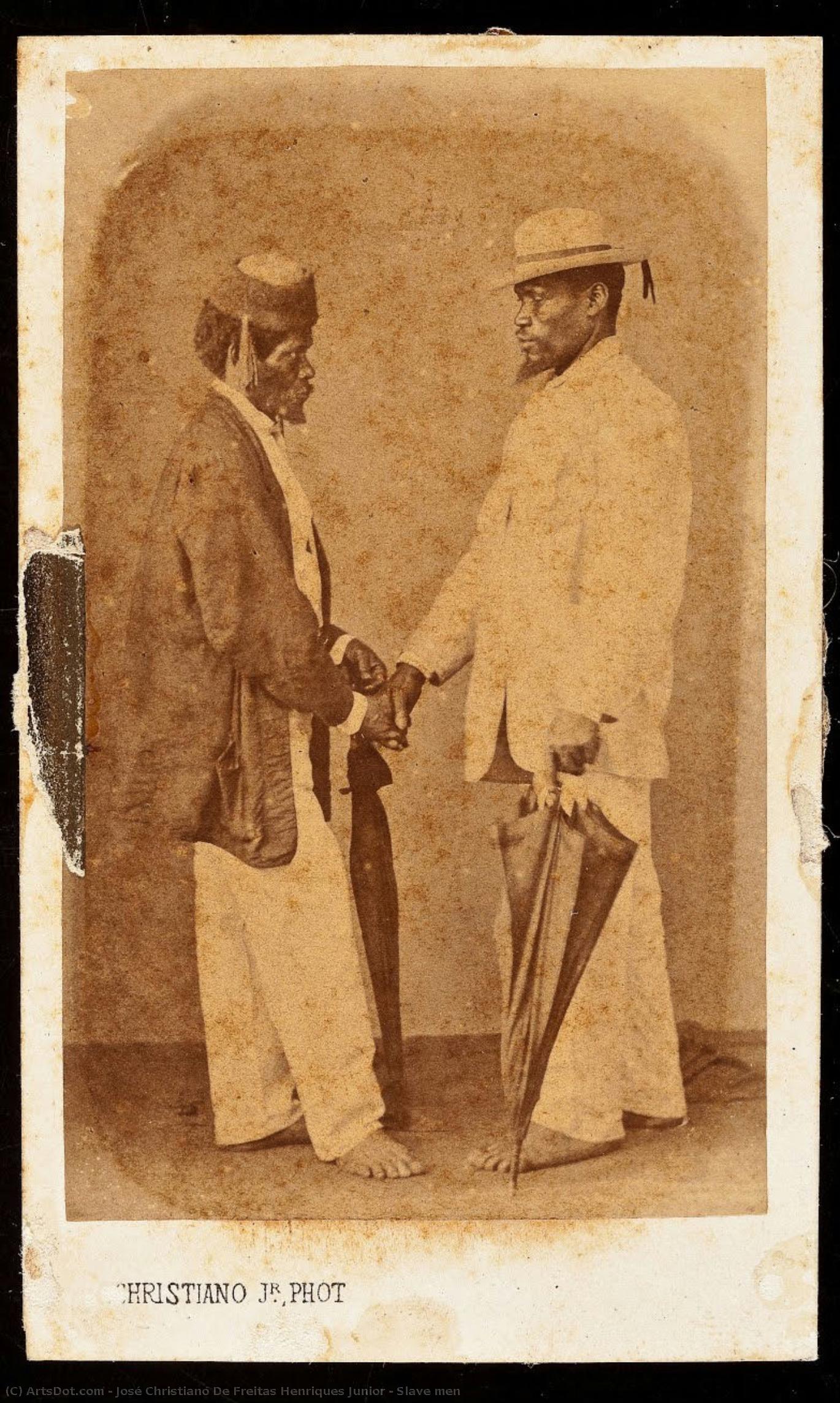
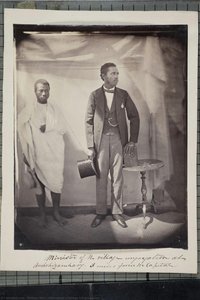
In the quiet, monochromatic depths of "Slave men," we are transported back to the year 1864, a period of profound social upheaval and complex human narratives. This evocative photograph, captured by the skilled lens of José Christiano de Freitas Henriques Junior, serves as more than just a visual record; it is a hauntingly beautiful window into a bygone era. The image presents two men standing in close proximity before a weathered building, their presence anchored in a moment that feels both fleeting and eternal. One man, dressed with the formal dignity of a suit, stands alongside a companion wearing a hat, perhaps clutching an umbrella against an unseen drizzle. There is a palpable sense of intimacy in their interaction, as one reaches out toward the other, suggesting a shared story, a whispered confidence, or a momentary connection amidst the heavy atmosphere of 19th-century life.
The technique employed by Christiano Junior reflects the delicate mastery required of early photographic pioneers. The photograph possesses a soft, faded quality—a characteristic of its age that lends it an ethereal, dreamlike texture. This lack of sharp, modern clarity allows the viewer to focus on the interplay of light and shadow, where the silhouettes of the men emerge from the grain of the historical medium. The monochromatic palette strips away the distractions of color, forcing an emotional confrontation with the raw textures of the clothing, the weathered surfaces of the architecture, and the very essence of the subjects' expressions. For the collector or art enthusiast, this piece offers a profound sense of authenticity, as if one is touching the very fabric of history.
Historical Resonance and Emotional Depth
To understand "Slave men" is to engage with the complex social dynamics of 19th-century Brazil and Argentina. Christiano Junior, a Portuguese-born photographer who became a vital chronicler of South American life, had a unique ability to capture the nuances of social strata. While the title alludes to the heavy, systemic realities of the era, the photograph itself captures a moment of human agency and interpersonal connection. The subtle gesture of the hand being extended creates a poignant tension between the individual's humanity and the broader, often oppressive, historical context in which they lived. It is this duality—the personal warmth within a cold historical reality—that gives the work its enduring emotional impact.
For interior designers and curators of fine art reproductions, this piece serves as a sophisticated focal point for spaces that value depth, storytelling, and historical gravity. Whether placed in a study filled with leather-bound books or a contemporary gallery setting, the photograph commands attention through its quiet strength. It does not shout; rather, it invites contemplation. Owning a high-quality reproduction of this work allows one to preserve a fragment of a lost world, bringing a sense of scholarly elegance and soulful reflection into any curated environment. It is an invitation to look closer, to listen to the silence of the past, and to appreciate the enduring resilience of the human spirit captured in silver and light.
Related Artworks
Artist Biography
early life and career
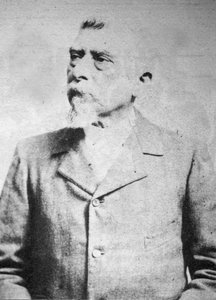
josé christiano de freitas henriques junior, also known as christiano junior, was a portuguese-born photographer who left an indelible mark on the history of photography in argentina. born in 1832 in santa cruz das flores, portugal, junior emigrated to brazil in 1855 and later settled in argentina, where he would establish himself as one of the most prominent photographers of the 19th century.photographic work
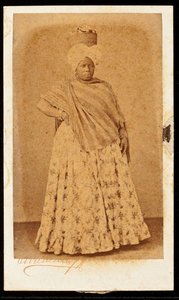
junior's photographic work is characterized by its diverse subjects, ranging from slave woman also known as “slave who earns” working as a street seller, a painting that showcases his early work in rio de janeiro, to capturing the essence of argentine cities and their people. his photographs not only provide a glimpse into the lives of those he photographed but also serve as a testament to the era's social dynamics.- notable works: slave men, another painting that highlights junior's early work in rio de janeiro, showcasing his ability to capture the essence of his subjects. vistas y costumbres de la república argentina, a monumental project that aimed to photographically document the argentine republic from the atlantic to the andes.
- photographic style: junior's photographs are known for their candid nature, often capturing his subjects in professional activities or street scenes.
museums and collections
junior's work can be found in various museums and collections, including the museu histórico nacional (rio de janeiro, brazil), which houses some of his early photography work. his later work, particularly from his time in argentina, is part of the general archive of the nation, as acquired by alexander witcomb.- notable collections: josé christiano de freitas henriques junior's work on ArtsDot, featuring a selection of his photographs. the general archive of the nation, which houses junior's later work acquired by alexander witcomb.
legacy and later life
junior ceased his activity as a photographer in 1883, after four years of traveling throughout argentina. he died in asunción, paraguay, in 1902. despite the unfinished nature of his monumental project, junior's work remains one of the most significant contributions to argentine photography.- legacy: christiano junior's photographs serve as a window into the lives of those he captured, providing invaluable insights into the social and cultural landscape of 19th-century argentina.
josé christiano de freitas henriques junior
1832 - 1902 , Portugal
Quick Facts
- Artistic Movement Or Style: Photography
- Date Of Birth: 1832
- Date Of Death: 1902
- Full Name: José Christiano de Freitas Henriques Junior
- Nationality: Portuguese
- Notable Artworks:
- Slave woman
- Slave men
- Vistas y Costumbres de la República Argentina
- Place Of Birth: Santa Cruz das Flores, Portugal
Related Articles

White on Canvas: 10 Masterpieces & Timeless Elegance for Your Home Decor
Explore 10 iconic white paintings by Monet, Whistler & Rothko! Discover the stories behind these serene masterpieces and their impact on art history. Find museum-quality reproductions for your home decor at .

Dark Masterpieces: 10 Iconic Paintings Dominated by Black Tones |
Explore 10 iconic paintings dominated by black tones, from Rembrandt’s chiaroscuro to Goya's dark expressions. Discover the stories behind these masterpieces & find museum-quality art reproductions for your home at .

Monochrome Visions: Exploring the Aesthetic & Historical Significance of Black & White Photography
Explore the rich history & artistic power of black and white photography. From early techniques to iconic masters like Ansel Adams, discover why monochrome continues to captivate art lovers today. Expert insights for collectors.
From Snapshot to Statement: Elevating Personal Photography Through Black & White Fine Art Reproduction
Transform cherished photos into timeless black & white fine art with ArtsDot. Our expert artists create museum-quality reproductions – a lasting legacy for your home and family. Discover the artistry today.

19th Century Masterpieces: 10 Paintings That Defined an Era | ArtsDot
Journey through 19th century art with ArtsDot! Explore 10 iconic paintings – from Monet & Renoir to Courbet – and discover the stories behind Romanticism, Realism & Impressionism. Find museum-quality reproductions for your home decor. Explore the full collection online!