 Preview
 Send
Send Share
Share
 Details

 Download
 Similars
 X-Ray
X-Ray Diaporama
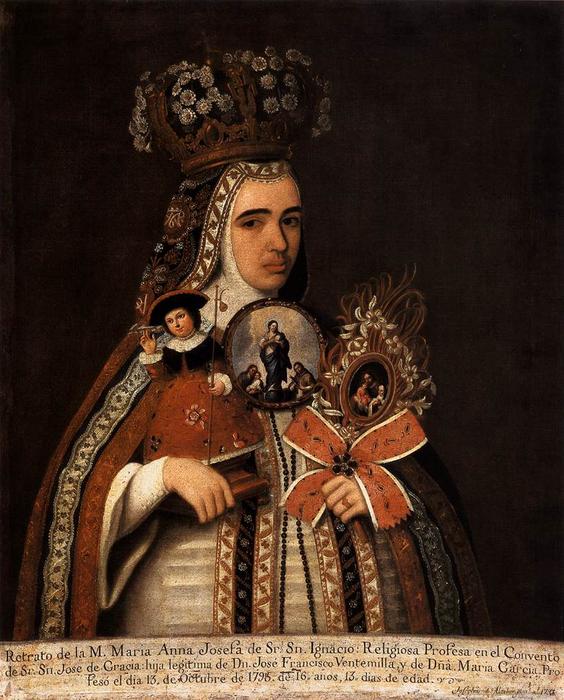
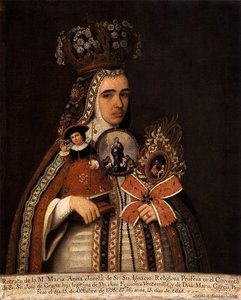
Portrait of María Anna Josefa Taking Vow
 1793
1793 103.0 x 83.0 cm
 Szépmûvészeti Múzeum
 Read More
Giclée / Art Print
Museum-quality giclée or canvas print with fast production and flexible finish options. ( Buy Hand Made Painting Buy Image)




































Pick from our preset sizes that match the artwork's original proportions.

You may enter your own dimensions to fit a specific frame or space. If your selected size does not match the original image's proportions, we will either crop the artwork or extend the image with a mirrored or solid-fill edge. A digital mockup will be sent for your approval before production begins.
Please note that the on-screen preview does not reflect the actual cropping or extension. Only the mockup will accurately show the final composition.
While custom sizes are available, we recommend selecting a dimension from the predefined list to preserve the original proportions.
Worldwide Delivery () in 2 weeks instead of standard 4/5 weeks. (27 August)

Free Worldwide Express Shipping

High-Quality Linen Canvas

Full Shipping Insurance

Customs Tax Refund Guarantee

True Color Matching Guarantee

60-Day Return Policy (Defects Only)

100% Money-Back Guarantee

Bulk Discount Offer
 Glass option is only available in size under 110 CM

Portrait of María Anna Josefa Taking Vow
Giclée / Art Print
Reproduction Size
-


Total Price
$ 63
Related Artworks








Artist Biography
The Master of the Mexican Baroque: The Life and Legacy of José de Alcibar
In the vibrant, sun-drenched era of colonial Mexico, a period defined by both profound religious fervor and the burgeoning intellectual light of the Enlightenment, José de Alcibar emerged as a definitive voice in the Spanish Baroque tradition. Born around 1728, his life unfolded during a transformative epoch for the Americas, where the artistic echoes of Europe met the unique cultural textures of New Spain. While historical records offer glimpses into his beginnings—some suggesting roots in Guadalajara and others placing his birth in Mexico City—there is no doubt that Alcibar stood as a pivotal figure, representing the zenith of portraiture and religious painting in the eighteenth century. He was not merely a painter but a cornerstone of the Mexican artistic identity, serving as a bridge between the venerable traditions of the Escuela Vieja and the formal academic rigor that would define the next generation.
The development of Alcibar’s technique was a sophisticated tapestry woven from various prestigious influences. He is believed to have been shaped by the studios of masters such as Miguel Cabrera, absorbing the meticulousness required for high-society portraiture and the spiritual gravity needed for ecclesiastical commissions. His style became a masterful dialogue between light and shadow, drawing inspiration from the dramatic chiaroscibility of Caravaggio and the atmospheric depth of Rembrandt. This command over light allowed him to breathe life into his subjects, capturing not just their physical likeness but their very essence. Whether rendering the shimmering texture of fine silk in an aristocratic portrait or the somber, heavy drapery of a saint’s habit, Alcibar possessed an unparalleled ability to manipulate oil paint to evoke tactile reality and profound psychological depth.
A Legacy of Faith and Nobility
The breadth of Alcibar’s oeuvre is a testament to his versatility and his deep integration into the social and religious fabric of Mexico. His work can be broadly categorized into two monumental streams: the sacred and the secular. In the realm of the sacred, he was a prolific creator of altarpieces and devotional canvases that adorned the most significant churches of the era. His contributions to the Chapel of San Nicolás Tolentino and his celebrated La Adoración de los Reyes demonstrate his ability to translate complex theological narratives into visual experiences that inspired awe and contemplation in the faithful. These works were not merely decorations but spiritual conduits, designed to communicate the divine through the beauty of human form and symbolic landscape.
Simultaneously, Alcibar became the preferred chronicler of the colonial elite. His portraits are renowned for their dignified composure, capturing the likenesses of viceroys, bishops, and prominent families with an elegance that spoke of status and permanence. In these canvases, one finds a meticulous attention to detail—the glint of jewelry, the intricate patterns of lace, and the subtle nuances of facial expression—that elevated the portrait from a simple record to a work of high art. Through his brush, the social hierarchy of New Spain was immortalized, presenting a world of scholarly pursuit, religious devotion, and aristocratic grace that remains frozen in time.
The Architect of Artistic Tradition
Beyond the individual brilliance of his paintings, José de Alcibar’s historical significance is cemented by his role as an educator and institutional founder. He was a foundational member of the Real Academia de Bellas Artes de San Carlos in 1784, serving as a professor and helping to establish the first major art school and museum in the Americas. This position allowed him to shape the stylistic trajectory of Mexican art, mentoring students who would go on to refine the local aesthetic. His presence in the Academy ensured that the rigorous standards of the Baroque era were passed down, even as new influences from Europe began to arrive.
As the century drew to a close, Alcibar’s influence remained a guiding force. His life and work represent a unique moment in history where the traditions of the old Mexican school met the structured academicism of the new age. To study his work today is to witness the soul of colonial Mexico—a period of intense devotion, social complexity, and an enduring pursuit of beauty that continues to resonate within the halls of art history.
josé de alcibar
1728 - 1803 , Mexico
Quick Facts
- Artistic Movement Or Style: Neoclassical
- Artists Or Movements Influenced By This Artist: ['Spanish Romanticism']
- Artists Who Influenced This Artist: ['Francisco Goya']
- Date Of Death: 1803
- Full Name: José de Alcibar
- Nationality: Mexican
- Notable Artworks: ['Portrait of María Teresa Bárbara de Aragón y Borbón']
- Place Of Birth: Mexico City, Mexico