 Preview
 Send
Send Share
Share
 Details

 Download
 Similars
 X-Ray
X-Ray Diaporama
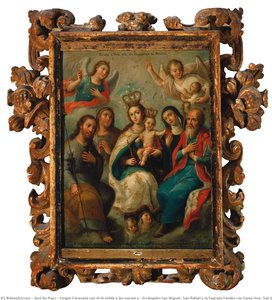
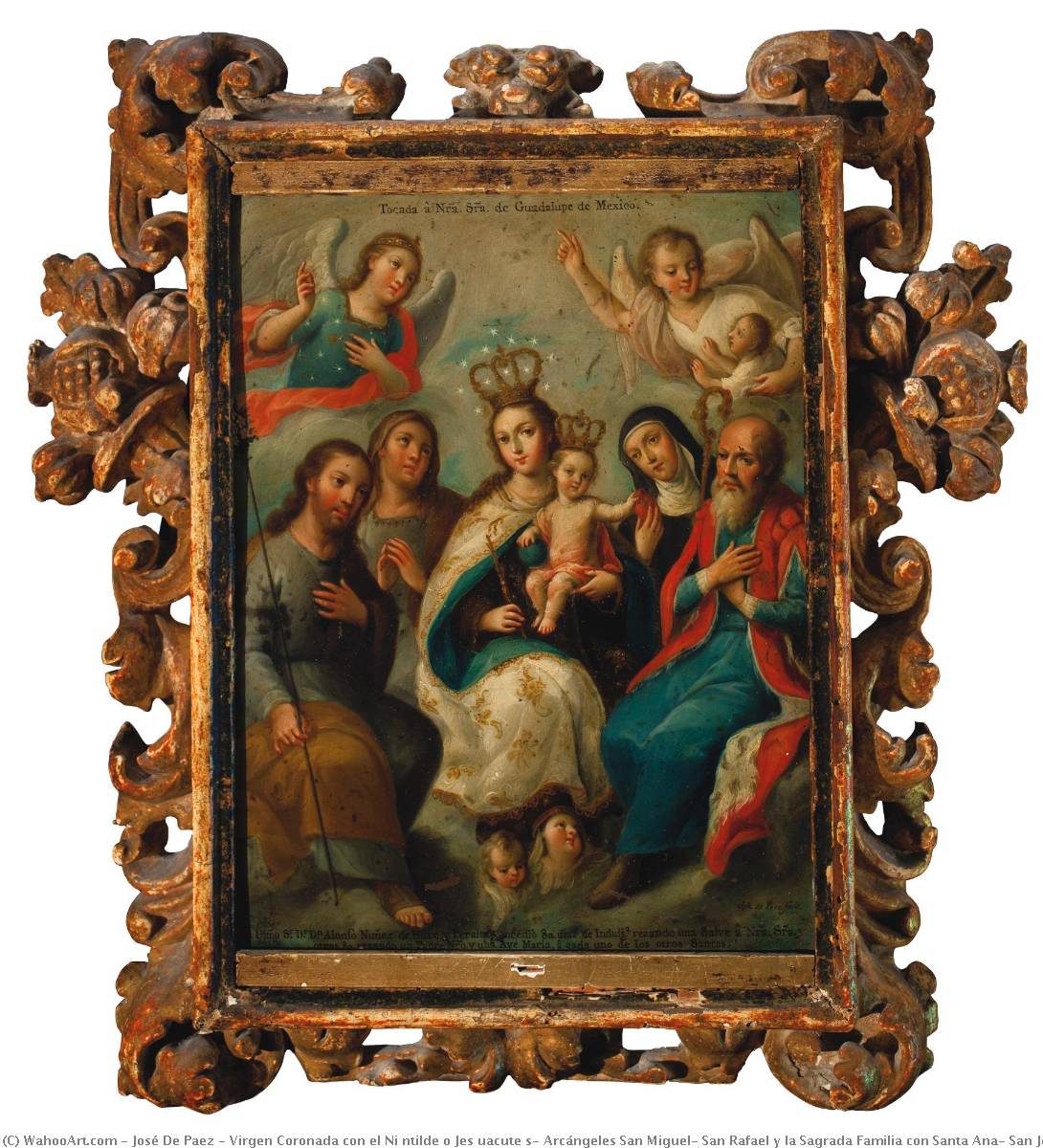
Virgen Coronada con el Ni ntilde o Jes uacute s, Arcángeles San Miguel, San Rafael y la Sagrada Familia con Santa Ana, San Joaquín y Santa Teresa de Jes uacute s
 32.0 x 26.0 cm
 Read More
Hand Made Oil Reproduction
Hand-painted oil on canvas in your size and frame, made to order by our artists. ( Buy Print Buy Image)




































Pick from our preset sizes that match the artwork's original proportions.

You may enter your own dimensions to fit a specific frame or space. If your selected size does not match the original image's proportions, we will either crop the artwork or extend the painting with additional hand-painted elements. A digital mockup will be sent for your approval before production begins.
Please note that the on-screen preview does not reflect the actual cropping or extension. Only the mockup will accurately show the final composition.
While custom sizes are available, we recommend selecting a dimension from the predefined list to preserve the original proportions.
After order, ArtsDot.com team will email client for instructions and provide a mockup preview
Worldwide Delivery () in 3/4 weeks instead of standard 5 weeks. (31 August). No compromise on quality.

Free Worldwide Express Shipping

High-Quality Linen Canvas

Full Shipping Insurance

Customs Tax Refund Guarantee

True Color Matching Guarantee

60-Day Return Policy (Defects Only)

100% Money-Back Guarantee

Bulk Discount Offer
 Glass option is only available in size under 110 CM

Virgen Coronada con el Ni ntilde o Jes uacute s, Arcángeles San Miguel, San Rafael y la Sagrada Familia con Santa Ana, San Joaquín y Santa Teresa de Jes uacute s
Reproduction Medium
Reproduction Size
-


Total Price
$ 263
Related Artworks









Artist Biography
José de Páez: A Painter of Faith and Frontier Drama
José de Páez (1720-1790) stands as a pivotal figure in the artistic landscape of 18th-century New Spain, a region grappling with colonial expansion, religious fervor, and burgeoning cultural complexities. His legacy isn’t defined by grand, revolutionary movements but rather by a profound ability to capture the spirit of his time – a blend of devout piety, regional identity, and a keen eye for narrative detail. Born in Mexico City around 1720, Páez's artistic journey was deeply intertwined with the religious orders that shaped colonial society, particularly the Franciscans, and the dramatic events unfolding on the fringes of the empire.Early Life and Artistic Training
Páez’s lineage provided a crucial foundation for his career. His father, Baltazar de Páez, was a student under Nicolás Enríquez, a prominent painter of the era, establishing a direct line of artistic influence. This connection exposed young José to established techniques and stylistic conventions. While details about his formal training remain somewhat sparse, it’s believed he honed his skills through apprenticeship and observation within the workshops of Mexico City's leading artists. Crucially, Páez wasn’t merely replicating existing styles; he absorbed and adapted them, imbuing them with a distinctly Mexican sensibility. His early works demonstrate an affinity for the *boceto* style favored by Miguel Cabrera, a renowned painter known for his dramatic compositions and skillful rendering of figures – a style that would profoundly influence Páez's approach to religious painting.The Art of Religious Devotion: Marian Scenes and Beyond
Páez’s most celebrated works are undoubtedly his depictions of the Virgin Mary and scenes centered around her devotion. He possessed a remarkable ability to evoke a sense of serene spirituality, often employing soft lighting and carefully orchestrated compositions to draw viewers into the heart of the religious narrative. His paintings weren't simply representations of saints; they were imbued with an emotional resonance that connected deeply with the faithful. Beyond Marian scenes, Páez also excelled in portraying Saint Ignatius de Loyola and Saint Luis Gonzaga, frequently depicted together in moments of contemplation or prayer – a pairing reflecting the shared dedication to faith and service within the Jesuit order. His output was prolific, flooding the second half of the 18th century with his paintings, as art historian Manuel Toussaint noted, demonstrating a sustained commitment to religious imagery throughout his career.A Dramatic Chronicle: The Destruction of San Sabá
Perhaps Páez’s most enduring and historically significant work is “The Destruction of the Mission Santa Cruz de San Sabá in the Province of Texas and the Martyrdom of the Priests,” completed around 1765. This monumental painting, executed in oil on copper, transcends mere religious iconography to become a powerful historical document. Commissioned by Don Pedro Romero de Terreros, a relative of the martyred friars, it vividly depicts the violent raid on the frontier mission by Comanche warriors, resulting in the deaths of Fray Alonso Giraldo de Terreros and Fray José de Santiesteban. The painting’s meticulous detail – from the fortifications of the mission to the determined expressions of the attackers – offers a rare glimpse into the realities of colonial life along the Texas border. Art historian Pedro Ángeles Jiménez has described the scene as “a sort of setting in which the artist accommodated the episodes of the story, which are only activated when the spectator scrutinizes the order of the inscriptions,” highlighting the painting’s layered narrative complexity. The inscription details provide context for the dramatic events unfolding before the viewer, transforming the artwork into a historical record.Casta Paintings and Social Commentary
Beyond his religious works, Páez was also a skilled practitioner of *casta* paintings – intricate depictions of racial mixtures within colonial society. These paintings, often commissioned by wealthy patrons, served as visual representations of social hierarchies and family lineages. Páez’s *casta* paintings are notable for their meticulous detail and adherence to the established conventions of the genre, illustrating a complex system of racial classification. His series, created around 1780, typically depicted individuals progressing through generations, showcasing the gradual assimilation or decline in social status associated with mixed-race families. These works offer valuable insights into the social dynamics and prejudices prevalent during the colonial period, revealing a nuanced understanding of identity and belonging within a rigidly structured society. His style, described as “sentimental” by art historian Ilona Katzew, combined technical skill with an emotional depth that resonated with viewers and provided a visual commentary on the complexities of colonial life. José de Páez’s artistic legacy extends far beyond his individual works. He represents a crucial link between European artistic traditions and the unique cultural identity of New Spain. His paintings—ranging from serene devotional scenes to dramatic historical narratives and insightful social commentaries—continue to captivate audiences today, offering a poignant window into the complexities of colonial Mexico and the enduring power of faith and art.
josé de paez
1727 - 1780
Quick Facts
- Artistic Movement Or Style: Religious painting
- Artists Or Movements Influenced By This Artist: ['Miguel Cabrera']
- Artists Who Influenced This Artist: ['Nicolás Enríquez']
- Date Of Birth: 1720
- Date Of Death: 1790
- Full Name: José de Páez
- Nationality: Mexican
- Notable Artworks:
- Adoration of Sacred Heart
- Destruction San Sabá
- Place Of Birth: Mexico City, Mexico