 Preview
 Send
Send Share
Share
 Details

 Download
 Similars
 X-Ray
X-Ray Diaporama
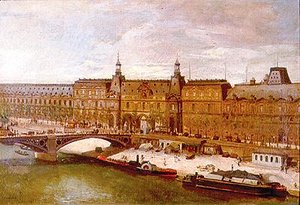
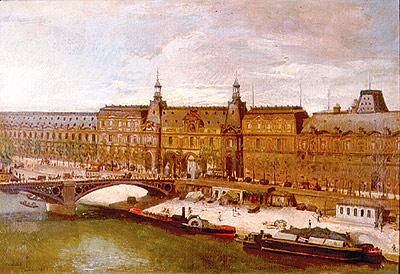
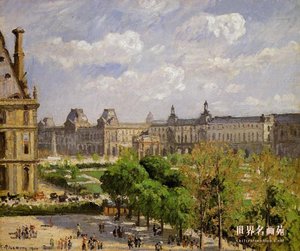
Arredores do Louvre
 1880
1880 36.0 x 54.0 cm
 Read More
Giclée / Art Print
Museum-quality giclée or canvas print with fast production and flexible finish options. ( Buy Hand Made Painting Buy Image)




































Pick from our preset sizes that match the artwork's original proportions.

You may enter your own dimensions to fit a specific frame or space. If your selected size does not match the original image's proportions, we will either crop the artwork or extend the image with a mirrored or solid-fill edge. A digital mockup will be sent for your approval before production begins.
Please note that the on-screen preview does not reflect the actual cropping or extension. Only the mockup will accurately show the final composition.
While custom sizes are available, we recommend selecting a dimension from the predefined list to preserve the original proportions.
Worldwide Delivery () in 2 weeks instead of standard 4/5 weeks. (21 August)

Free Worldwide Express Shipping

High-Quality Linen Canvas

Full Shipping Insurance

Customs Tax Refund Guarantee

True Color Matching Guarantee

60-Day Return Policy (Defects Only)

100% Money-Back Guarantee

Bulk Discount Offer
 Glass option is only available in size under 110 CM

Arredores do Louvre
Giclée / Art Print
Reproduction Size
-


Total Price
$ 63
Related Artworks








Artist Biography
The Soul of the Brazilian Countryside: The Life of Almeida Júnior
In the tapestry of Brazilian art history, few threads are as vibrant or as deeply rooted in the soil as those woven by José Ferraz de Almeida Júnior. Born in 1850 in the quiet town of Itu, his journey began not in a grand atelier, but amidst the rhythmic tolling of bells at the Church of Our Lady of Candelária. As a young bell-ringer, the sounds of faith and the simplicity of rural life formed the foundational cadence of his creative spirit. This early immersion in the spiritual and the provincial would later manifest in an artistic vision that sought to elevate the humble caipira—the Brazilian peasant—to the status of a dignified subject, forever changing the trajectory of national identity through paint and canvas.
The path from a small-town bell-ringer to a celebrated master was paved by unexpected acts of grace. Recognizing the latent genius within the young boy's religious sketches, the head priest of Candelária organized a fundraising effort that allowed Júnior to seek formal instruction in Rio de Janeiro. This pivotal moment brought him under the mentorship of Pedro Américo, a titan of the Imperial Academy of Fine Arts. While the allure of European prestige was immense—even earning him a generous monthly stipend from Emperor Pedro II for studies abroad—Almeida Júnior maintained a profound, unbreakable bond with his roots. His decision to return to Itu to establish his own studio allowed him to observe and document the authentic rhythms of Brazilian life with an intimacy that no traveler could replicate.
A Master of Realism and the Rural Essence
When Almeida Júnior traveled to Paris, he did not merely absorb European techniques; he sought a new way to see. Under the tutelage of Alexandre Cabanel, he was exposed to the avant-garde currents of the French Salon, yet his heart remained tethered to the landscapes of his homeland. He became a pioneer of the Realistic tradition in Brazil, drawing profound inspiration from the works of Gustave Courbet and Jean-François Millet. Rather than pursuing the grand, idealized historical epics favored by his contemporaries, Júnior turned his gaze toward the quiet, unvarnished truths of the countryside. His brush captured the texture of sun-drenched skin, the weary grace of manual labor, and the poignant stillness of a moment at rest.
His oeuvre is characterized by an unparalleled sensitivity to light and atmosphere, creating works that feel less like static portraits and more like breathing memories. Through his mastery of genre painting, he achieved several remarkable feats:
- The Dignity of the Caipira: He transformed the depiction of rural laborers from mere caricatures into symbols of national character and resilience.
- Atmospheric Naturalism: His ability to render the soft light of the Brazilian interior brought a sense of profound nostalgia, or saudade, to his compositions.
- Technical Precision: By blending academic rigor with a naturalist's eye for detail, he bridged the gap between classical training and modern realism.
Legacy and Eternal Significance
Though his life was tragically short, ending in 1899 at the age of forty-nine, the impact of Almeida Júnior remains indelible. He did not merely paint scenes; he constructed a visual language for a nation finding its own identity amidst the transition from Empire to Republic. His work serves as a bridge between the rigid idealism of the past and the raw, emotive truth of the modern era. Today, his birthday is celebrated as the Day of the Fine Artist in Brazil, a testament to his role as the patron of Brazilian creative spirit.
To look upon a work like O Derrubador Brasileiro or Caipira Picando Fumo is to encounter the very heartbeat of 19th-century Brazil. He remains a figure of immense historical significance, remembered not just for his technical brilliance, but for his profound empathy. In every stroke of his brush, there lies a deep respect for the humble, a celebration of the local, and an eternal tribute to the beauty found in the simplest of lives.
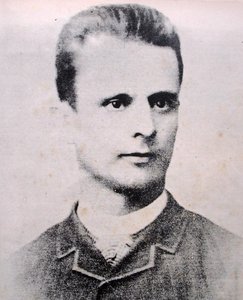
josé ferraz de almeida júnior
1850 - 1899
Quick Facts
- Artistic Movement Or Style: Realism
- Artists Or Movements Influenced By This Artist: ['École des Beaux-Arts']
- Artists Who Influenced This Artist: ['Victor Meirelles']
- Date Of Death: 1899
- Full Name: José Ferraz de Almeida Júnior
- Nationality: Brazilian
- Notable Artworks:
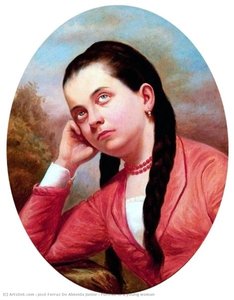
- Portrait of a young woman
- St. Onuphrius
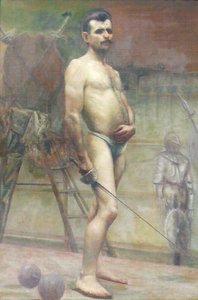
- English The sculptor (Resurrection) Português O estatuário