

![[la Calavera De Los Encapuchados] — Jose Guadalupe Posada](/media/artworks/images/full/e5/f9/e5f94d50c06b4c59a06e7f42ff1d8dfa.Jpg)
 Preview
 Send
Send Share
Share
 Details

 Download
 Similars
 X-Ray
X-Ray Diaporama
[La Calavera de los Encapuchados]
 Lithograph
 19th Century
 40.0 x 30.0 cm
 Nagoya City Art Museum
 Read More
Purchase a high-resolution, enhanced digital image, far superior to the online preview.
Each file is meticulously prepared by our in-house specialists using advanced tools and expert manual retouching. We ensure every image has exceptional clarity, precise color accuracy, and fine detail.
The final file is delivered via email within 72 hours, optimized for immediate use in professional, editorial, and print environments. This is the same quality trusted by top-tier design studios, publishers, and galleries.
Digital Image
Download a high-resolution file for personal display, printing, and creative projects. ( Buy Print Buy Hand Made Painting)
Included in Every Digital Image Order
Expert Digital Delivery, Guaranteed
When you choose ArtsDot.com, you're not just getting an image - you're receiving a professionally enhanced digital artwork, crafted with precision and backed by a satisfaction guarantee. Here's everything that comes with your order, automatically:

Fast Email Delivery
Your high-resolution digital image file will be emailed to you within 72 hours of ordering - ready for immediate use.

AI-Enhanced Digital File
Your artwork is professionally optimized using advanced AI tools and manual editing, ensuring maximum detail, clarity, and color accuracy.

Free Lifetime Re-Delivery
Accidentally deleted or lost your file? No worries - we'll resend it to you anytime, free of charge.

No Import Fees - Ever
Enjoy your artwork instantly with zero customs, duties, or delivery fees - digital downloads are always tax-free.

Color Accuracy Guarantee
We ensure your digital image reflects the original colors as closely as possible using professional tools and color management.

60-Day Satisfaction Guarantee
If you're not satisfied with your digital image, we'll revise it or refund 100% within 60 days - no questions asked.

100% Money-Back Guarantee
Not satisfied? Get a full refund within 60 days of receiving your digital file - no questions asked.

Bulk Order Discounts
Buy 3 images, save 10% - Buy 5, save 15% - Buy 10+, save 20%. Great for creative projects, galleries, and agencies.
Collectible Description
A Dance of Shadows and Skeletons
In the hauntingly beautiful print "La Calavera de los Encapuchados," we are transported into the visceral, satirical world of José Guadalupe Posada, one of Mexico's most profound masters of political engraving. This striking black and white composition presents a macabre yet mesmerizing tableau where the boundaries between life and death dissolve into a rhythmic dance of bones. At the heart of the piece, a central skeleton figure commands the viewer's attention with arms outstretched, as if conducting an invisible orchestra of the deceased. Surrounding this focal point is a dynamic assembly of skeletal figures, each captured in a unique pose—some clutching skulls, others adorned with the remnants of their former earthly identities through hats and ties. The interplay of light and shadow creates a sense of depth that pulls the observer into a swirling, spectral procession, making the composition feel less like a static image and more like a fleeting moment captured from a midnight parade.
The technique employed by Posada reflects his mastery of lithography and engraving, utilizing sharp contrasts to breathe life into the lifeless. Through the meticulous use of line and tonal gradation, the artist achieves a sense of movement that is both unsettling and captivating. The skeletal forms are not merely anatomical studies; they are expressive vessels of character. By stripping away the flesh, Posada strips away social pretension, leaving only the essential structure of the human condition. This stark, monochromatic palette serves to emphasize the textures of the bones and the intricate details of the accessories, ensuring that every etched line contributes to the overall atmosphere of poignant irony and dark whimsy.
Historically, this work emerges from a period of intense social and political upheaval in Mexico, where Posada used his art as a powerful tool for cultural critique. The calavera—the skull—became his signature motif, serving as a democratic equalizer that mocked the hierarchies of the era. In "La Calavera de los Encapuchados," the presence of clothing and accessories on the skeletons suggests a lingering attachment to social status, even in the afterlife. This symbolism invites the viewer to contemplate the fleeting nature of wealth, power, and identity. It is a profound memento mori that manages to be both biting in its satire and deeply human in its empathy.
For the discerning collector or interior designer, this reproduction offers more than just a visual centerpiece; it provides a conversation piece steeped in historical gravity and artistic soul. The artwork’s monochromatic elegance allows it to integrate seamlessly into diverse decor styles, from the moody sophistication of a contemporary gallery-style room to the eclectic charm of a classic study. Its emotional impact lies in its ability to provoke thought and evoke a sense of wonder, making it an ideal acquisition for those who appreciate art that challenges the intellect while enchanting the eye. Owning a piece of Posada’s legacy is an invitation to embrace the beautiful complexity of the human story, where even in death, there is a profound, rhythmic vitality.
Related Artworks
Artist Biography
The Soul of Mexican Satire: The Life and Legacy of José Guadalupe Posada
In the vibrant, often turbulent tapestry of late 19th-century Mexico, few figures loom as large or as hauntingly beautiful as José Guadalupe Posada. A master of the print, an engraver of profound social insight, and a chronicler of the human condition, Posada transformed the medium of lithography into a powerful weapon of political critique and cultural identity. Born in Aguascalientes on February 2, 1852, to Germán Posada Serna and Petra Aguilar Portillo, his early life was shaped by the disciplined instruction of his brother, Cirilo, and the formal training he received at the Municipal Drawing Academy of Aguascalientes. This foundation in classical technique would later serve as the scaffolding for a career defined by radical subversion and the democratization of art through mass-produced imagery.
Posada’s artistic journey was one of constant movement and technical evolution. As a young teenager, he entered the workshop of Trinidad Pedroso, where he mastered the intricate arts of lithography and engraving—skills that would become his primary instruments for social engagement. His early professional years were marked by a nomadic spirit, moving through León, Guanajuato, where he established his own workshop and taught lithography, before returning to his roots in Aguascalientes. It was during these formative decades that his voice began to emerge, not merely as a commercial illustrator, but as a sharp-witted commentator on the injustices of his era. His work for newspapers like El Jicote allowed him to hone a satirical acuteness that would eventually define the Mexican visual lexicon.
The Dance of Death and the Power of the Calavera
To understand Posada is to understand the calavera—the skull. While many artists use death as a somber or morbid subject, Posada embraced it with a uniquely Mexican sense of irony and vitality. He utilized skeletons, bones, and skulls to strip away the pretensions of the upper classes, mocking the vanity of those who sought to mimic European aristocratic trends while ignoring the stark realities of the Mexican populace. His most enduring icon, La Catrina, serves as a profound memento mori; she is a skeletal figure adorned in elegant finery, a biting reminder that regardless of wealth or social standing, death is the ultimate equalizer.
This mastery of symbolism allowed Posada to bridge the gap between high art and folk tradition. His prints were not intended for the quiet contemplation of galleries, but for the hands of the common people—the workers, the peasants, and the revolutionaries. Through his engravings, he captured the pulse of a nation in flux, documenting everything from the tragic Great Flood of León in 1888 to the simmering political tensions that would eventually ignite the Mexican Revolution. His ability to blend the macabre with the humorous created a visual language that was both deeply unsettling and irresistibly engaging.
A Lasting Influence on Latin American Art
The historical significance of José Guadalupe Posada cannot be overstated. Though he lived much of his life in relative obscurity compared to the fine artists of his time, his influence rippled through generations of Latin American creators. His technique of using mass media for social commentary laid the groundwork for the great Mexican Muralists, such as Diego Rivera and David Alfaro Siqueiros, who would later adopt his commitment to public, politically charged art. The visual vocabulary he created—the satirical cartoon, the political caricature, and the use of folk motifs to convey complex socio-political messages—remains a cornerstone of Mexican identity.
Today, Posada is celebrated not just as a printmaker, but as a foundational architect of Mexican visual culture. His work continues to resonate in contemporary art, where his spirit of resistance and his celebration of the skeletal dance of life find new expressions. Through his hands, the ink and stone became a mirror reflecting the triumphs, tragedies, and enduring resilience of the Mexican soul.
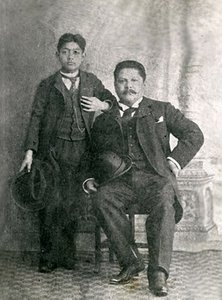
jose guadalupe posada
1852 - 1913
Quick Facts
- Artistic Movement Or Style: Satirical printmaking and engraving
- Artists Or Movements Influenced By This Artist:
- Latin American artists
- Cartoonists
- Date Of Birth: February 2, 1852
- Date Of Death: 1913
- Full Name: José Guadalupe Posada
- Nationality: Mexican
- Notable Artworks: ['La Catrina']
- Place Of Birth: Aguascalientes, Mexico

