

 Preview
 Send
Send Share
Share
 Details

 Download
 Similars
 X-Ray
X-Ray Diaporama
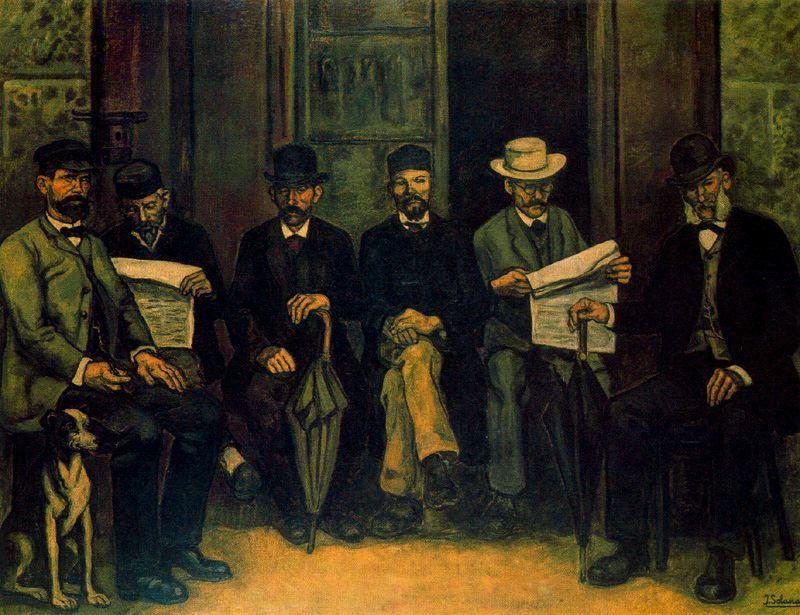
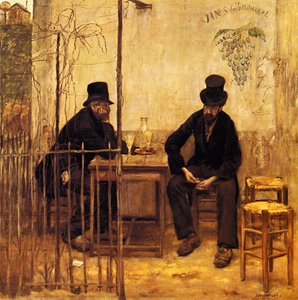
La reunión de la botica

 Read More
Purchase a high-resolution, enhanced digital image, far superior to the online preview.
Each file is meticulously prepared by our in-house specialists using advanced tools and expert manual retouching. We ensure every image has exceptional clarity, precise color accuracy, and fine detail.
The final file is delivered via email within 72 hours, optimized for immediate use in professional, editorial, and print environments. This is the same quality trusted by top-tier design studios, publishers, and galleries.
Digital Image
Download a high-resolution file for personal display, printing, and creative projects. ( Buy Print Buy Hand Made Painting)
Included in Every Digital Image Order
Expert Digital Delivery, Guaranteed
When you choose ArtsDot.com, you're not just getting an image - you're receiving a professionally enhanced digital artwork, crafted with precision and backed by a satisfaction guarantee. Here's everything that comes with your order, automatically:

Fast Email Delivery
Your high-resolution digital image file will be emailed to you within 72 hours of ordering - ready for immediate use.

AI-Enhanced Digital File
Your artwork is professionally optimized using advanced AI tools and manual editing, ensuring maximum detail, clarity, and color accuracy.

Free Lifetime Re-Delivery
Accidentally deleted or lost your file? No worries - we'll resend it to you anytime, free of charge.

No Import Fees - Ever
Enjoy your artwork instantly with zero customs, duties, or delivery fees - digital downloads are always tax-free.

Color Accuracy Guarantee
We ensure your digital image reflects the original colors as closely as possible using professional tools and color management.

60-Day Satisfaction Guarantee
If you're not satisfied with your digital image, we'll revise it or refund 100% within 60 days - no questions asked.

100% Money-Back Guarantee
Not satisfied? Get a full refund within 60 days of receiving your digital file - no questions asked.

Bulk Order Discounts
Buy 3 images, save 10% - Buy 5, save 15% - Buy 10+, save 20%. Great for creative projects, galleries, and agencies.
Related Artworks
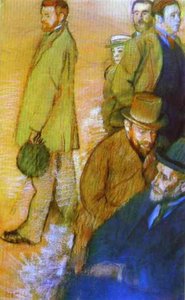
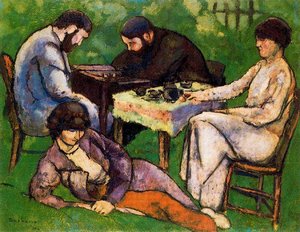
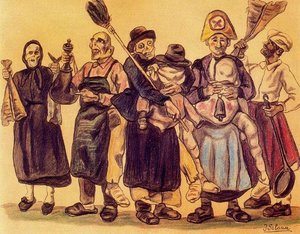
Artist Biography
A Shadowy Vision of Spain
José Gutiérrez Solana, a name that resonates with the dark heart of early 20th-century Spanish art, was far more than simply an Expressionist painter; he was a chronicler of a nation’s soul. Born in Madrid in 1886, Solana emerged as a pivotal figure during a period of intense cultural and social upheaval. His artistic journey began under the tutelage of his uncle, José Díez Palma, a professor at the University of Salamanca, instilling in him a foundational understanding of draftsmanship. Formal studies followed at the Escuela de Bellas Artes de San Fernando from 1900 to 1904, culminating in an honorable mention at the prestigious Exposición Nacional de Bellas Artes in 1906 – early recognition that hinted at the powerful force he would become. However, it wasn’t merely academic training that shaped Solana's vision; it was a deep immersion into the underbelly of Spanish life, a fascination with its shadows and forgotten corners. He roamed the slums and suburbs of Madrid, ventured into the Cantabrian harbors, and journeyed through the landscapes of La Mancha, Aragón, and Andalucía, meticulously sketching and absorbing the essence of a Spain often overlooked by polite society. This relentless exploration of the marginalized and the melancholic would become the defining characteristic of his oeuvre.Echoes of Masters and the Birth of a Unique Style
Solana’s artistic style wasn't born in a vacuum. He stood firmly within the lineage of Spanish masters, drawing profound inspiration from the haunting intensity of El Greco, the bleak power of Goya’s “Black Paintings,” and the evocative realism of Eugenio Lucas Velázquez. Yet, he didn’t simply imitate; he synthesized these influences into something entirely his own. While often categorized as an Expressionist, Solana transcended easy labels. His canvases pulsate with a raw emotionality characteristic of the movement, but they are tempered by a distinctly Spanish sensibility—a blend of religious fervor, macabre humor, and unflinching social commentary. He possessed a remarkable ability to capture not just what he saw, but *how* it felt – the weight of poverty, the desperation of faith, the unsettling energy of popular festivals. His palette favored somber earth tones punctuated by flashes of crimson, creating an atmosphere of brooding intensity that draws the viewer into his world. He wasn’t interested in idyllic landscapes or flattering portraits; he sought to portray the truth, however harsh and uncomfortable it might be. This commitment to authenticity is what sets him apart, forging a style uniquely his own.Themes of Darkness and Social Commentary
The subject matter Solana chose further cemented his reputation as a painter of “La España negra” – the dark Spain. His canvases are populated by marginalized figures: beggars, prostitutes, bullfighters, and the devoutly religious caught in moments of ecstasy or despair. Taverns, carnivals, processions, and scenes of everyday life become stages for exploring themes of mortality, social injustice, and the complexities of human nature. “La Tertulia del Café de Pombo”, a masterpiece housed at the Museo Nacional Centro de Arte Reina Sofía, is a prime example—a vibrant yet unsettling depiction of Madrid’s literary elite, capturing their intellectual energy alongside an undercurrent of melancholy. “La Procesión de la Muerte” exemplifies his fascination with mortality and religious fervor, portraying a somber procession that feels both ancient and immediate. Even seemingly innocuous subjects like clowns – as seen in “Payasos” – are imbued with a sense of pathos and unease. Solana’s work wasn't merely about depicting these scenes; it was about forcing viewers to confront the realities they often preferred to ignore, holding a mirror up to Spanish society and revealing its hidden wounds.Recognition, Legacy, and Lasting Influence
Solana’s path to widespread recognition wasn’t immediate. His first exhibition in Paris in 1928 met with initial indifference, but he persevered, and by 1936, his work had gained acclaim throughout Europe. He became a central figure in the vibrant intellectual circles of Madrid, frequenting the legendary Café de Pombo alongside writers and artists who shaped the cultural landscape of Spain. Despite achieving considerable success, Solana remained a somewhat enigmatic figure, preferring a solitary existence dedicated to his art and writing. He passed away in Madrid in 1945, leaving behind a body of work that continues to captivate and disturb audiences today. His legacy extends beyond his paintings; he was also a prolific writer, producing insightful essays and novels that further explored the themes present in his visual art. Solana’s influence can be seen in subsequent generations of Spanish artists who sought to grapple with the complexities of their nation's identity and history. He remains a vital voice—a shadowy prophet who dared to look into the darkness and reveal what he found, ensuring his place as one of Spain’s most important modernist masters. His art serves as a potent reminder that true beauty can often be found in the most unexpected and unsettling places.Exploring Solana's World Further
For those seeking to delve deeper into the world of José Gutiérrez Solana, numerous resources are available. His works can be found in prominent collections such as the Museo del Prado and the National Archaeological Museum in Madrid. The Colección Andrés Blaisten in Mexico also features a selection of his paintings. Online platforms offer high-quality reproductions, allowing art enthusiasts to experience the power of Solana’s vision firsthand. Further research into his life and work can be found through resources such as Wikipedia and Britannica, providing valuable context and insight into this remarkable artist's enduring legacy.- Key Influences: El Greco, Francisco Goya, Eugenio Lucas Velázquez
- Major Themes: Social injustice, mortality, religious fervor, the underbelly of Spanish life.
- Signature Style: Somber palette, raw emotionality, unflinching realism.
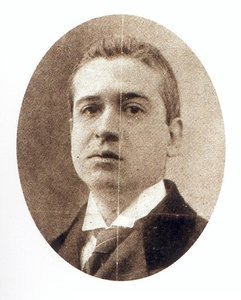
José Gutiérrez Solana
1886 - 1945 , Spain
Quick Facts
- Artistic Movement Or Style: Expressionism
- Artists Or Movements Influenced By This Artist: Spanish Modernists
- Artists Who Influenced This Artist:
- El Greco
- Goya
- Lucas Velázquez
- Date Of Birth: 1886
- Date Of Death: 1945
- Full Name: José Gutiérrez Solana
- Nationality: Spanish
- Notable Artworks:
- La procesión de la muerte
- La tertulia del café de Pombo
- Payasos
- Place Of Birth: Madrid, Spain

