 Preview
 Send
Send Share
Share
 Details

 Download
 Similars
 X-Ray
X-Ray Diaporama
 Stats
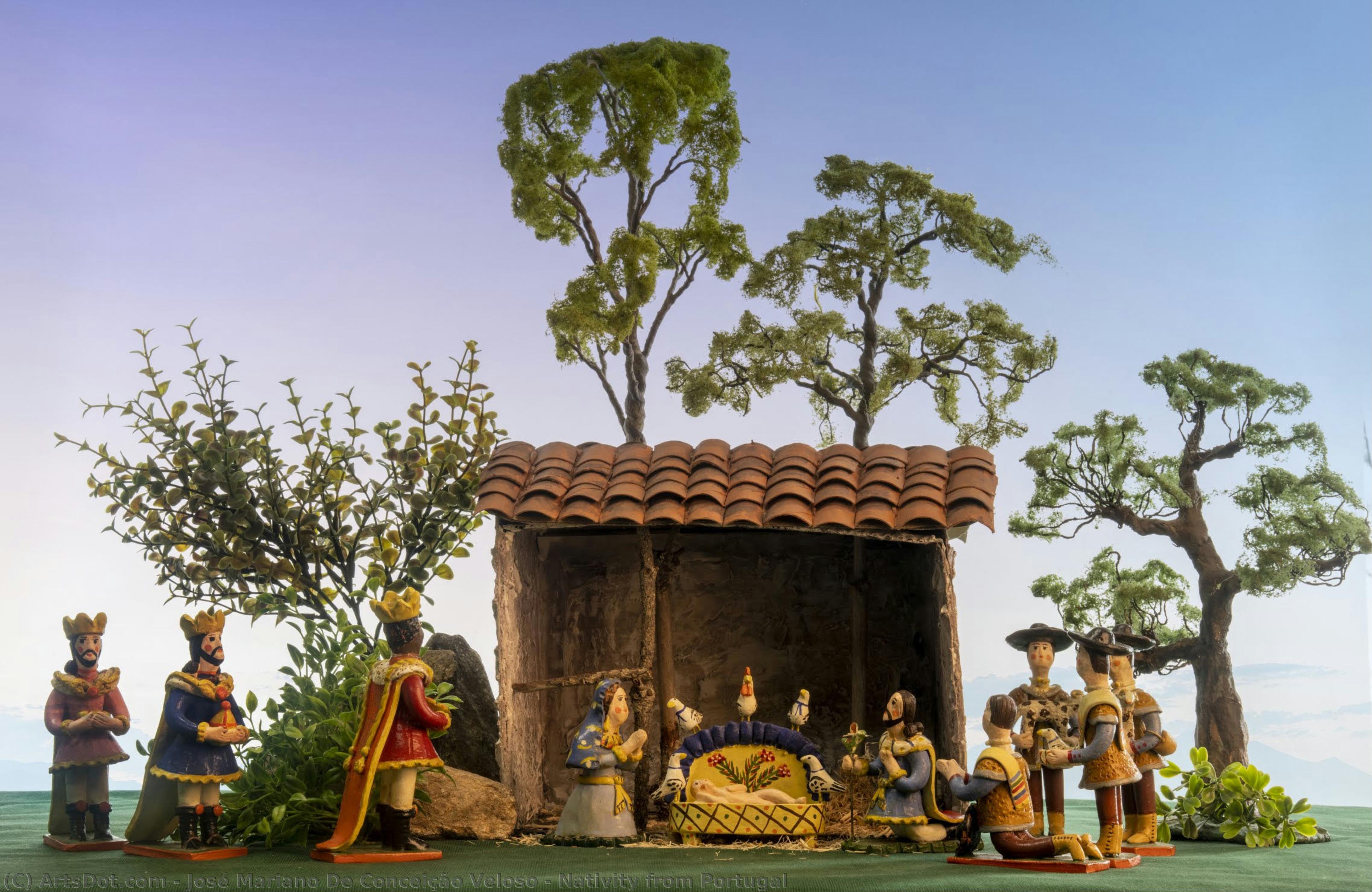
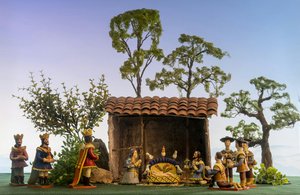
StatsNativity from Portugal

 Read More
Hand Made Oil Reproduction
Hand-painted oil on canvas in your size and frame, made to order by our artists. ( Switch to Print Switch to Digital Image)




































Pick from our preset sizes that match the artwork's original proportions.

You may enter your own dimensions to fit a specific frame or space. If your selected size does not match the original image's proportions, we will either crop the artwork or extend the painting with additional hand-painted elements. A digital mockup will be sent for your approval before production begins.
Please note that the on-screen preview does not reflect the actual cropping or extension. Only the mockup will accurately show the final composition.
While custom sizes are available, we recommend selecting a dimension from the predefined list to preserve the original proportions.
After order, ArtsDot.com team will email client for instructions and provide a mockup preview
Worldwide Delivery () in 3/4 weeks instead of standard 5 weeks. (9 September). No compromise on quality.

Free Worldwide Express Shipping

High-Quality Linen Canvas

Full Shipping Insurance

Customs Tax Refund Guarantee

True Color Matching Guarantee

100-Day Return Policy (Defects Only)

100% Money-Back Guarantee

Bulk Discount Offer
 Glass option is only available in size under 110 CM

Nativity from Portugal
Reproduction Medium
Reproduction Size
-


Total Price
$ 263
Related Artworks






Artist Biography
The Botanical Visionary of Minas Gerais
In the lush, verdant landscapes of eighteenth-century Brazil, a silent revolution of scientific discovery was unfolding, led by a man whose devotion to nature was matched only by his religious fervor. José Mariano de Conceição Veloso, born in the historic region of Tiradentes in 1742, was far more than a mere collector of specimens; he was a pioneer of the Enlightenment in South America. His life, shaped by the quiet cloisters of the Convent of Santo Antônio and the rigorous academic halls of the University of Coimbra, represents a unique intersection of spiritual contemplation and empirical observation. To look upon the legacy of Veloso is to witness the moment when the wild, undocumented beauty of the Brazilian wilderness began to be translated into the structured language of global science.
Veloso’s journey was one of profound intellectual expansion. While his roots were firmly planted in the mineral-rich soil of Minas Gerais, his ambitions carried him across the Atlantic to Portugal. It was during his time in Lisbon and Coimbra that his scientific mind truly began to crystallize. Collaborating with figures such as Martim Francisco Ribeiro de Andrada, he engaged deeply with the burgeoning disciplines of mineralogy and agriculture. This period of intense study allowed him to bridge the gap between colonial tradition and the modern scientific method, preparing him for a monumental task: the systematic cataloging of a continent's botanical treasures.
The Masterpiece of Florae Fluminensis
The true heart of Veloso’s contribution lies in his magnum opus, Florae Fluminensis. This was not merely a book, but a monumental labor of love and endurance that spanned decades. Driven by an unwavering commitment to documenting the endemic species of Brazil, Veloso spent twenty-five years traversing the rugged terrains of Minas Gerais and São Paulo. His work was a symphony of meticulous fieldwork and artistic collaboration. He did not work in isolation; rather, he orchestrated a grand scientific endeavor, entrusting the visual representation of his findings to skilled hands like Friar Francisco Solano and Antonio Alvarez.
The scale of this achievement is staggering. Through his efforts, over 1,600 plant species were brought into the light of scientific recognition. The sheer volume of detail contained within his descriptions—and the accompanying 1,700 illustrations—offered a window into a world previously unseen by European eyes. His work provided a foundational vocabulary for Brazilian botany, establishing a standard of excellence that would influence naturalists for generations. Every leaf, petal, and stem documented in his work served as a testament to the immense biodiversity of the region and his role as its primary chronicler.
A Lasting Scientific Legacy
Though Veloso’s name may not resonate with the same immediate fame as the great painters of the Renaissance, his impact on the natural sciences is immeasurable. He occupies a singular space in history as a figure who utilized the tools of the Enlightenment to assert the scientific importance of the Brazilian landscape. His ability to blend the meticulousness of a scholar with the passion of an explorer allowed him to create a lasting record that remains vital to this day. The botanical abbreviation Vell., still used by scientists today to denote his contributions, serves as a permanent signature of his enduring influence.
Ultimately, the life of José Mariano de Conceição Veloso reminds us of the profound connection between human curiosity and the natural world. His work stands as a bridge between the colonial era and the modern age of ecology, preserving the memory of a pristine wilderness through the lens of scientific devotion. He remains a silent observer whose observations spoke volumes, ensuring that the vibrant flora of Brazil would never be forgotten by the annals of history.
josé mariano de conceição veloso
1742 - 1811 , Brazil
Quick Facts
- Artistic Movement Or Style: Florae Fluminensis
- Artists Or Movements Influenced By This Artist: ['Portuguese Botany']
- Artists Who Influenced This Artist: ['Martim Francisco Ribeiro de Andrada']
- Date Of Birth: October 14, 1742
- Date Of Death: July 14, 1811
- Full Name: José Mariano de Conceição Veloso
- Nationality: Brazilian
- Notable Artworks: ['Flora fluminensis']
- Place Of Birth: Tiradentes, Brazil