 Preview
 Send
Send Share
Share
 Details

 Download
 Similars
 X-Ray
X-Ray Diaporama
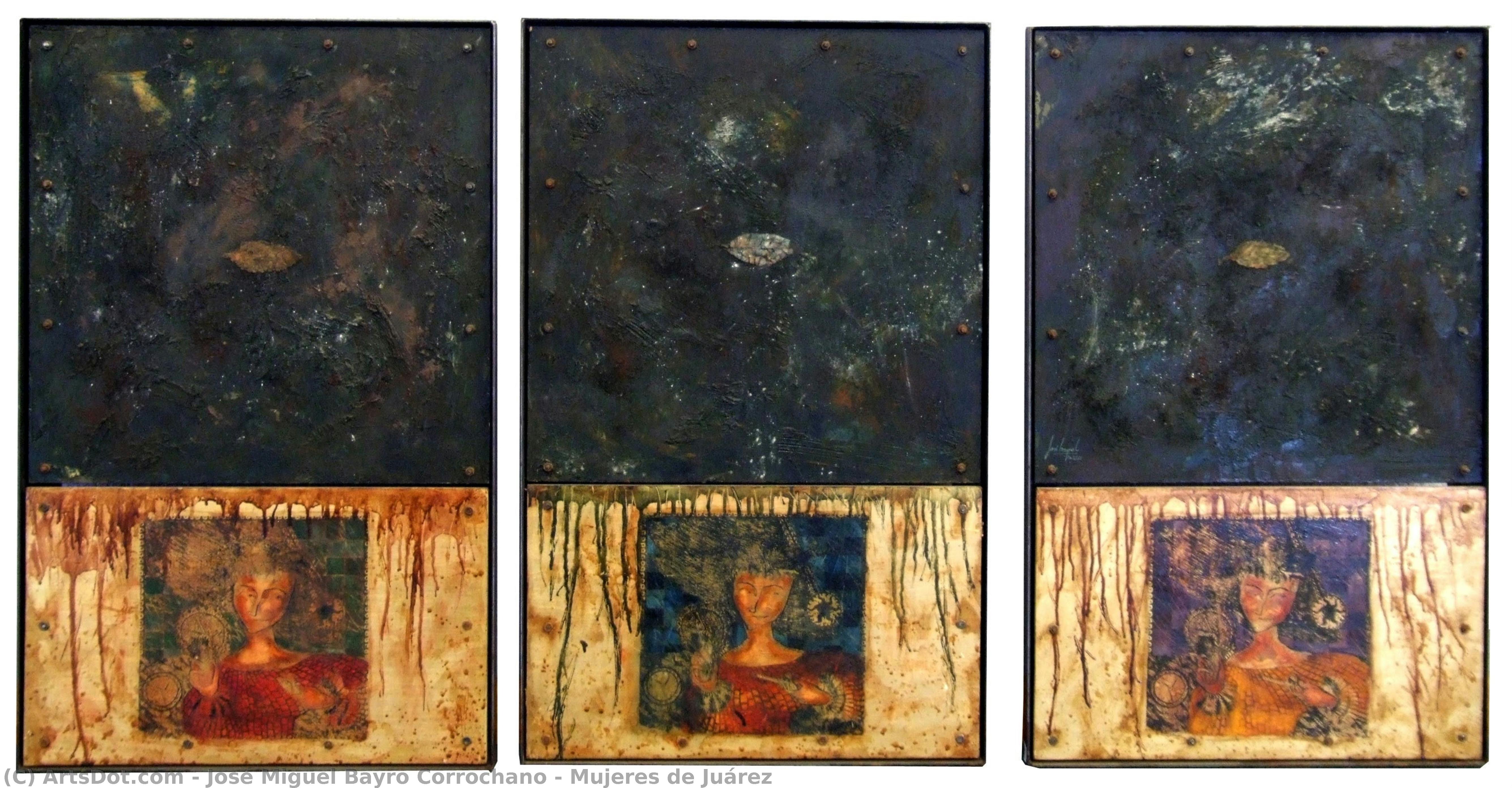
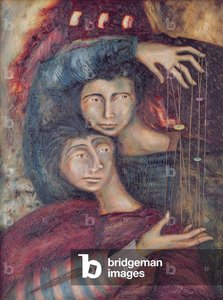
Mujeres de Juárez
 2001
2001 80.0 x 50.0 cm
 Fundación Universidad de las Américas Puebla
 Read More
Giclée / Art Print
Museum-quality giclée or canvas print with fast production and flexible finish options. ( Buy Hand Made Painting Buy Image)




































Pick from our preset sizes that match the artwork's original proportions.

You may enter your own dimensions to fit a specific frame or space. If your selected size does not match the original image's proportions, we will either crop the artwork or extend the image with a mirrored or solid-fill edge. A digital mockup will be sent for your approval before production begins.
Please note that the on-screen preview does not reflect the actual cropping or extension. Only the mockup will accurately show the final composition.
While custom sizes are available, we recommend selecting a dimension from the predefined list to preserve the original proportions.
Worldwide Delivery () in 2 weeks instead of standard 4/5 weeks. (27 August)

Free Worldwide Express Shipping

High-Quality Linen Canvas

Full Shipping Insurance

Customs Tax Refund Guarantee

True Color Matching Guarantee

60-Day Return Policy (Defects Only)

100% Money-Back Guarantee

Bulk Discount Offer
 Glass option is only available in size under 110 CM

Mujeres de Juárez
Giclée / Art Print
Reproduction Size
-


Total Price
$ 63
Related Artworks








Artist Biography
The Crucible of Change: An Exploration of the Art of the 1960s
The decade of the 1960s wasn’t merely a period marked by social upheaval and cultural shifts; it was, fundamentally, an artistic crucible. A rejection of established norms – both in art and society – fueled a remarkable explosion of creativity, challenging conventions and redefining what constituted “art” itself. Emerging from the shadow of Abstract Expressionism, a movement that had dominated the post-war landscape with its emotionally charged canvases, artists began to grapple with the burgeoning consumer culture, the anxieties of the Cold War, and the growing awareness of social injustice. This period witnessed not just stylistic shifts but a profound questioning of artistic purpose – moving away from individual expression towards conceptual ideas, mass production, and engagement with the everyday.
Early Influences and the Seeds of Rebellion
The groundwork for this seismic shift was laid in the preceding decades. The rise of Pop Art, spearheaded by figures like Andy Warhol and Roy Lichtenstein, directly confronted the elitism of the art world. Rejecting the notion that art had to be ‘serious’ or emotionally profound, these artists embraced imagery from advertising, comic books, and mass-produced objects – a deliberate provocation against the established canon. Simultaneously, Minimalism emerged as a counterpoint, stripping art down to its bare essentials: geometric forms, industrial materials, and a focus on the viewer's experience of space. Artists like Donald Judd and Sol LeWitt sought to eliminate any trace of the artist’s hand, emphasizing the object itself and its relationship to the surrounding environment.
- Pop Art: Celebrated consumerism and popular culture through techniques like screen printing and bold colors.
- Minimalism: Focused on simplicity, geometric forms, and industrial materials, challenging traditional notions of beauty and skill.
- Conceptual Art: Prioritized the idea behind the artwork over its physical form, questioning the very definition of art.
Key Movements and Artistic Voices
The 1960s weren’t defined by a single movement but rather a constellation of interconnected trends. Fluxus, originating in Europe, further blurred the boundaries between art and life, embracing chance, humor, and everyday activities. Happenings – ephemeral performances that combined visual art, music, and theater – became a defining feature of the era, often challenging audience expectations and disrupting traditional gallery spaces. Elsewhere, artists like Robert Rauschenberg experimented with collage and assemblage, incorporating found objects into their work to comment on consumerism and social issues. Figures such as Peter Blake and Richard Hamilton created iconic imagery that captured the spirit of the decade – from psychedelic posters to witty commentary on suburban life.
- Fluxus: Emphasized spontaneity, chance, and the blurring of boundaries between art and life.
- Happenings: Ephemeral performances that challenged traditional gallery spaces and audience expectations.
- Robert Rauschenberg: Pioneered assemblage and collage, incorporating found objects to critique consumerism and social issues.
The Rise of Conceptual Art and the Shifting Role of the Artist
Perhaps the most significant development of the 1960s was the rise of conceptual art. Artists like Joseph Kosuth questioned the very nature of artistic creation, arguing that the idea behind a work could be more important than its physical manifestation. This shift challenged the traditional role of the artist as a skilled craftsman and elevated the concept to the forefront. The influence of philosophers like Marcel Duchamp, who famously declared “the art is the idea,” resonated deeply with artists grappling with these new ideas. Simultaneously, the rise of photography and video further expanded the possibilities for artistic expression, allowing artists to explore themes of identity, memory, and social commentary in unprecedented ways.
Legacy and Enduring Significance
The art of the 1960s continues to resonate today. Its rejection of traditional values, its embrace of experimentation, and its engagement with contemporary issues have had a profound impact on subsequent generations of artists. The ideas pioneered during this decade – from Pop Art’s celebration of consumer culture to Minimalism’s focus on simplicity – remain relevant in the 21st century. The 1960s weren't just a fleeting moment in art history; it was a period of radical transformation that fundamentally reshaped our understanding of what art can be and how it can engage with the world.
josé miguel bayro corrochano
1960 - , Bolivia
Quick Facts
- Artistic Movement Or Style: Hand-painted reproductions
- Artists Or Movements Influenced By This Artist: ['']
- Artists Who Influenced This Artist: ['']
- Date Of Birth: 1960
- Full Name: WahooArt
- Notable Artworks: ['Various famous artworks']
- Place Of Birth: WahooArt