 Preview
 Send
Send Share
Share
 Details

 Download
 Similars
 X-Ray
X-Ray Diaporama
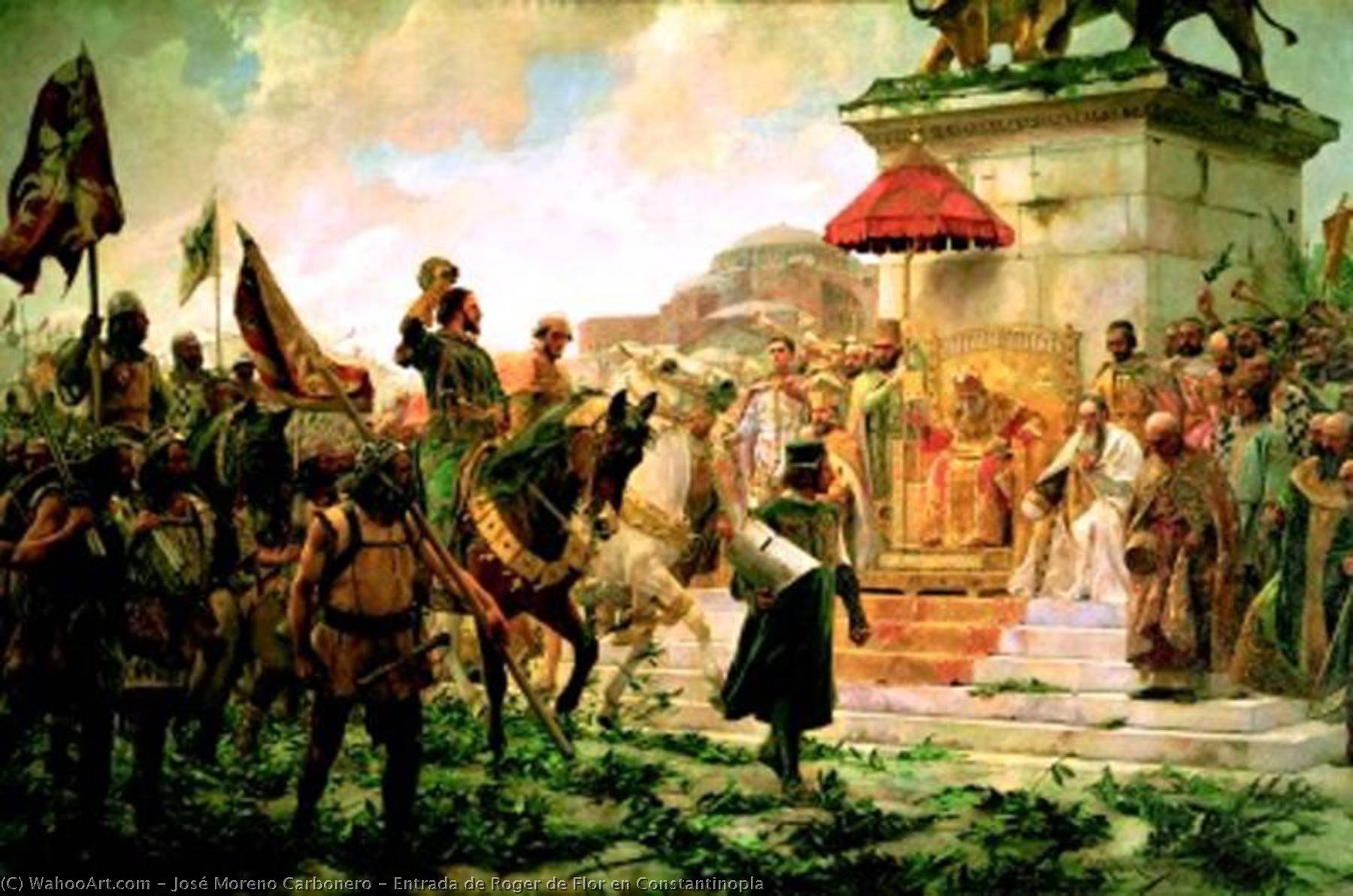
Entrada de Roger de Flor en Constantinopla
 Read More
Hand Made Oil Reproduction
Hand-painted oil on canvas in your size and frame, made to order by our artists. ( Buy Print Buy Image)




































Pick from our preset sizes that match the artwork's original proportions.

You may enter your own dimensions to fit a specific frame or space. If your selected size does not match the original image's proportions, we will either crop the artwork or extend the painting with additional hand-painted elements. A digital mockup will be sent for your approval before production begins.
Please note that the on-screen preview does not reflect the actual cropping or extension. Only the mockup will accurately show the final composition.
While custom sizes are available, we recommend selecting a dimension from the predefined list to preserve the original proportions.
After order, ArtsDot.com team will email client for instructions and provide a mockup preview
Worldwide Delivery () in 3/4 weeks instead of standard 5 weeks. (23 August). No compromise on quality.

Free Worldwide Express Shipping

High-Quality Linen Canvas

Full Shipping Insurance

Customs Tax Refund Guarantee

True Color Matching Guarantee

60-Day Return Policy (Defects Only)

100% Money-Back Guarantee

Bulk Discount Offer
 Glass option is only available in size under 110 CM

Entrada de Roger de Flor en Constantinopla
Reproduction Medium
Reproduction Size
-


Total Price
$ 263
Related Artworks


Artist Biography
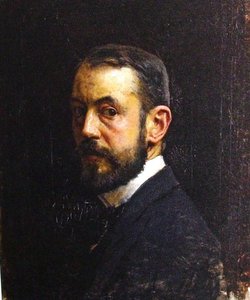
José Moreno Carbonero: A Lasting Legacy of Spanish History Painting
José Moreno Carbonero (1860-1942) stands as a significant figure in 19th-century Spanish art, often recognized as one of the final great proponents of historical painting within that era. While celebrated for his elegant portraiture and patronage from Madrid's elite, his artistic output extended to genre scenes, landscapes (vedutas), and still lifes, showcasing an eclectic talent shaped by diverse influences.
Early Life and Training: Foundations in Málaga
- Birth and Origins: Born in the Perchel quarter of Málaga, Spain.
- Formal Education: In 1868, he enrolled at the School of Fine Arts in Málaga, demonstrating early artistic promise.
- Mentorship of Bernardo Ferrándiz: A crucial influence was his apprenticeship under Bernardo Ferrándiz, a leading artist in Málaga. Ferrándiz introduced Moreno Carbonero to history painting and instilled revolutionary views emphasizing independence, freedom, and nonconformity – themes that would permeate his historical works.
- Early Recognition: He achieved early success, earning the gold medal at the Exhibition of the Lyceum of Málaga in 1872.
- North African Inspiration: A trip to Morocco in 1873 sparked a series of paintings inspired by Mariano Fortuny’s style, focusing on African themes.
Parisian Studies and the Rise of a Virtuoso Style
- Scholarship to Paris (1875): A scholarship from the local government of Málaga enabled him to study in Paris under Jean-Léon Gérôme, known for his academic and Orientalist works.
- Adolphe Goupil's Influence: Introduction to art dealer Adolphe Goupil exposed Moreno Carbonero to the market for small genre paintings ("tableautins").
- Fortuny’s Shadow & Developing Virtuosity: He developed a virtuoso style closely resembling that of Mariano Fortuny, achieving early successes in the "tableautin" format.
- Roman Studies (1881): Further studies in Rome on a stipend honed his skills and contributed to his later historical works.
Major Achievements and Official Recognition
- National Exhibition Successes: Won gold medals at the National Exhibitions of 1881 ("The Prince Don Carlos de Viana") and 1884 ("The Conversion of the Duke of Gandía").
- Royal Commissions: Received significant commissions from official institutions, including a painting "The Entry of Roger de Flor in Constantinople" commissioned by the Spanish Senate in 1888.
- International Acclaim: Garnered numerous awards at international exhibitions, including honors at the Vatican Exposition (1888), Munich and Vienna Exhibitions, Exposition Universelle in Paris (1889 - second medal), Budapest International Exhibition (1890 – great gold medal), Berlin Universal Exhibition (1891 – honorary diploma), and the World's Columbian Exposition in Chicago (1893 – only medal).
- The Founding of Buenos Aires: Commissioned by the Argentine government to paint "The Founding of Buenos Aires" for the 100th anniversary of the Argentine Revolution. King Alfonso XIII gifted the work to Buenos Aires, and Moreno Carbonero later reworked it based on further historical research, demonstrating his commitment to accuracy.
- Academic Career: Served as a professor of live drawing at the Real Academia de Bellas Artes de San Fernando from 1892.
Artistic Style and Historical Significance
Moreno Carbonero’s artistic style was eclectic, heavily influenced by Mariano Fortuny's work. His portraits were characterized by a realistic approach and sophisticated treatment of subjects. As a history painter, he excelled in clear drawing and clean brushstrokes, often drawing inspiration from his early genre painting experience. He distinguished himself by focusing on the emotions and reactions of individuals within historical events rather than grand narratives, prioritizing historical accuracy through meticulous research.
His legacy lies in being one of the last significant Spanish history painters of the 19th century, bridging traditional academic techniques with a growing interest in realism and psychological depth. His dedication to detail and his ability to capture human emotion within historical contexts cemented his place as an important figure in Spanish art.
José Moreno Carbonero
1860 - 1942
Quick Facts
- Artistic Movement Or Style: History painting, Realism
- Artists Who Influenced This Artist:
- Mariano Fortuny
- Jean-Léon Gérôme
- Date Of Birth: 1860
- Date Of Death: 1942
- Full Name: José Moreno Carbonero
- Nationality: Spanish
- Notable Artworks:
- Entrada de Roger de Flor...
- Drinking from the Fountain
- The Founding of Buenos Aires