 Preview
 Send
Send Share
Share
 Details

 Download
 Similars
 X-Ray
X-Ray Diaporama
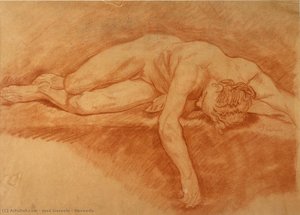
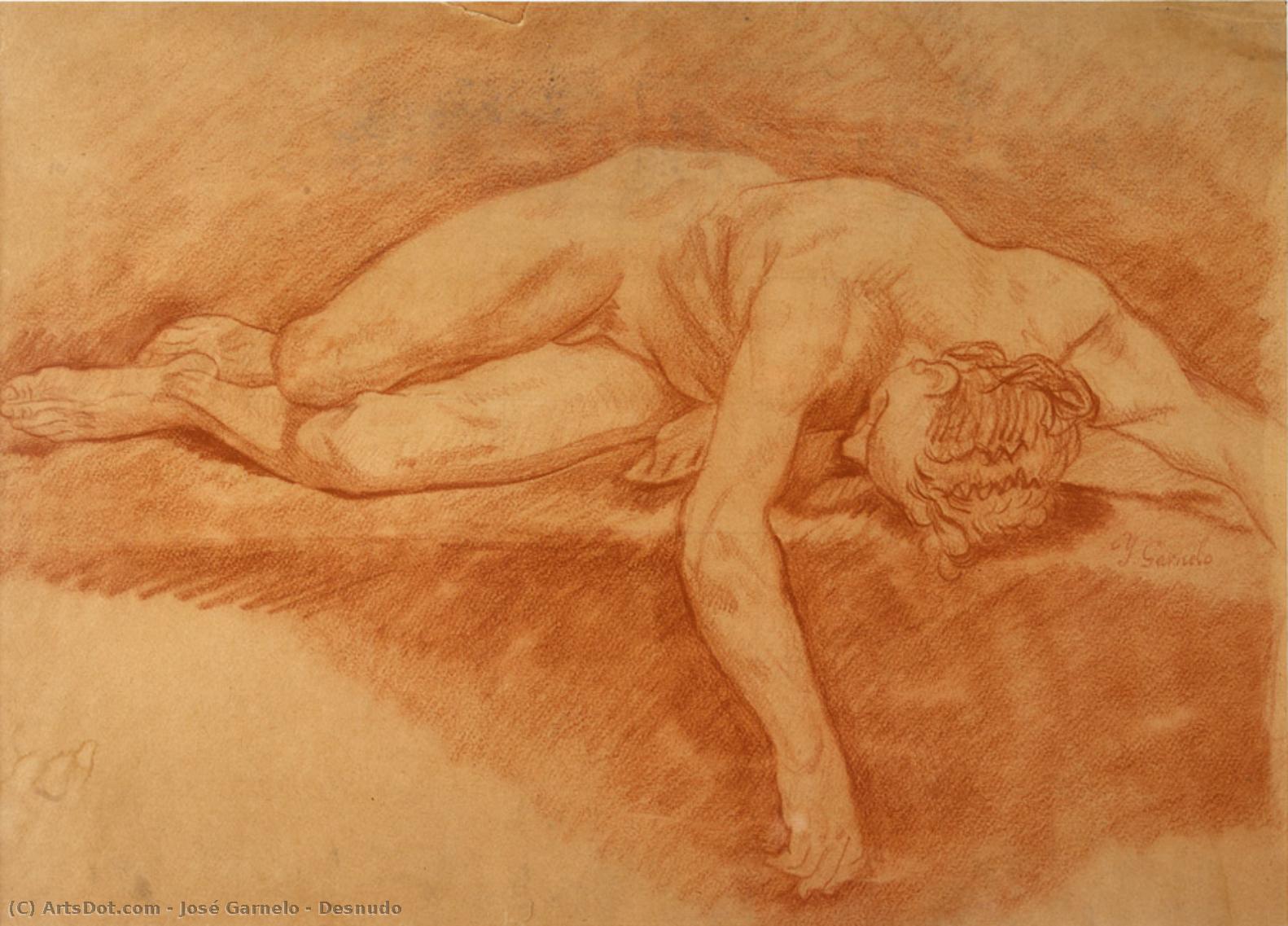
Desnudo

 Read More
Hand Made Oil Reproduction
Hand-painted oil on canvas in your size and frame, made to order by our artists. ( Buy Print Buy Image)




































Pick from our preset sizes that match the artwork's original proportions.

You may enter your own dimensions to fit a specific frame or space. If your selected size does not match the original image's proportions, we will either crop the artwork or extend the painting with additional hand-painted elements. A digital mockup will be sent for your approval before production begins.
Please note that the on-screen preview does not reflect the actual cropping or extension. Only the mockup will accurately show the final composition.
While custom sizes are available, we recommend selecting a dimension from the predefined list to preserve the original proportions.
After order, ArtsDot.com team will email client for instructions and provide a mockup preview
Worldwide Delivery () in 3/4 weeks instead of standard 5 weeks. (16 August). No compromise on quality.

Free Worldwide Express Shipping

High-Quality Linen Canvas

Full Shipping Insurance

Customs Tax Refund Guarantee

True Color Matching Guarantee

60-Day Return Policy (Defects Only)

100% Money-Back Guarantee

Bulk Discount Offer
 Glass option is only available in size under 110 CM

Desnudo
Reproduction Medium
Reproduction Size
-


Total Price
$ 263
Related Artworks
Artist Biography
The Soul of Spanish Naturalism: The Life and Legacy of José Santiago Garnelo y Alda
In the golden twilight of the nineteenth century, a period defined by a profound tension between romantic idealism and the burgeoning rigor of scientific observation, José Santiago Garnelo y Alda emerged as a master of the Spanish Naturalist movement. Born in 1866 in Enguera, Spain, Garnelo’s early years were shaped by an environment of intellectual curiosity, nurtured by a father who was a physician. This foundational exposure to the meticulous study of reality would later manifest in his brushwork, which sought not merely to decorate, but to document the human condition with an almost clinical precision and deep emotional resonance. As he moved from the quiet landscapes of his youth toward the vibrant artistic hubs of Seville and Madrid, Garnelo began to weave a visual language that could bridge the gap between the grandiosity of classical history and the intimate, often overlooked nuances of everyday life.
His artistic evolution was far from accidental; it was a deliberate pilgrimage through the most prestigious academies of his era. The halls of the Escuela de Bellas Artes de Santa Isabel de Hungría in Seville provided him with the technical scaffolding necessary for greatness, as he studied under the watchful eyes of Eduardo Cano and Manuel Ussel de Guimbarda. This training was further refined in Madrid at the Real Academia de Bellas Artes de San Fernando, where the influence of Casto Plasencia and Diómedes Puebla instilled in him a command over light and form that would become his hallmark. However, it was perhaps his time in Rome, supported by a prestigious study stipend, that truly transformed his perspective. Immersed in the echoes of antiquity and the enduring legacies of the Renaissance masters, Garnelo learned to infuse his compositions with a sense of timelessness, treating every portrait and genre scene as if it were a fragment of an eternal narrative.
Mastery of Genre and the Classical Narrative
Garnelo’s oeuvre is a breathtaking tapestry of diverse subject matter, ranging from the quiet dignity of portraits to the dramatic tension of historical scenes. He possessed a rare ability to navigate the Naturalist style, utilizing a palette that felt both grounded in earth tones and luminous with captured light. His work often focused on genre scenes—intimate glimpses into the lives of common people—where he could explore textures, fabrics, and the subtle play of shadows across a room. Yet, he was equally at home in the realm of the epic. In 1892, his ability to breathe life into the past was cemented when he won first prize at the National Exhibition of Fine Arts for his classical portrait of Cornelia Africana. This achievement demonstrated that his technical skill was matched by a profound psychological depth, allowing him to render historical figures not as distant icons, but as living, breathing entities with palpable human emotions.
The significance of his work lies in this very duality: the ability to elevate the mundane and humanize the monumental. His paintings often serve as windows into a vanished world, capturing the textures of 19th-century Spanish life with such fidelity that the viewer can almost feel the weight of the textiles or the warmth of the sunlight. Through his meticulous attention to detail, Garnelo contributed to a broader cultural movement in Spain that sought to find beauty in truth and dignity in reality. His legacy is not merely found in the museums that house his canvases, but in the way he taught subsequent generations to look closer at the world around them, finding the extraordinary within the ordinary.
- Artistic Style: Naturalism, Academicism, and Classical Portraiture.
- Key Themes: Historical narratives, everyday genre scenes, and psychological portraiture.
- Notable Achievements: Recipient of prestigious medals in Spain; winner of the first prize at the National Exhibition of Fine Arts for Cornelia Africana.
- Educational Pedigree: Trained at the Escuela de Bellas Artes de Santa Isabel de Hungría and the Real Academia de Bellas Artes de San Fernando.
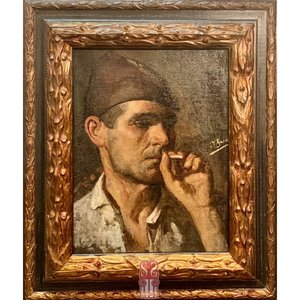
josé santiago garnelo y alda
1866 - 1944 , Spain
Quick Facts
- Artistic Movement Or Style: Naturalism
- Artists Or Movements Influenced By This Artist: ['Pablo Picasso']
- Artists Who Influenced This Artist:
- Eduardo Cano
- Manuel Ussel de Guimbarda
- Date Of Birth: July 25, 1866
- Date Of Death: October 28, 1944
- Full Name: José Santiago Garnelo y Alda
- Nationality: Spanish
- Notable Artworks:
- Pie
- Retrato
- Desnudo
- Place Of Birth: Enguera, Spain