![[auto-retrato Num Grupo] (pintura Para O Café ” A Brasileira” Do Chiado, Lisboa) — José Sobral De Almada Negreiros](/media/artworks/images-full/2e/12/2e126776cc1e1dc4675a3df00ae2ce5b.jpg)
 Preview
 Send
Send Share
Share
 Details

 Download
 Similars
 X-Ray
X-Ray Diaporama
[Auto-Retrato num grupo] (Pintura para o café ” A Brasileira” do Chiado, Lisboa)


 Read More
Giclée / Art Print
Museum-quality giclée or canvas print with fast production and flexible finish options. ( Buy Hand Made Painting Buy Image)




P118B $10

P118H $10

P118W $10

P438Z $10

P508JH $12

P508YH $12

P805H $10

P805Z $10

P919BZ $10

P919G $10

P919XJ $10

P959ZH $10

P968JZ $12

W106C $8

W218G $10

W218JH $8

W218Y $10

W307PJ $10

W316G $10

W316PJ $8

W316Y $10

W398PJ $8

W4111J $10

W500HY $15

W500JH $15

W692G $12

W849H $8

W940BG $15

W953PJ $8




Pick from our preset sizes that match the artwork's original proportions.

You may enter your own dimensions to fit a specific frame or space. If your selected size does not match the original image's proportions, we will either crop the artwork or extend the image with a mirrored or solid-fill edge. A digital mockup will be sent for your approval before production begins.
Please note that the on-screen preview does not reflect the actual cropping or extension. Only the mockup will accurately show the final composition.
While custom sizes are available, we recommend selecting a dimension from the predefined list to preserve the original proportions.
Worldwide Delivery () in 2 weeks instead of standard 4/5 weeks. (30 August)

Free Worldwide Express Shipping

High-Quality Linen Canvas

Full Shipping Insurance

Customs Tax Refund Guarantee

True Color Matching Guarantee

60-Day Return Policy (Defects Only)

100% Money-Back Guarantee

Bulk Discount Offer
 Glass option is only available in size under 110 CM

[Auto-Retrato num grupo] (Pintura para o café ” A Brasileira” do Chiado, Lisboa)
Giclée / Art Print
Reproduction Size
-


Total Price
$ 63
A Moment Frozen in Modernist Time
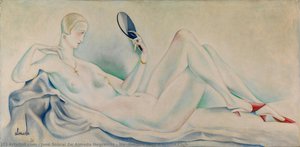
In the heart of Lisbon’s historic Chiado district, where the air is thick with the scent of roasted coffee and the echoes of intellectual debate, lies a profound visual memory captured by the visionary José Sobral de Almada Negreiros. His 1925 masterpiece, [Auto-Retrato num grupo], originally conceived for the iconic Café “A Brasileira,” serves as more than just a decoration; it is a window into the soul of Portuguese Modernism. The painting presents a striking black and white composition of four figures gathered around a dining table, their presence anchored in an intimate, shared moment of repose. Through the stark contrast of light and shadow, Negreiros invites us to witness a quiet tableau of camaraderie, where the simple act of sharing a meal becomes a monumental expression of human connection.
The technique employed in this work reflects the artist's profound command over the interplay between form and atmosphere. By stripping away the distraction of color, Negreiros focuses the viewer's gaze on the structural essence of the scene—the way light catches the rim of a cup, the heavy drape of a tie left casually on a chair, and the subtle geometry of the seated figures. This monochromatic approach lends the piece a timeless, almost cinematic quality, reminiscent of early 20th-century photography. The brushwork, while controlled, possesses an underlying energy that speaks to the Futurist influences present in Negreiros' broader oeuvre, injecting a sense of rhythmic movement into what might otherwise be a static portrait.
Symbolism and the Spirit of the Avant-Garde
Beyond its surface depiction of a cafe scene, the artwork vibrates with the social and cultural symbolism of the 1920s. During this era, cafes like “A Brasileira” were not merely eateries but crucibles of revolution, where poets, painters, and thinkers forged the identity of a new age. The arrangement of the figures—seated in a way that suggests an egalitarian closeness—mirrors the communal spirit of the avant-garde movements of the time. Each element, from the scattered bowls to the casual placement of clothing, serves as a testament to the beauty found in the everyday and the rejection of rigid, academic formality. It is a celebration of the "lived moment," a core tenet of the Modernist movement that sought to find art within the pulse of urban life.
For the discerning collector or interior designer, this piece offers an unparalleled opportunity to introduce a sense of historical depth and intellectual sophistication into a space. The stark, monochromatic palette makes it a versatile choice for contemporary settings, providing a focal point that complements both minimalist modernism and classic European elegance. A high-quality reproduction of this work does not merely decorate a wall; it anchors a room with the weight of history and the quiet, enduring strength of Portuguese artistic heritage. It is an invitation to pause, much like the figures in the painting, and find beauty in the shared, silent narratives of our existence.
Related Artworks

Artist Biography
A Visionary Bridging Art Nouveau and Futurism
José Sobral de Almada Negreiros (1893–1970) stands as a singular figure in Portuguese Modernist art, embodying an extraordinary fusion of stylistic influences that resulted in a distinctive artistic vision. Born in São Tomé, Portugal, his upbringing instilled within him a deep connection to the colonial landscape and its cultural heritage, shaping his artistic sensibilities from an early age. His father, António Lobo de Almada Negreiros, was of Portuguese descent, while his mother, Elvira Freire Sobral, carried Santomean roots, creating a rich tapestry of familial traditions that would permeate his creative endeavors throughout his prolific life.
Almada Negreiros’ artistic pursuits extended far beyond the realm of painting alone. He possessed a remarkable versatility, demonstrating profound talent in diverse mediums including literature, ballet choreography, and graphic arts. His hand was equally adept at engraving, mural painting, caricature, mosaic, azulejo, and stained glass. This multifaceted approach reflects a broader intellectual curiosity and an unwavering desire to engage with various artistic disciplines. Notably, his active participation in ballet productions showcased a sophisticated understanding of movement and spatial composition, allowing him to translate the rhythm of dance into the static beauty of visual art.
The Convergence of Movement and Dream
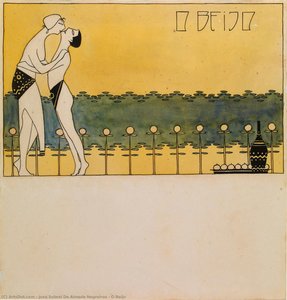
His artistic style was profoundly impacted by two dominant movements of the early 20th century: Futurism and Surrealism. The Futurists championed dynamism, speed, and technological advancement, mirroring Negreiros’ fascination with innovative techniques and experimental forms. This energy is palpable in works such as O Beijo, where Art Nouveau elegance meets Futurist dynamism to create a mesmerizing depiction of lovers amidst vibrant florals. Simultaneously, Surrealist principles—characterized by dreamlike imagery and the exploration of the subconscious—influenced his compositions, adding layers of symbolism and psychological depth that defied conventional boundaries.
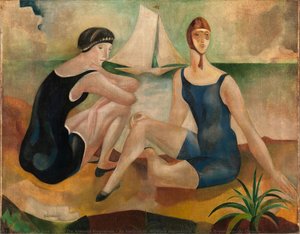
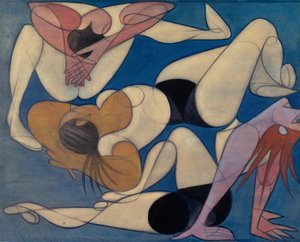
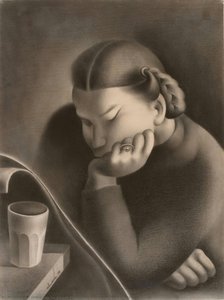
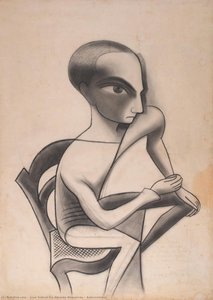
This stylistic blend allowed him to navigate between the structured elegance of the past and the fragmented, energetic reality of the modern age. Whether through a striking monochrome Autorretrato that captures a masterful blend of Art Nouveau grace and Futurist tension, or his more decorative works like As banhistas, Negreiros maintained a unique voice. In the latter, he utilized an Art Deco sensibility to depict scenes of beach leisure with serene beauty and stylized figures, proving his ability to master different aesthetic languages while maintaining his personal touch.
A Legacy Written in Murals and Motion
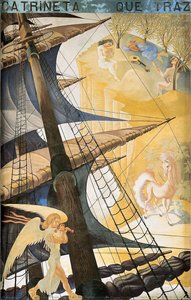
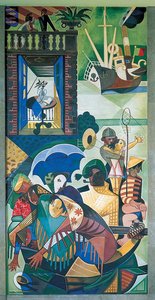
The historical significance of Almada Negreiros lies in his ability to weave the spirit of Portuguese identity into the fabric of international Modernism. His large-scale works, particularly his murals, serve as monumental testaments to his skill. A prime example is his 1943 triptych located at the Alcântara Station, titled Here Comes the Nau Catrineta That Has a Lot to Tell. This vibrant mural captures a lively sailing scene filled with movement and celestial figures, acting as a captivating piece of historical artistry that brings the energy of Portuguese maritime history into a modern architectural space.
Throughout his career, Negreiros remained a pivotal force in the Portuguese art scene, leaving behind a legacy that encompasses:
- Interdisciplinary Mastery: A seamless integration of visual arts, dance, and literature.
- Stylistic Innovation: The successful synthesis of Art Nouveau, Futurism, and Surrealism.
- Cultural Impact: The creation of enduring public works, such as his decorative paintings for the Café «A Brasileira» in Chiado.
- Modernist Leadership: A role in defining the aesthetic trajectory of 20th-century Portuguese art through social commentary and vibrant depictions of daily life.
Ultimately, the work of José Sobral de Almada Negreiros remains a profound exploration of the human condition, captured through the lens of a man who saw no boundaries between the movement of a dancer, the stroke of a brush, and the written word.
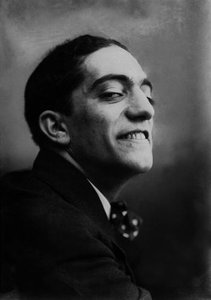
josé sobral de almada negreiros
1893 - 1970 , Portugal
Quick Facts
- Artistic Movement Or Style: Modernism, Futurism
- Artists Who Influenced This Artist:
- Georges Braque
- Pablo Picasso
- Date Of Birth: April 7, 1893
- Date Of Death: June 15, 1970
- Full Name: José Sobral de Almada Negreiros
- Nationality: Portuguese
- Notable Artworks:
- Nu (Pintura para o Bristol Club)
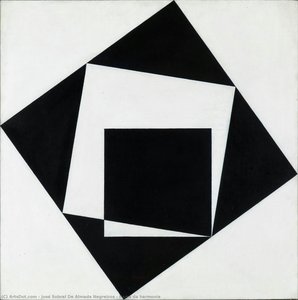
- Porta da harmonia
- Drawing
- Place Of Birth: São Tomé, Portugal
Related Articles

White on Canvas: 10 Masterpieces & Timeless Elegance for Your Home Decor
Explore 10 iconic white paintings by Monet, Whistler & Rothko! Discover the stories behind these serene masterpieces and their impact on art history. Find museum-quality reproductions for your home decor at .

Dark Masterpieces: 10 Iconic Paintings Dominated by Black Tones |
Explore 10 iconic paintings dominated by black tones, from Rembrandt’s chiaroscuro to Goya's dark expressions. Discover the stories behind these masterpieces & find museum-quality art reproductions for your home at .

Monochrome Visions: Exploring the Aesthetic & Historical Significance of Black & White Photography
Explore the rich history & artistic power of black and white photography. From early techniques to iconic masters like Ansel Adams, discover why monochrome continues to captivate art lovers today. Expert insights for collectors.
Mars Black Masterpieces: 10 Iconic Paintings & Timeless Art Decor Ideas
Delve into the power of 'Mars Black' with 10 iconic paintings by masters like Rembrandt & Caravaggio. Explore dramatic chiaroscuro, gothic art, and timeless beauty. Find museum-quality reproductions & elevate your home decor on .
The Subtleties of White: Exploring Absence, Light & Symbolism in Art History
Explore the profound symbolism & history of white in art! From ancient purity to modern abstraction, discover how artists have used absence & light. Expert insights from ArtsDot.
![[Auto-Retrato num grupo] (Pintura para o café ” A Brasileira” do Chiado, Lisboa)](/media/artworks/images-thumb/a4/61/a461098d89246fd864c410f9903ef5b3.jpg)
![[Autorretrato]](/media/artworks/images-thumb/af/cd/afcd4e3d871ed237e7f0234288238414.jpg)