 Preview
 Send
Send Share
Share
 Details

 Download
 Similars
 X-Ray
X-Ray Diaporama
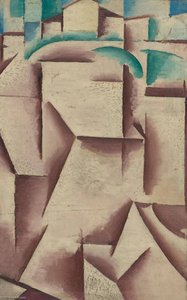
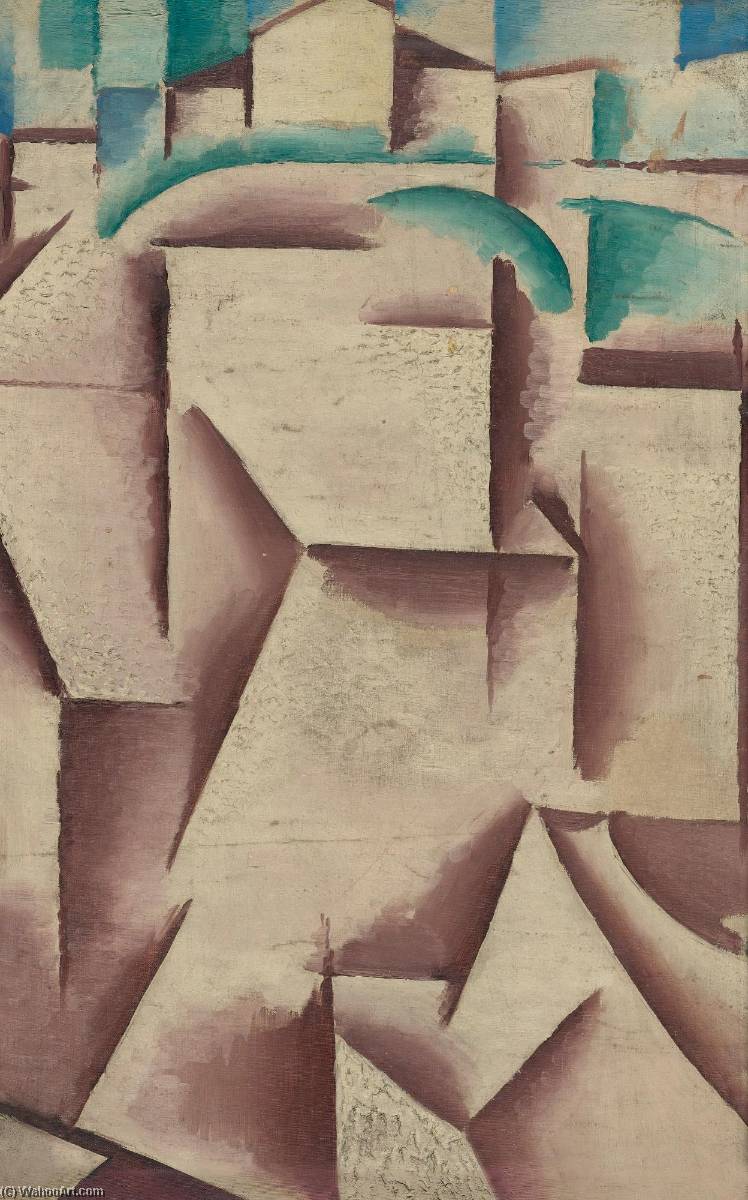
Cubist Landscape recto Contemplation verso

 Read More
Hand Made Oil Reproduction
Hand-painted oil on canvas in your size and frame, made to order by our artists. ( Buy Print Buy Image)




































Pick from our preset sizes that match the artwork's original proportions.

You may enter your own dimensions to fit a specific frame or space. If your selected size does not match the original image's proportions, we will either crop the artwork or extend the painting with additional hand-painted elements. A digital mockup will be sent for your approval before production begins.
Please note that the on-screen preview does not reflect the actual cropping or extension. Only the mockup will accurately show the final composition.
While custom sizes are available, we recommend selecting a dimension from the predefined list to preserve the original proportions.
After order, ArtsDot.com team will email client for instructions and provide a mockup preview
Worldwide Delivery () in 3/4 weeks instead of standard 5 weeks. (27 August). No compromise on quality.

Free Worldwide Express Shipping

High-Quality Linen Canvas

Full Shipping Insurance

Customs Tax Refund Guarantee

True Color Matching Guarantee

60-Day Return Policy (Defects Only)

100% Money-Back Guarantee

Bulk Discount Offer
 Glass option is only available in size under 110 CM

Cubist Landscape recto Contemplation verso
Reproduction Medium
Reproduction Size
-


Total Price
$ 263
Related Artworks






Artist Biography
The Visionary Architect of Form and Thought
In the vibrant tapestry of early 20th-century European modernism, few figures possess a legacy as intellectually profound and stylistically diverse as Josef Čapek. Born in 1887 in Hronov, Bohemia, Čapek was far more than a mere practitioner of the brush; he was a polymath whose creative spirit bridged the gap between visual art, literature, and the very language of the future. While history often remembers his brother, Karel Čapek, for introducing the concept of the robot to the world, it was Josef who provided the aesthetic soul to much of this era's avant-garde movement. His life was a testament to the power of multidisciplinary exploration, moving seamlessly from the structured geometry of Cubism to the raw, emotive depths of Expressionism.
Čapek’s artistic journey began in the intellectual cradle of Prague, shaped by an upbringing that valued scientific inquiry and artistic curiosity. His early training at the School of Applied Arts instilled in him a rigorous understanding of form, yet his spirit could not be contained by traditional boundaries. During the pivotal years of the 1910s, the magnetic pull of Paris drew him into the heart of the revolutionary Cubist movement. Here, he learned to dissect reality, breaking the world into fragmented planes and multiple perspectives. This period was not merely about technical experimentation; it was an intellectual pursuit to reconstruct visual truth through a lens of modern complexity.
A Synthesis of Emotion and Geometry
As his career matured, Čapek’s work underwent a fascinating metamorphosis. He did not simply cling to the rigid structures of Cubism; instead, he began to infuse them with the visceral energy of Expressionism. This unique synthesis allowed him to create works that were simultaneously intellectually structured and emotionally resonant. In his landscapes, one finds a profound sense of contemplation, where geometric forms serve as vessels for atmospheric mood and light. His portraits, too, reflect this duality, capturing the fleeting nuances of human psychology through expressive brushwork and a masterful command of tonal variation.
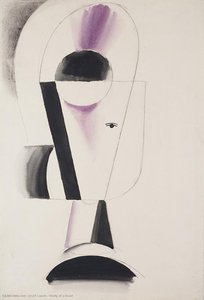
The breadth of his technical skill is perhaps most evident in works such as Study of a Head, where the meticulous observation of anatomy meets an almost haunting psychological depth. His ability to manipulate texture and color allowed him to evoke the "art of the unconscious," a concept he championed alongside his literary endeavors. Whether through the playful minimalism of his later years or the intense, fractured compositions of his youth, Čapek’s oeuvre remains a captivating study in the balance between the seen and the felt.
Legacy Amidst Shadows and Light
The latter years of Čapek’s life were marked by the profound darkness of the mid-20th century. As a vocal critic of National Socialism, his courage led to his arrest by the Gestapo in 1939. The trajectory of his life, once defined by the bright light of artistic innovation, was tragically diverted through the harrowing landscapes of concentration camps, including Dachau and Buchenwald. Even in the depths of such unimaginable suffering, his creative impulse persisted; he composed poignant poems from within the confines of the camps, proving that the artist's voice can remain unextinguished even when the body is imprisoned.
Josef Čapek passed away in April 1945 in Bergen-Belsen, leaving behind a legacy that continues to inspire awe. His significance extends far beyond the canvas; he was a pioneer who anticipated the technological and social anxieties of the modern age. Today, we recognize him not just as a painter of remarkable sensitivity, but as a visionary whose work serves as a bridge between the classical traditions of the past and the fragmented, automated reality of our contemporary world. His life remains a powerful reminder of the enduring strength of the human spirit and the transformative power of art.

Quick Facts
- Artistic Movement Or Style: Cubism
- Artists Or Movements Influenced By This Artist: ['Expressionism']
- Artists Who Influenced This Artist: ['Wassily Kandinsky']
- Date Of Birth: March 23, 1887
- Date Of Death: April 1945
- Full Name: Josef Čapek
- Nationality: Czech
- Notable Artworks:
- Study of a head
- Cubist Landscape recto Contemplation verso
- Place Of Birth: Brno, Czech Republic