 Preview
 Send
Send Share
Share
 Details

 Download
 Similars
 X-Ray
X-Ray Diaporama
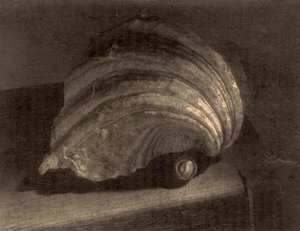
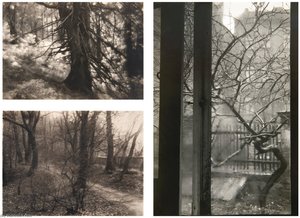
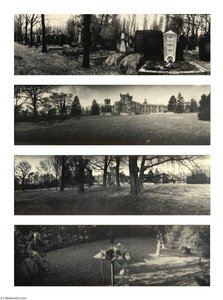
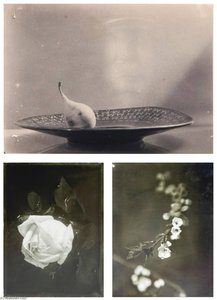
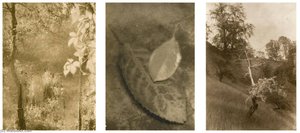
Three Photographs (i) Head of a Sculpture by Matthias Braun (ii) Troja Castle Blossom (iii) The Coming of Autumn

 Read More
Giclée / Art Print
Museum-quality giclée or canvas print with fast production and flexible finish options. ( Buy Hand Made Painting Buy Image)




































Pick from our preset sizes that match the artwork's original proportions.

You may enter your own dimensions to fit a specific frame or space. If your selected size does not match the original image's proportions, we will either crop the artwork or extend the image with a mirrored or solid-fill edge. A digital mockup will be sent for your approval before production begins.
Please note that the on-screen preview does not reflect the actual cropping or extension. Only the mockup will accurately show the final composition.
While custom sizes are available, we recommend selecting a dimension from the predefined list to preserve the original proportions.
Worldwide Delivery () in 2 weeks instead of standard 4/5 weeks. (29 August)

Free Worldwide Express Shipping

High-Quality Linen Canvas

Full Shipping Insurance

Customs Tax Refund Guarantee

True Color Matching Guarantee

60-Day Return Policy (Defects Only)

100% Money-Back Guarantee

Bulk Discount Offer
 Glass option is only available in size under 110 CM

Three Photographs (i) Head of a Sculpture by Matthias Braun (ii) Troja Castle Blossom (iii) The Coming of Autumn
Giclée / Art Print
Reproduction Size
-


Total Price
$ 63
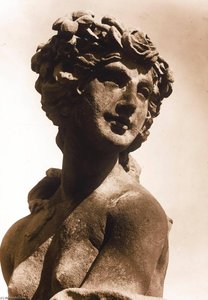
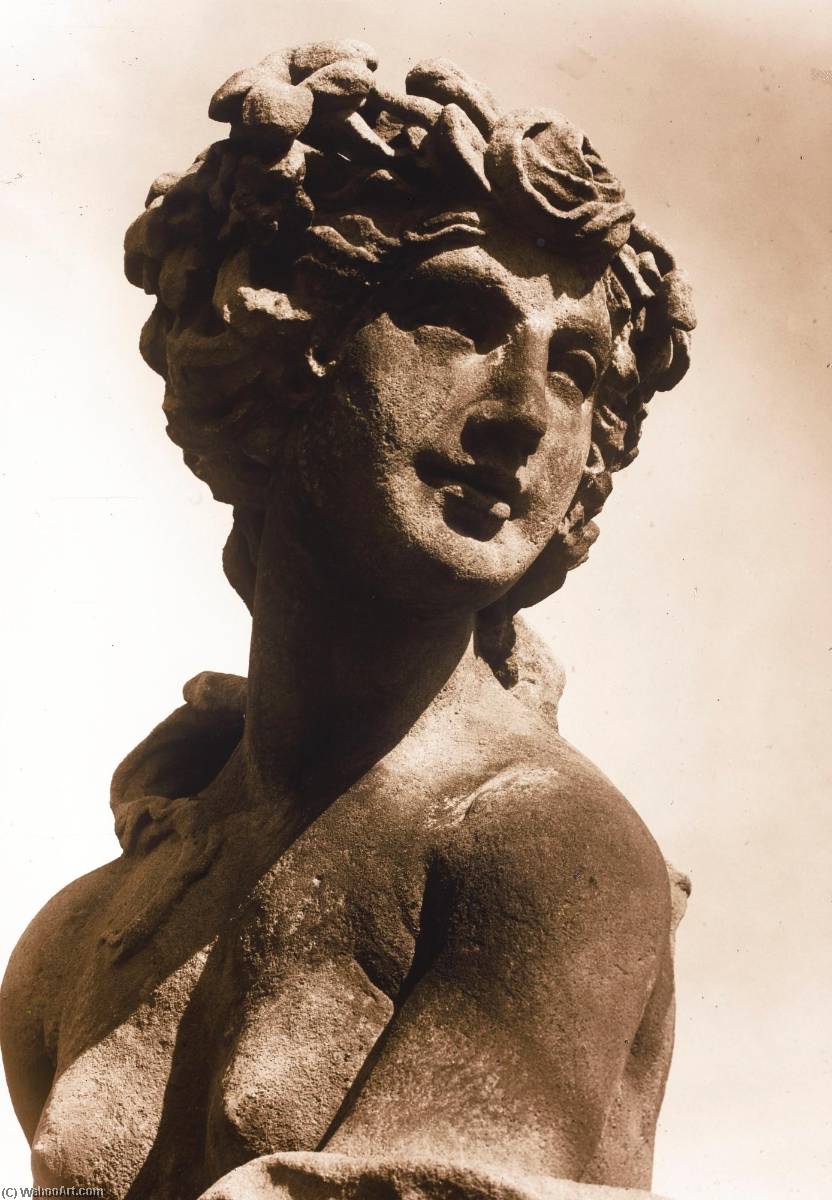
A Glimpse of Classical Beauty: Josef Sudek's "Head of a Sculpture by Matthias Braun"
This evocative photograph, part of Josef Sudek’s “Three Photographs” series, presents a captivating close-up study of a sculpture attributed to Matthias Braun. More than just a portrait, it is a meditation on form, texture, and the enduring power of classical ideals. The subject itself – a sculpted head – embodies serenity and timelessness, hinting at the rich artistic heritage of Europe. Sudek’s masterful composition elevates this seemingly simple image into a work of profound visual interest.Style & Technique: Pictorialism Meets Modernity
Sudek's photographic style occupies an intriguing space between pictorialism and early modernism. While initially embracing the romantic, painterly aesthetic characteristic of pictorialism – evident in his earlier works – he consistently challenged its conventions. This photograph demonstrates a move beyond purely decorative representation. The focus is intensely sharp on the sculpture’s features, capturing every curl of hair and subtle nuance of expression. The lighting, carefully orchestrated to cast shadows across the face, creates depth and drama, highlighting the sculptor's skill in rendering human form. Sudek’s use of a large format camera, despite his physical limitations following wartime injury, underscores his commitment to detail and precision. He skillfully manipulates light and shadow to evoke a sense of quiet contemplation, moving away from purely representational photography towards a more subjective and emotionally resonant approach.Historical Context & The Legacy of Matthias Braun
The sculpture depicted is believed to be the work of Matthias Braun (1836-1915), a significant Czech sculptor known for his neo-classical works, often depicting mythological figures and portraits. Braun’s style reflects the broader European revival of classical forms in the 19th century, drawing inspiration from ancient Greek and Roman art. Sudek's choice to photograph this particular sculpture is not arbitrary; it connects to a lineage of artistic excellence and speaks to the enduring appeal of classical ideals within Czech culture. The photograph itself was created during a period of significant artistic experimentation in Prague, where Sudek played a pivotal role in fostering a more progressive photographic movement.Emotional Impact & Symbolism
Beyond its technical brilliance, this photograph resonates with a quiet emotional power. The serene expression on the sculpture’s face evokes feelings of peace and introspection. The soft lighting and muted background create an atmosphere of tranquility, inviting viewers to pause and reflect. The inclusion of what appear to be leaves or flowers woven into the hair suggests themes of nature, beauty, and perhaps even mortality – a common thread in classical art. Sudek’s photograph isn't merely documenting a sculpture; it is capturing a moment of profound stillness, transforming an inanimate object into a vessel for human emotion and artistic expression. It invites us to consider the enduring power of art to transcend time and connect with our deepest selves.Related Artworks
Artist Biography
The Poet of Prague: The Soulful Vision of Josef Sudek
To step into the photographic world of Josef Sudek is to wander through a dreamscape where light and shadow perform a melancholic dance across the cobblestones of old Prague. Known affectionately as the "Poet of Prague," Sudek possessed an uncanny ability to transform the mundane—a pane of glass, a weathered sculpture, or a shifting autumn leaf—into profound meditations on existence. Born in 1896 in Kolín, Bohemia, his early life was rooted in the meticulous traditions of craftsmanship, having trained as a bookbinder. This foundational respect for texture and detail would later manifest in his photographic prints, which often possessed a tactile, almost sculptural quality that blurred the lines between photography and fine art.
The trajectory of Sudek’s life was irrevocably altered by the horrors of the First World War. Serving on the Italian Front, he suffered a devastating injury that resulted in the amputation of his right arm at the shoulder. While such a physical limitation might have silenced many artists, for Sudek, it became the crucible of his creative spirit. Navigating the world with a single arm, he learned to master cumbersome, large-format cameras, often relying on assistants to manage the heavy equipment. This struggle fostered a unique intimacy with his subject matter; because he could not move with frantic speed, he was forced to wait, to observe, and to feel the slow, rhythmic pulse of light as it moved through his studio window.
A Journey Through Pictorialism and Modernity
Sudek’s artistic evolution was a delicate negotiation between tradition and the avant-garde. In his early years, he was deeply immersed in Pictorialism, a movement that sought to elevate photography to the status of painting through soft focus and emotive compositions. Alongside contemporaries like Jaromír Funke, he helped found the Czech Photographic Society in 1924, championing an aesthetic that prioritized atmosphere over mere documentation. Yet, Sudek was never a stagnant artist. While his heart remained tethered to the romantic and the evocative, he was not immune to the shifting tides of modernism. During the 1930s, he engaged with more commercial, graphic styles, proving his versatility by contributing to influential periodicals like Pestrý týden.
His work is often characterized by a deep sense of Neo-romanticism, a style that found beauty in the ephemeral and the decaying. This is perhaps most evident in his legendary series, The Window of My Atelier. Through this singular vantage point, Sudek captured the changing seasons, the play of rain on glass, and the way sunlight filtered through the foliage of his garden. These images were not merely landscapes; they were psychological portraits of a man in communion with his environment. His ability to find the infinite within the infinitesimal allowed him to create a visual language that felt both deeply personal and universally resonant.
Legacy and the Labyrinths of Light
As the decades progressed and the political landscape of Europe grew increasingly dark, Sudek’s photography took on even more haunting, introspective tones. His later works, such as the Labyrinths series, explored the crowded, cluttered interiors of his studio, turning a small space into an expansive, psychological maze of objects and shadows. This period of his work serves as a testament to his enduring resilience; despite the physical and political upheavals surrounding him, his gaze remained fixed on the spiritual essence of his subjects.
The historical significance of Josef Sudek lies in his refusal to let photography be a mere mirror of reality. Instead, he used it as a prism to refract the soul of Prague. His achievements include:
- Mastery of Light: Redefining how shadow and luminosity could convey complex human emotions.
- Artistic Resilience: Overcoming profound physical disability to pioneer a new, intimate way of seeing.
- Cultural Preservation: Capturing the vanishing textures and atmospheres of pre-war and wartime Prague, creating a vital historical and emotional record.
Today, Sudek stands as a titan of 20th-century photography, an artist whose work continues to haunt and inspire. He remains a reminder that even in the face of loss and darkness, there is a profound, poetic beauty waiting to be discovered by those who know how to truly look.
josef sudek
1896 - 1976
Quick Facts
- Artistic Movement Or Style: Neo-romantic photography
- Artists Or Movements Influenced By This Artist: ['Pictorialism']
- Artists Who Influenced This Artist: ['Jaromir Funke']
- Date Of Death: 1976
- Full Name: Josef Südek
- Nationality: Czech
- Notable Artworks:
- The Window of My Atelier Series
- Prague Nightscapes
- Place Of Birth: Prague, Czech Republic
Related Articles

Bronze Sculptures That Defined Art History | ArtsDot
Journey through art history with our Top 10 bronze sculptures! Explore masterpieces by Rodin, Michelangelo & more. Discover stories behind iconic statues and find museum-quality reproductions for your home decor at ArtsDot.com.

The Enduring Form: Exploring Themes & Techniques in Sculpture Across Historical Periods
Explore the rich history of sculpture from ancient masterpieces to contemporary innovations. Discover key techniques, influential artists & investment potential for discerning art collectors.

Bronze Age to Modern Masters: 10 Sculptures That Redefined Art | ArtsDot
Journey through art history with 10 legendary bronze sculptures – from Michelangelo's David to Rodin’s Thinker. Explore the stories, techniques & timeless beauty of these masterpieces. Find museum-quality reproductions & elevate your home decor on ArtsDot.com.

The Enduring Form: Sculpture Across History, Technique & Emotional Resonance
Explore the rich history of sculpture with ArtsDot. Discover key techniques, influential artists & investment potential for discerning collectors. Expert insights into valuing and collecting timeless masterpieces.

Beyond the Lens: Photography's Enduring Influence on Modern & Contemporary Art
Explore photography's pivotal role in shaping modern & contemporary art. Discover key movements, influential artists like Stieglitz, and expert collecting advice from ArtsDot.