

 Preview
 Send
Send Share
Share
 Details

 Download
 Similars
 X-Ray
X-Ray Diaporama
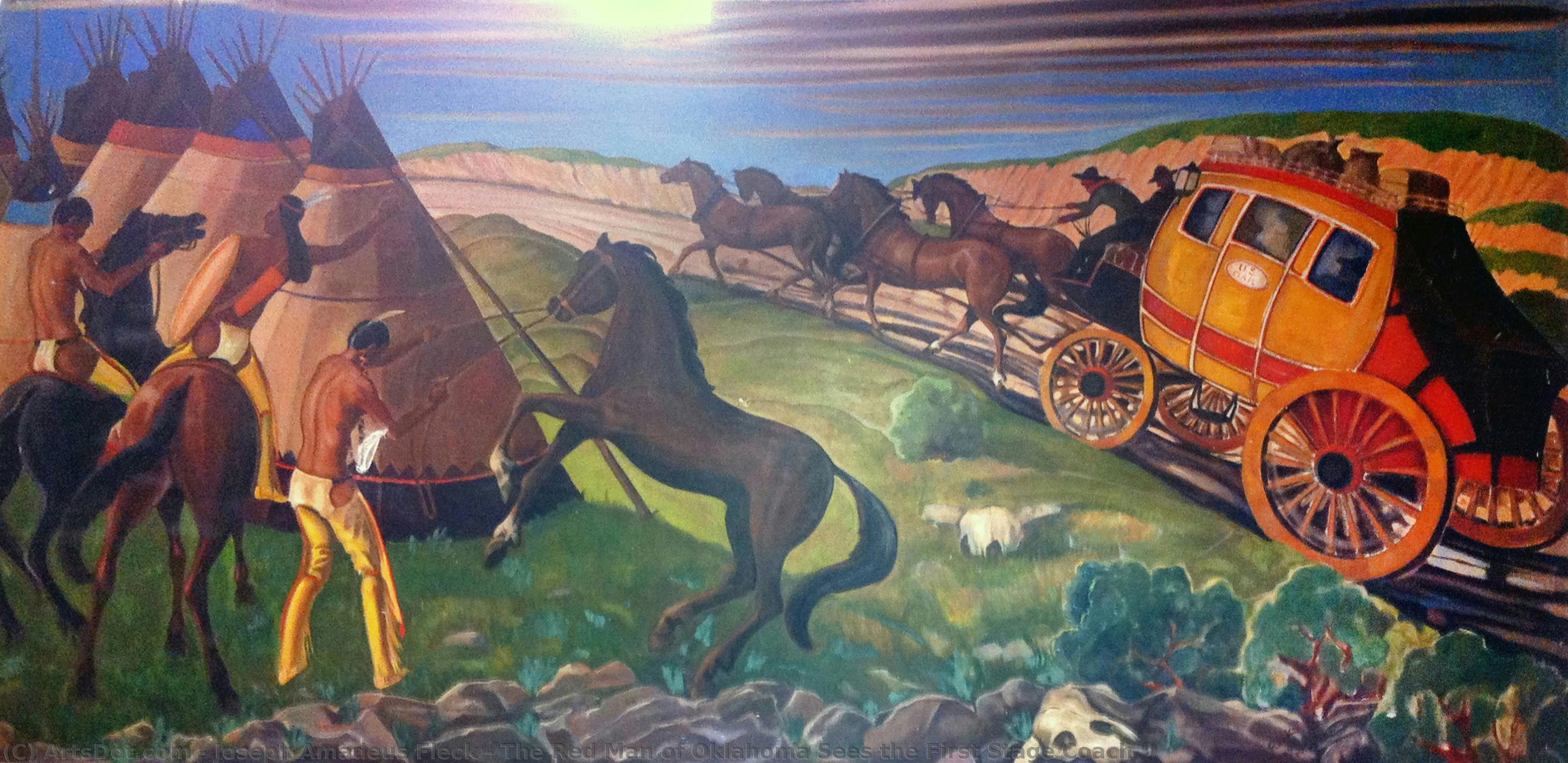
The Red Man of Oklahoma Sees the First Stage Coach


 Read More
Purchase a high-resolution, enhanced digital image, far superior to the online preview.
Each file is meticulously prepared by our in-house specialists using advanced tools and expert manual retouching. We ensure every image has exceptional clarity, precise color accuracy, and fine detail.
The final file is delivered via email within 72 hours, optimized for immediate use in professional, editorial, and print environments. This is the same quality trusted by top-tier design studios, publishers, and galleries.
Digital Image
Download a high-resolution file for personal display, printing, and creative projects. ( Buy Print Buy Hand Made Painting)
Included in Every Digital Image Order
Expert Digital Delivery, Guaranteed
When you choose ArtsDot.com, you're not just getting an image - you're receiving a professionally enhanced digital artwork, crafted with precision and backed by a satisfaction guarantee. Here's everything that comes with your order, automatically:

Fast Email Delivery
Your high-resolution digital image file will be emailed to you within 72 hours of ordering - ready for immediate use.

AI-Enhanced Digital File
Your artwork is professionally optimized using advanced AI tools and manual editing, ensuring maximum detail, clarity, and color accuracy.

Free Lifetime Re-Delivery
Accidentally deleted or lost your file? No worries - we'll resend it to you anytime, free of charge.

No Import Fees - Ever
Enjoy your artwork instantly with zero customs, duties, or delivery fees - digital downloads are always tax-free.

Color Accuracy Guarantee
We ensure your digital image reflects the original colors as closely as possible using professional tools and color management.

60-Day Satisfaction Guarantee
If you're not satisfied with your digital image, we'll revise it or refund 100% within 60 days - no questions asked.

100% Money-Back Guarantee
Not satisfied? Get a full refund within 60 days of receiving your digital file - no questions asked.

Bulk Order Discounts
Buy 3 images, save 10% - Buy 5, save 15% - Buy 10+, save 20%. Great for creative projects, galleries, and agencies.
Collectible Description
A Moment Frozen in Time: The Encounter of Two Worlds
In the vast, sun-drenched expanse of the American Plains, there exists a moment of profound historical tension, captured with breathtaking clarity in Joseph Amadeus Fleck’s 1937 masterpiece, The Red Man of Oklahoma Sees the First Stage Coach. This evocative mural does not merely depict a scene; it captures a collision of eras. The Earth is still, and the wind whispers lightly through the tall grasses, yet the atmosphere is thick with an impending, irreversible change. As the viewer gazates upon this work, they are transported to a time when the rhythmic peace of Indigenous life was suddenly fractured by the jarring, metallic cacophony of progress. The rattling, rumbling, and jingling of the approaching stagecoach serves as the auditory herald of a new age, bringing with it a wave of uncertainty that ripples through the tribal village.
Fleck masterfully orchestrates a sense of movement and psychological depth. One can almost feel the sudden spike in adrenaline as horses, startled by the unfamiliar disturbance, begin to rear and fret. The composition draws the eye from the tranquil activities of the tribe toward the dust-kicking intrusion of the stagecoach. Some figures stand frozen in silent contemplation, while others instinctively reach for their weapons, their faces etched with a mixture of fear, curiosity, and defensive anger. It is a visceral depiction of the precise moment when a civilization’s isolation ends and its struggle with an encroaching tide begins.
The Legacy of the New Deal and Fleck’s Artistic Vision
To understand the soul of this painting, one must look to the era of its creation. Born from the transformative energy of Franklin Roosevelt’s New Deal, this work was part of a monumental effort to revitalize the American spirit through public art. Joseph Amadeus Fleck, a painter whose rigorous training in the prestigious academies of Vienna and Munich provided him with a sophisticated command of classical technique, brought a unique European sensibility to the rugged landscapes of the American West. His selection for the 48 States Competition was not merely an academic achievement but a mission to weave the rich, often painful history of the United States into the very fabric of its public infrastructure.
The mural, which once graced the walls of the original post office in Hugo, Oklahoma, stands as a testament to the power of art to document the human condition. While some works from this period may lean toward romanticized myth, Fleck’s execution is grounded in high emotion and historical weight. He utilizes a style that bridges the gap between Southwestern Impressionism and classical muralism, using light and shadow to emphasize the dramatic tension of the scene. For the collector or the interior designer, this piece offers more than just aesthetic beauty; it offers a profound narrative of resilience and the inevitable march of time.
A Captivating Addition for Discerning Spaces
For those looking to curate a collection that speaks to history, drama, and the American spirit, a high-quality reproduction of this work provides an unparalleled focal point. The painting’s palette—rich with the warm tones of the Oklahoma sun and the earthy hues of the plains—makes it a versatile choice for sophisticated interiors. Whether placed in a study filled with leather-bound books or as a commanding statement piece in a contemporary living space, the artwork invites conversation and deep reflection.
Owning a reproduction of Fleck’s work allows one to preserve the emotional gravity of this historical encounter. It is an invitation to contemplate the complexities of heritage and the transformative power of change. As a piece of fine art, it serves as both a window into a vanished way of life and a tribute to the enduring strength of the human spirit in the face of the unknown.
Related Artworks

Artist Biography
The Viennese Roots of a Southwestern Visionary
The story of Joseph Amadeus Fleck is one of profound geographical and artistic transformation, a journey that began in the heart of the Austro-Hungarian Empire and culminated in the sun-drenched landscapes of the American Southwest. Born on August 25, 1892, in the village of Sziklos, Fleck’s early life was defined by the rigorous academic traditions of Europe. His formative years were spent immersed in the meticulous disciplines of the Kunstgewerbe (Institute of Applied Arts) and the Royal Academy of Fine Arts in Vienna. This classical foundation provided him with a mastery of lithography, etching, and engraving—skills that would later lend a structural precision to his more expressive paintings. His education was not merely about technique but about an immersion into the Austrian Succession movement, where he learned to balance academic excellence with the burgeoning desire for expressive freedom championed by mentors like Hans Tichi and Rudolf Bacher.
However, the trajectory of Fleck’s life was irrevocably altered by the onset of the First World War. Serving as a lieutenant in the Austro-Hungarian army, he found himself thrust into a role that merged his military duty with his artistic calling. As the unofficial artist of his regiment, he captured the grit and heroism of the era, painting portraits of war heroes and significant government figures. This period of conflict, while harrowing, solidified his reputation as a chronicler of human character and historical gravity, preparing him for a life that would eventually seek to capture the spirit of a different, more tranquil frontier.
From Kansas City to the Taos Light
In 1922, Fleck embarked on a monumental transition, immigrating to the United States and settling initially in Kansas City, Missouri. This period served as a vital bridge between his European training and his American future. While working as the chief designer for Tiffany & Co.’s stained glass studios, he continued to refine his portraiture, earning accolades such as the Morris Rosenwald prize from the Art Institute of Chicago. It was during an exhibition in Kansas City that Fleck first encountered the works of the Taos Society of Artists. The vibrant, light-filled canvases of the New Mexico landscape acted as a revelation, prompting him to travel to Taos in 1924 and eventually settle there permanently with his wife, Mable Davidson Mantz.
The arrival of Fleck in Taos marked the birth of a unique stylistic synthesis. He brought with him the disciplined, classical eye of a Viennese engraver and applied it to the rugged, luminous atmosphere of the American West. His work began to reflect a fascinating duality: the structural integrity of European tradition meeting the sweeping, impressionistic light of the high desert. Whether he was painting historical murals or intimate landscapes, Fleck possessed an uncanny ability to imbue his subjects with a sense of timelessness and dignity.
A Legacy of Color and History
Fleck’s artistic output was remarkably diverse, spanning various movements including Regionalism, Social Realism, and even the vibrant experiments of Synchromism. His mastery extended beyond the canvas to large-scale mural work that sought to narrate the history of the American frontier. Notable works such as The Red Man of Oklahoma Sees the First Stage Coach and his depictions of mail crossings in Raton Pass demonstrate his commitment to historical storytelling, blending a sense of romanticism with an observant, almost documentary precision.
Throughout his later years, Fleck remained a significant figure in the American art community, serving as the Dean of Fine Arts at the University of Missouri-Kansas City and receiving honors such as the Leon Gaspard Memorial Prize. His life’s work stands as a testament to the power of artistic migration—how the techniques of an old-world academy can be reimagined to celebrate the raw, untamed beauty of a new world. He left behind a legacy that continues to resonate through his ability to bridge the gap between the meticulous traditions of Vienna and the expansive, light-soaked horizons of the American West.
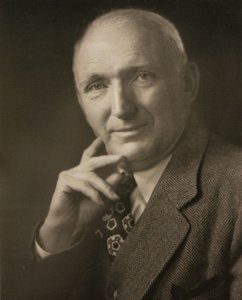
joseph amadeus fleck
1892 - 1977 , Croatia
Quick Facts
- Artistic Movement Or Style: Regionalism
- Artists Or Movements Influenced By This Artist: ['American modernism']
- Artists Who Influenced This Artist:
- Gustav Klimt
- Egon Schiele
- Date Of Birth: August 25, 1892
- Date Of Death: April 5, 1977
- Full Name: Joseph Amadeus Fleck
- Nationality: Austrian-American
- Notable Artworks:
- The Red Man of Oklahoma Sees the First Stage Coach
- First Mail Crossing Raton Pass
- Place Of Birth: Sziklos, Croatia

