 Preview
 Send
Send Share
Share
 Details

 Download
 Similars
 X-Ray
X-Ray Diaporama
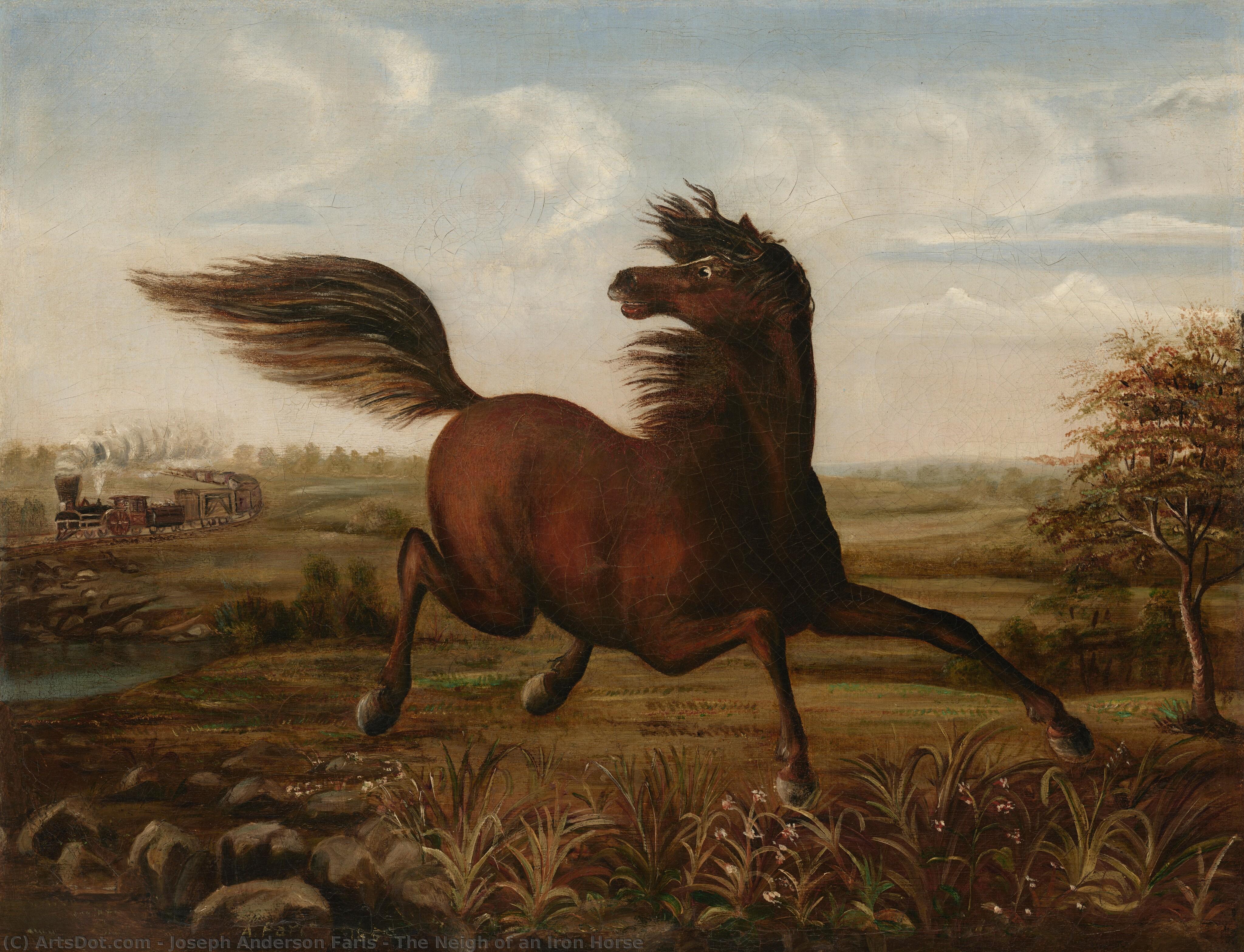
The Neigh of an Iron Horse
 35.0 x 45.0 cm
 Read More
Giclée / Art Print
Museum-quality giclée or canvas print with fast production and flexible finish options. ( Buy Hand Made Painting Buy Image)




































Pick from our preset sizes that match the artwork's original proportions.

You may enter your own dimensions to fit a specific frame or space. If your selected size does not match the original image's proportions, we will either crop the artwork or extend the image with a mirrored or solid-fill edge. A digital mockup will be sent for your approval before production begins.
Please note that the on-screen preview does not reflect the actual cropping or extension. Only the mockup will accurately show the final composition.
While custom sizes are available, we recommend selecting a dimension from the predefined list to preserve the original proportions.
Worldwide Delivery () in 2 weeks instead of standard 4/5 weeks. (1 September)

Free Worldwide Express Shipping

High-Quality Linen Canvas

Full Shipping Insurance

Customs Tax Refund Guarantee

True Color Matching Guarantee

60-Day Return Policy (Defects Only)

100% Money-Back Guarantee

Bulk Discount Offer
 Glass option is only available in size under 110 CM

The Neigh of an Iron Horse
Giclée / Art Print
Reproduction Size
-


Total Price
$ 63
Related Artworks









Artist Biography
Joseph Anderson Faris: A Visionary of Rural America
Born in St. Clairsville, Ohio, in 1833, Joseph Anderson Faris’s life was a testament to the quiet beauty and profound storytelling found within the landscapes and faces of rural America. Initially apprenticed as a cabinetmaker under his father, Faris’s artistic inclinations soon led him to the craft of marble cutting in Wheeling, West Virginia, at the young age of eighteen. This early exposure to meticulous detail and form would profoundly influence his later work, shaping his distinctive style – a captivating blend of naive realism and heartfelt emotion.
Faris's career blossomed during a period when American art was grappling with evolving styles and influences. While he didn’t formally study in an academy, his artistic development was deeply rooted in the traditions of folk art and the visual narratives prevalent in his community. He married Mary E. Pratt in 1856, establishing a home and family life that likely provided a constant source of inspiration for his paintings. His subjects—often humble farmers, their families, animals, and the surrounding countryside—were not depicted with grand formality but rather imbued with an intimate sense of observation and genuine affection.
The Language of Naive Art
Faris is most recognized as a key figure in the realm of naive art – a style characterized by its directness, simplicity, and lack of academic training. His paintings eschew complex perspective or idealized representations, instead favoring bold outlines, vibrant colors, and an unvarnished portrayal of everyday life. This approach wasn’t born from ignorance but rather a deliberate choice to capture the essence of his subjects with honesty and immediacy. He frequently employed a limited palette—earth tones, blues, and greens—to evoke the natural world around him, creating a visual harmony that resonated deeply with viewers.
A crucial element of Faris’s style is his ability to convey emotion through subtle gestures and facial expressions. His portraits, in particular, are remarkable for their capacity to capture a subject's personality—their dignity, resilience, or quiet contemplation—with remarkable sensitivity. Animals, often rendered with an almost anthropomorphic quality, seem to possess a life of their own, reflecting the close relationship between humans and nature that defined rural American culture.
Themes and Influences
Faris’s work is deeply intertwined with the social and cultural fabric of West Virginia in the 19th century. His paintings offer glimpses into the lives of ordinary people—farmers, laborers, and families—who shaped the region's identity. The depiction of animals reflects a deep respect for nature and a recognition of their importance to the community’s livelihood. There is also a strong sense of nostalgia in his work, a yearning for simpler times and a connection to the land.
While he didn’t explicitly cite specific influences, it's believed that Faris drew inspiration from European folk art traditions, particularly German woodcuts and Swiss Alpine paintings. The directness of his compositions, the emphasis on storytelling, and the use of symbolic imagery—such as a lone figure against a vast landscape—echo these artistic precedents. Furthermore, the prevalence of religious themes in rural American art likely played a role in shaping Faris’s visual vocabulary.
Legacy and Recognition
Joseph Anderson Faris died in 1909, leaving behind a remarkable body of work that continues to captivate viewers today. His paintings are not merely depictions of the past; they are windows into a bygone era—a time when life was intimately connected to the rhythms of nature and the values of community. His unique style has earned him recognition as one of the most important figures in American naive art, and his work is now housed in collections around the world.
Frederick F. Faris, Joseph’s nephew, continued the family legacy in architecture, designing notable buildings throughout Wheeling, West Virginia, further cementing the Faris name within the region's cultural landscape. His paintings stand as a testament to the enduring power of simple beauty and the profound stories that can be found in the most unassuming subjects.
joseph anderson faris
1833 - 1909 , United States of America
Quick Facts
- Artistic Movement Or Style: Naive painting
- Date Of Birth: 1833-07-26
- Date Of Death: 1909-05-14
- Full Name: Joseph Anderson Faris
- Nationality: American
- Notable Artworks: ['The Neigh of an Iron Horse']
- Place Of Birth: St Clairsville, USA