 Preview
 Send
Send Share
Share
 Details

 Download
 Similars
 X-Ray
X-Ray Diaporama
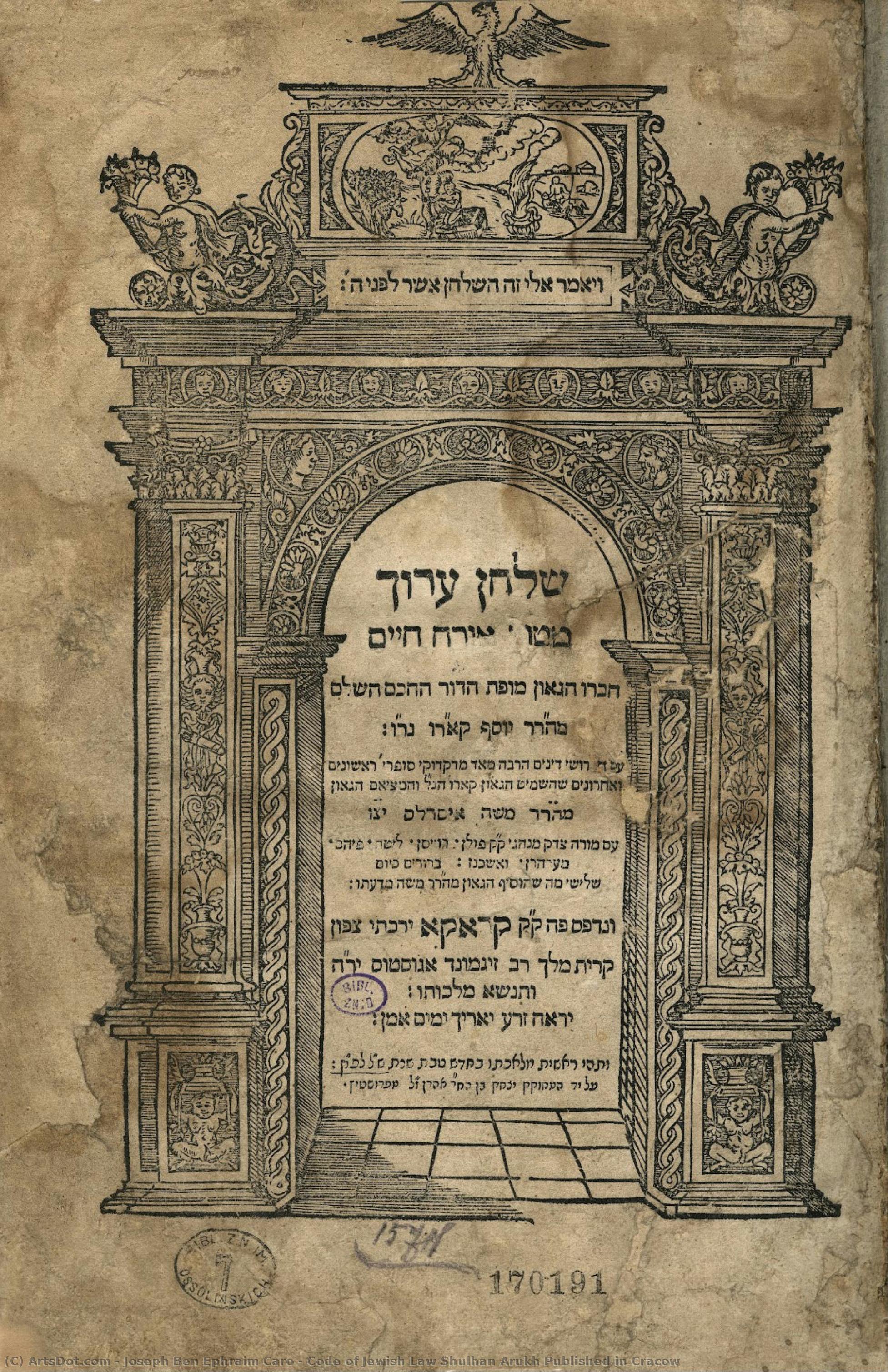
Code of Jewish Law Shulhan Arukh Published in Cracow


 Read More
Hand Made Oil Reproduction
Hand-painted oil on canvas in your size and frame, made to order by our artists. ( Buy Print Buy Image)




































Pick from our preset sizes that match the artwork's original proportions.

You may enter your own dimensions to fit a specific frame or space. If your selected size does not match the original image's proportions, we will either crop the artwork or extend the painting with additional hand-painted elements. A digital mockup will be sent for your approval before production begins.
Please note that the on-screen preview does not reflect the actual cropping or extension. Only the mockup will accurately show the final composition.
While custom sizes are available, we recommend selecting a dimension from the predefined list to preserve the original proportions.
After order, ArtsDot.com team will email client for instructions and provide a mockup preview
Worldwide Delivery () in 3/4 weeks instead of standard 5 weeks. (1 September). No compromise on quality.

Free Worldwide Express Shipping

High-Quality Linen Canvas

Full Shipping Insurance

Customs Tax Refund Guarantee

True Color Matching Guarantee

60-Day Return Policy (Defects Only)

100% Money-Back Guarantee

Bulk Discount Offer
 Glass option is only available in size under 110 CM

Code of Jewish Law Shulhan Arukh Published in Cracow
Reproduction Medium
Reproduction Size
-


Total Price
$ 263
Related Artworks








Artist Biography
A Life Forged in Exile: The Legacy of Joseph Ben Ephraim Caro
Joseph ben Ephraim Karo, known as Qaro, stands as a monumental figure in Jewish legal history—a scholar whose life was inextricably intertwined with the tumultuous events of Sephardic expulsion and diaspora. Born in Toledo, Spain, in 1488, his very existence became a testament to resilience amidst persecution. The Alhambra Decree of 1492 irrevocably altered the course of his early years, forcing his family into exile at the tender age of four. This initial displacement would become a defining motif, shaping not only his personal journey but also the profound depth and breadth of his legal codification.
The ensuing years were marked by a restless search for sanctuary. From Portugal to Morocco, and ultimately settling within the Ottoman Empire in Nikopolis, Karo’s upbringing was steeped in a constant awareness of loss and the fragility of Jewish life. His father, Ephraim, instilled in him a rigorous Talmudic education, laying the foundation for his future scholarship. Following his father's death, Karo found guidance under the tutelage of his uncle Isaac, himself a respected biblical commentator. This early mentorship proved crucial, nurturing the intellectual spark that would eventually illuminate the complexities of Jewish law.
The Shaping of a Halakhic Authority
Karo’s rabbinic career unfolded across several key Ottoman cities—Adrianople, Salonica, and finally Safed in Galilee. It was in Adrianople, during the 1520s, that he embarked on his most ambitious project: the Beit Yosef, a systematic attempt to reconcile centuries of Jewish legal precedent. This undertaking, spanning over two decades, wasn’t merely a compilation; it represented a profound effort to synthesize disparate opinions and offer a cohesive framework for Halakha—Jewish law. The Beit Yosef became a cornerstone of Sephardic jurisprudence, demonstrating Karo's remarkable ability to navigate intricate debates and establish reasoned conclusions.
The move to Safed in 1535 marked a turning point. This city had become a vibrant center for Jewish mysticism—Kabbalah—and Karo found himself immersed in a rich intellectual environment. He collaborated with prominent figures like Jacob Berab, advocating for the reinstatement of semikha, rabbinical ordination, which had been dormant for over eleven centuries. While this effort ultimately proved unsuccessful due to widespread opposition, it underscored his commitment to revitalizing Jewish scholarship and authority. He established a yeshiva in Safed, attracting over 200 students eager to learn from his wisdom.
The Shulhan Arukh: A Table Prepared for Generations
Karo’s magnum opus, the Shulhan Arukh (“Prepared Table”), published in 1565, stands as a testament to his lifelong dedication. This work wasn't intended to replace the Beit Yosef, but rather to present its rulings in a more accessible and concise format—a practical guide for everyday Jewish life. The Shulhan Arukh quickly gained widespread acceptance, becoming the foundational text for Orthodox Jewry. However, it initially reflected primarily Sephardic customs.
Recognizing this limitation, Moses Isserles, a prominent Ashkenazi scholar, appended his own commentary—the Remah—to Karo’s work, incorporating Ashkenazi traditions and rulings. This collaboration bridged the gap between the two major Jewish communities, solidifying the Shulhan Arukh's position as a universally authoritative code of law. The resulting synthesis remains central to Jewish legal discourse today.
A Legacy Beyond Law: Mysticism and Historical Significance
Beyond his monumental legal contributions, Karo’s personal diary reveals a deeply spiritual dimension—a fervent engagement with Kabbalistic practices and mystical experiences. These writings offer a glimpse into the inner life of a scholar driven by an unwavering faith and a profound desire for divine connection. His yearning for martyrdom, inspired by the example of Solomon Molcho, speaks to the intense religious fervor of his time.
Joseph ben Ephraim Karo’s historical significance lies not only in his codification of Jewish law but also in his ability to navigate and synthesize diverse traditions amidst a period of profound upheaval. His work provided a framework for preserving Jewish identity during exile, offering a sense of continuity and stability in the face of displacement and persecution. He is revered as HaMechaber (“the author”) and Maran (“our master”), titles that reflect his enduring influence on Jewish thought and practice—a legacy that continues to shape Jewish life centuries after his death in 1575.
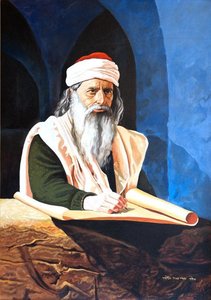
joseph ben ephraim caro
1488 - 1575 , Spain
Quick Facts
- Artistic Movement Or Style: Jewish legal texts
- Artists Or Movements Influenced By This Artist: ['Orthodox Jewry']
- Date Of Birth: 1488
- Date Of Death: March 24, 1575
- Full Name: Joseph Ben Ephraim Caro
- Nationality: Sephardic Jewish
- Notable Artworks:
- Beit Yosef
- Shulhan Arukh
- Place Of Birth: Toledo, Spain