 Preview
 Send
Send Share
Share
 Details

 Download
 Similars
 X-Ray
X-Ray Diaporama
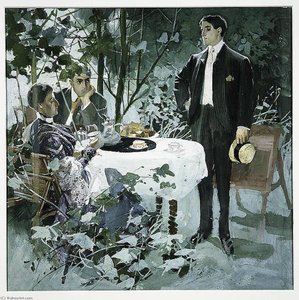
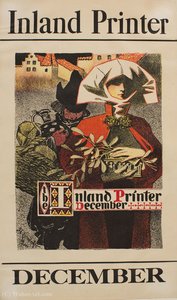
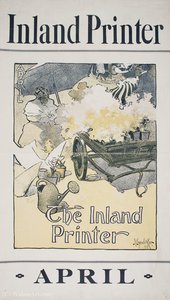
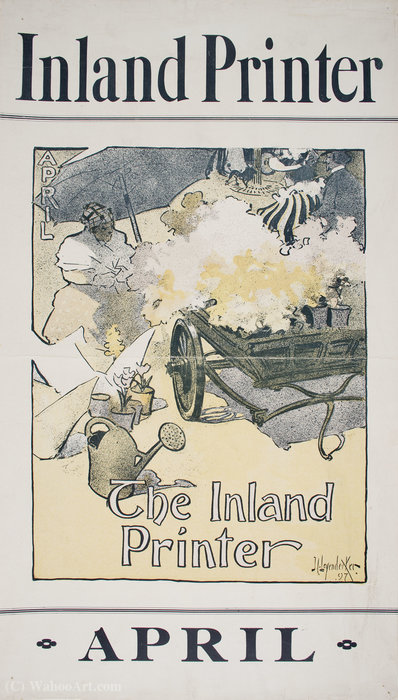
'Inland Printer. April', (43 x 24 CM) (1897)
 Read More
Hand Made Oil Reproduction
Hand-painted oil on canvas in your size and frame, made to order by our artists. ( Buy Print Buy Image)




































Pick from our preset sizes that match the artwork's original proportions.

You may enter your own dimensions to fit a specific frame or space. If your selected size does not match the original image's proportions, we will either crop the artwork or extend the painting with additional hand-painted elements. A digital mockup will be sent for your approval before production begins.
Please note that the on-screen preview does not reflect the actual cropping or extension. Only the mockup will accurately show the final composition.
While custom sizes are available, we recommend selecting a dimension from the predefined list to preserve the original proportions.
After order, ArtsDot.com team will email client for instructions and provide a mockup preview
Worldwide Delivery () in 3/4 weeks instead of standard 5 weeks. (16 August). No compromise on quality.

Free Worldwide Express Shipping

High-Quality Linen Canvas

Full Shipping Insurance

Customs Tax Refund Guarantee

True Color Matching Guarantee

60-Day Return Policy (Defects Only)

100% Money-Back Guarantee

Bulk Discount Offer
 Glass option is only available in size under 110 CM

'Inland Printer. April', (43 x 24 CM) (1897)
Reproduction Medium
Reproduction Size
-


Total Price
$ 263
Related Artworks
Artist Biography
The Gilded Brush: Joseph Christian Leyendecker and the American Ideal
Born in Montabaur, Germany, in 1874, Joseph Christian Leyendecker’s journey to becoming a defining voice of American illustration began with immigration. Arriving in Chicago with his family in 1882, young Joe absorbed the energy of a burgeoning nation, an experience that would profoundly shape his artistic vision. His early training at the School of the Art Institute of Chicago, where he honed skills in drawing and anatomy under John H. Vanderpoel, provided a solid foundation. However, it was a year spent at the Académie Julian in Paris alongside his brother Frank that truly ignited his aesthetic sensibilities. Immersed in the vibrant atmosphere of *fin-de-siècle* Paris, Leyendecker encountered the flowing lines and decorative elegance of Art Nouveau—influences readily apparent in his later work, echoing the styles of masters like Toulouse-Lautrec, Jules Chéret, and Alphonse Mucha. These European currents blended with a uniquely American pragmatism, forging a style that would come to epitomize the Golden Age of Illustration. His initial commissions, including sixty detailed illustrations for the Powers Brothers Company’s Bibles, demonstrated an early mastery of narrative storytelling and meticulous rendering—skills he would soon deploy on a much grander scale.Defining an Era: The Arrow Collar Man and Saturday Evening Post
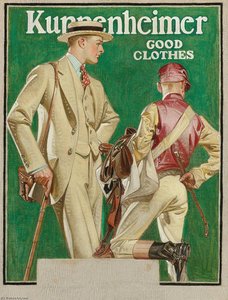
Leyendecker's breakthrough arrived in 1899 with his first commission for the *Saturday Evening Post*. This marked the beginning of an unparalleled relationship; he would ultimately create over 322 covers for the magazine, effectively defining its visual identity and becoming synonymous with American culture. But it was his work for Cluett Peabody & Company’s Arrow shirt collars that cemented his legacy. The “Arrow Collar Man,” impeccably dressed and radiating confidence, became an instant icon—a symbol of aspiration and masculine style. This wasn't merely advertising; it was the creation of a lifestyle, a carefully constructed image of success and refinement. The model for this enduring figure was Charles Beach, Leyendecker’s life partner, whose presence in his life remained largely private due to the social constraints of the time. Beyond Arrow, Leyendecker lent his talents to campaigns for Interwoven Socks, Hartmarx suits, and B. Kuppenheimer & Co., showcasing a remarkable versatility that extended beyond fashion. He even created a series of twenty “Kellogg’s Kids” characters to promote Kellogg's Corn Flakes, demonstrating an ability to craft memorable figures for mass consumption. These weren’t simply illustrations; they were carefully constructed narratives designed to capture the imagination and inspire desire.A Master of Style: Art Nouveau and Compositional Brilliance
Leyendecker’s artistic style was deeply rooted in the principles of Art Nouveau, characterized by elegant lines, flowing forms, and a decorative sensibility that elevated everyday scenes into realms of beauty. His compositions were masterful—dynamic diagonals, carefully orchestrated lighting, and a keen understanding of color theory all contributed to visually compelling images. He possessed an uncanny ability to capture not just likenesses but also the *essence* of his subjects, imbuing them with personality and charm. His influence extended far beyond the realm of commercial art; he became a mentor to Norman Rockwell, who openly acknowledged Leyendecker’s profound impact on his own artistic development. Rockwell meticulously studied Leyendecker's techniques, recognizing the older artist’s unparalleled skill in storytelling and characterization. In many ways, Leyendecker laid the groundwork for Rockwell’s iconic depictions of American life. He virtually invented modern magazine design, introducing traditions like the New Year’s baby, the Santa Claus image, and Mother’s Day floral tributes—images that continue to resonate with audiences today.A Legacy Enduring: Decline and Lasting Significance
The 1930s brought a shift in advertising trends and editorial leadership at the *Saturday Evening Post*, leading to a decline in commissions for Leyendecker. Cluett, Peabody & Co. also ceased using his illustrations, marking a turning point in his career. Despite this reduced output, his legacy as one of America’s greatest illustrators remained secure. His work continued—and continues—to be celebrated for its artistry, innovation, and enduring cultural significance. Leyendecker's impact extends beyond the aesthetic realm; he captured the spirit of an era, reflecting the aspirations, values, and anxieties of a rapidly changing nation. He is remembered not just as an artist but as a visual historian, documenting the evolution of American identity through his iconic imagery. His influence can still be seen in contemporary illustration and advertising, a testament to the enduring power of his vision. He defined an era and shaped the visual landscape of early 20th-century America—a legacy that continues to inspire and captivate audiences today.Rediscovering a Master
- Key Influences: Art Nouveau masters like Toulouse-Lautrec, Jules Chéret, and Alphonse Mucha.
- Signature Style: Elegant lines, decorative elements, dynamic compositions, idealized figures, and a masterful use of light and color.
- Major Achievements: Over 322 *Saturday Evening Post* covers, the creation of the “Arrow Collar Man,” influential advertising campaigns for numerous brands, and mentorship of Norman Rockwell.
- Lasting Impact: Defined American visual culture, shaped magazine design, and created enduring iconic images that continue to resonate today. His work is a testament to the power of illustration as both art and commerce.
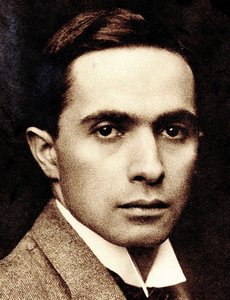
Joseph Christian Leyendecker
1874 - 1951 , Germany
Quick Facts
- Artistic Movement Or Style: Art Nouveau, Illustration
- Artists Or Movements Influenced By This Artist:
- Norman Rockwell
- American Illustration
- Artists Who Influenced This Artist:
- Toulouse-Lautrec
- Jules Chéret
- Alphonse Mucha
- Date Of Birth: March 23, 1874
- Date Of Death: July 25, 1951
- Full Name: Joseph Christian Leyendecker
- Nationality: German-American
- Notable Artworks:
- Arrow Collar Man series
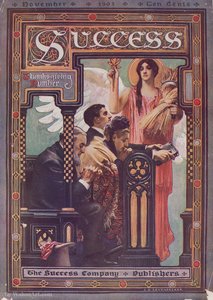
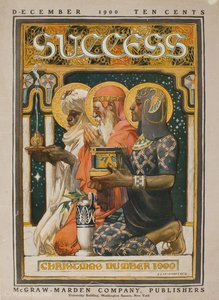
- 'Success' (1901)
- Kellogg’s Kids series
- Place Of Birth: Montabaur, Germany