

 Preview
 Send
Send Share
Share
 Details

 Download
 Similars
 X-Ray
X-Ray Diaporama
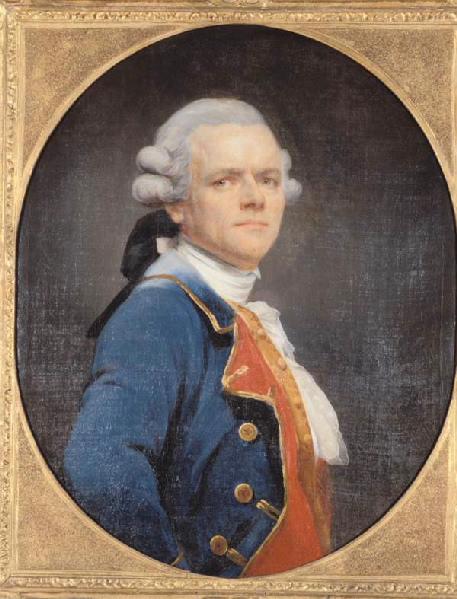
Autoportrait en officier de marine
 Read More
Purchase a high-resolution, enhanced digital image, far superior to the online preview.
Each file is meticulously prepared by our in-house specialists using advanced tools and expert manual retouching. We ensure every image has exceptional clarity, precise color accuracy, and fine detail.
The final file is delivered via email within 72 hours, optimized for immediate use in professional, editorial, and print environments. This is the same quality trusted by top-tier design studios, publishers, and galleries.
Digital Image
Download a high-resolution file for personal display, printing, and creative projects. ( Buy Print Buy Hand Made Painting)
Included in Every Digital Image Order
Expert Digital Delivery, Guaranteed
When you choose ArtsDot.com, you're not just getting an image - you're receiving a professionally enhanced digital artwork, crafted with precision and backed by a satisfaction guarantee. Here's everything that comes with your order, automatically:

Fast Email Delivery
Your high-resolution digital image file will be emailed to you within 72 hours of ordering - ready for immediate use.

AI-Enhanced Digital File
Your artwork is professionally optimized using advanced AI tools and manual editing, ensuring maximum detail, clarity, and color accuracy.

Free Lifetime Re-Delivery
Accidentally deleted or lost your file? No worries - we'll resend it to you anytime, free of charge.

No Import Fees - Ever
Enjoy your artwork instantly with zero customs, duties, or delivery fees - digital downloads are always tax-free.

Color Accuracy Guarantee
We ensure your digital image reflects the original colors as closely as possible using professional tools and color management.

60-Day Satisfaction Guarantee
If you're not satisfied with your digital image, we'll revise it or refund 100% within 60 days - no questions asked.

100% Money-Back Guarantee
Not satisfied? Get a full refund within 60 days of receiving your digital file - no questions asked.

Bulk Order Discounts
Buy 3 images, save 10% - Buy 5, save 15% - Buy 10+, save 20%. Great for creative projects, galleries, and agencies.
Related Artworks









Artist Biography
A Courtier’s Wit: The Life and Art of Joseph Ducreux
Joseph Ducreux, a name perhaps unfamiliar to many outside the circles of art history, occupies a fascinating niche in the late 18th-century French artistic landscape. Born in Nancy in 1735, his journey from the workshop of his painter father to becoming *premier peintre de la reine* – First Painter to Queen Marie Antoinette – is a testament to both talent and opportune timing. The son of Charles Ducreux, who served Stanisław Leszczyński, the exiled King of Poland, Joseph’s initial artistic education was steeped in the traditions of courtly portraiture. However, it was his move to Paris around 1760 that truly ignited his creative development. There, he fell under the tutelage of Maurice Quentin de La Tour, a master of pastel and renowned for his sensitive portrayals of aristocratic society. This mentorship proved pivotal, instilling in Ducreux a delicate touch and an exceptional command of pastel techniques – skills that would initially define his artistic style. He also benefited from the influence of Jean-Baptiste Greuze, whose expertise helped refine Ducreux’s oil painting abilities.Royal Favor and Artistic Innovation
Ducreux's ascent within the French court was remarkably swift. A turning point arrived in 1769 when he secured the commission to paint a portrait of Archduchess Marie Antoinette before her marriage to Louis XVI. Remarkably, he won this prestigious assignment over more established artists, largely due to his willingness to offer a more affordable price. This initial success opened doors, and soon Ducreux was appointed *premier peintre de la reine*, an extraordinary achievement considering he wasn’t yet a member of the highly exclusive Royal Academy of Painting and Sculpture. The appointment ruffled feathers within the Academy, traditionally reserving such positions for its members, but royal favor proved a powerful force. He continued to navigate this complex relationship with the Academy, producing portraits that satisfied both courtly expectations and his own burgeoning artistic vision. During the tumultuous years of the French Revolution, Ducreux even traveled to London, where he created what would become the last known portrait of King Louis XVI before his tragic execution – a poignant record of a fading era.Beyond Likeness: Physiognomy and Self-Expression
While proficient in traditional portraiture, it is for his unconventional self-portraits that Joseph Ducreux is most celebrated today. These works, created primarily during the 1780s and 1790s, represent a radical departure from the formal conventions of the time. Instead of presenting himself with dignified composure, Ducreux dared to depict himself in moments of unrestrained emotion – yawning widely, bursting into laughter, or making deliberately comical faces. This fascination with capturing fleeting expressions stemmed from his interest in physiognomy, the now-discredited belief that facial features reveal character and inner disposition. He wasn’t merely interested in *likeness*; he sought to portray personality, mood, and even a sense of playful self-awareness. These self-portraits challenged the very notion of portraiture, injecting humor, spontaneity, and an unprecedented level of individuality into the genre. Some scholars draw parallels between Ducreux's expressive portraits and the *tronies* – character studies – favored by Dutch Golden Age painters, suggesting a broader European tradition of exploring human psychology through artistic representation.A Lasting Legacy: From Salon to Internet Meme
Following the French Revolution, Ducreux continued his career with support from Jacques-Louis David, and his home became a gathering place for artists and musicians. He came from a family of creatives; his son Jules was a painter and infantry captain who tragically died in battle, while his daughters Rose-Adélaïde and Antoinette-Clémence also pursued artistic careers. Ducreux passed away in 1802, leaving behind a body of work that, while appreciated by connoisseurs for generations, experienced an unexpected resurgence in the 21st century. His self-portrait *Portrait de l'artiste sous les traits d’un moqueur* (Self-Portrait as a Mocker) became a viral internet meme, often paired with verbose and archaic language to create humorous captions. This unlikely phenomenon introduced Ducreux’s work to a new audience, demonstrating the enduring appeal of his playful spirit and expressive artistry.Major Works and Historical Significance
Ducreux's oeuvre encompasses a range of portraits, but certain works stand out as particularly significant. His Portrait of Marie Antoinette (1769), commissioned before her marriage, remains a key example of his early success and royal patronage. The Self-Portrait, Yawning (c. 1783), now held in a private collection, exemplifies his unconventional approach to self-representation. However, it is the Self-Portrait as a Mocker (c. 1793), housed in the Louvre Museum, that has captured the modern imagination and cemented Ducreux’s place in popular culture. Other notable works include Le Discret (ca. 1790), showcasing his ability to capture personality through subtle expression, and his portrait of Pierre Choderlos de Laclos, author of *Les Liaisons dangereuses*. Joseph Ducreux’s work represents a crucial transition in the history of portraiture, moving away from rigid formality towards greater expressiveness and individuality. His self-portraits are not merely artistic exercises; they are precursors to modern concepts of self-representation and a testament to the power of art to challenge conventions and reveal the complexities of the human spirit.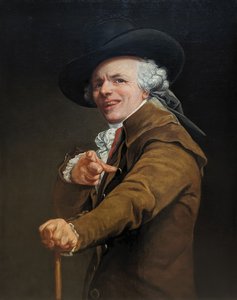
Joseph Ducreux
1735 - 1802 , France
Quick Facts
- Artistic Movement Or Style: Rococo, Neoclassical
- Artists Or Movements Influenced By This Artist: Modern self-representation
- Artists Who Influenced This Artist:
- Maurice Quentin de La Tour
- Jean-Baptiste Greuze
- Date Of Birth: June 26, 1735
- Date Of Death: 1802
- Full Name: Joseph Ducreux
- Nationality: French
- Notable Artworks:
- Marie Antoinette (1769)
- Self-Portrait, Yawning
- Self-Portrait as a Mocker
- Le Discret
- Laclos Portrait
- Place Of Birth: Nancy, France

