 Preview
 Send
Send Share
Share
 Details

 Download
 Similars
 X-Ray
X-Ray Diaporama
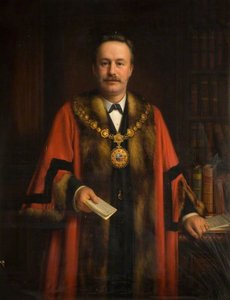
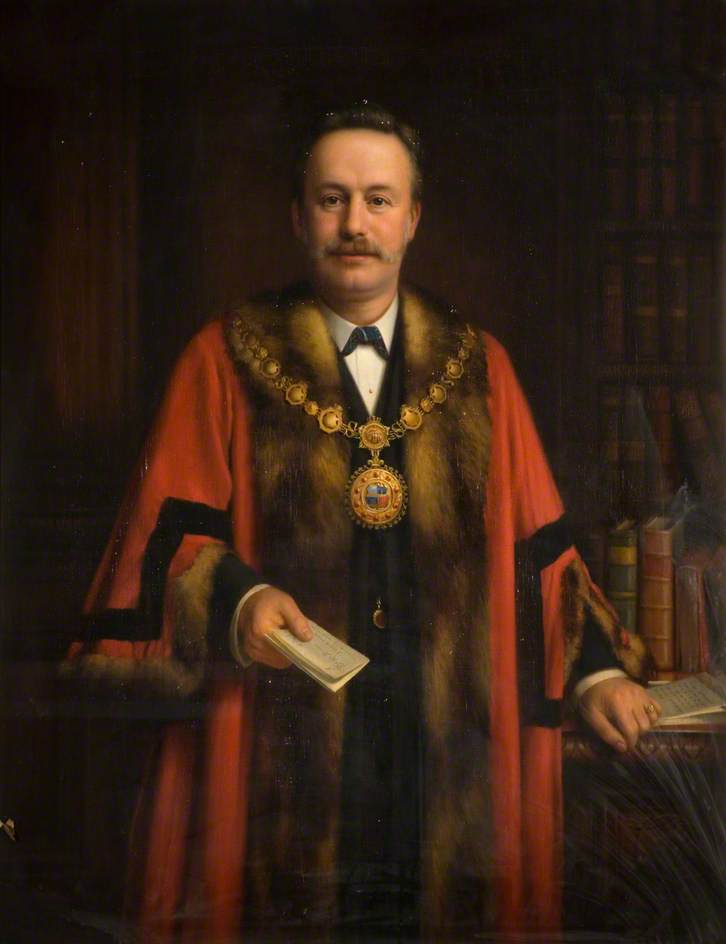
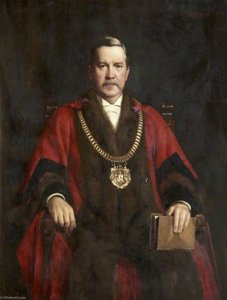
Alderman George Bowden, Mayor of Smethwick (1903–1905)
 1904
1904 112.0 x 87.0 cm
 Read More
Giclée / Art Print
Museum-quality giclée or canvas print with fast production and flexible finish options. ( Buy Hand Made Painting Buy Image)




































Pick from our preset sizes that match the artwork's original proportions.

You may enter your own dimensions to fit a specific frame or space. If your selected size does not match the original image's proportions, we will either crop the artwork or extend the image with a mirrored or solid-fill edge. A digital mockup will be sent for your approval before production begins.
Please note that the on-screen preview does not reflect the actual cropping or extension. Only the mockup will accurately show the final composition.
While custom sizes are available, we recommend selecting a dimension from the predefined list to preserve the original proportions.
Worldwide Delivery () in 2 weeks instead of standard 4/5 weeks. (29 August)

Free Worldwide Express Shipping

High-Quality Linen Canvas

Full Shipping Insurance

Customs Tax Refund Guarantee

True Color Matching Guarantee

60-Day Return Policy (Defects Only)

100% Money-Back Guarantee

Bulk Discount Offer
 Glass option is only available in size under 110 CM

Alderman George Bowden, Mayor of Smethwick (1903–1905)
Giclée / Art Print
Reproduction Size
-


Total Price
$ 63
Related Artworks








Artist Biography
The Quiet Mastery of Joseph Gibbs
In the grand tapestry of British art history, certain names shine with a blinding, flamboyant light, while others exist in the soft, evocative shadows of the periphery. Joseph Gibbs belongs to that second, more intimate category—a painter whose work does not shout for attention through bravado, but rather whispers through meticulous detail and an uncanny ability to capture the ephemeral essence of his subjects. Though often overshadowed by the monumental legacies of Thomas Gainsbrorough or Joshua Reynolds, Gibbs carved out a significant niche during the late nineteenth century, particularly within the industrial heartlands of England. His life and work serve as a poignant window into the Victorian era, reflecting a period caught between the rigid structures of tradition and the burgeoning realism of a changing world.
Active primarily between 1852 and 1907, Gibbs established himself as a portraitist of remarkable sensitivity. His artistic journey was deeply rooted in the region around Smethwick, in what was then South Staffordshire. This locale, a hub of the industrial revolution, provided a stark yet fascinating backdrop to his pursuit of classical beauty. Unlike the grand, sweeping landscapes of his contemporaries, Gibbs found his calling in the human face and the subtle textures of life. His technique was characterized by a profound devotion to realism, a quality that allowed him to render the delicate translucency of skin, the heavy weight of velvet, and the intricate patterns of lace with an almost tactile precision. This mastery of surface and light suggests an artist who viewed the canvas not merely as a space for representation, but as a vessel for preserving the dignity of his sitters.
A Legacy in Portraiture and Detail
The true significance of Gibbs’ oeuvre lies in his ability to transcend mere likeness, imbuing his portraits with a quiet, psychological depth. He was a master of the subtle atmospheric perspective, using light to create a sense of space and soul within the frame. His most enduring contributions are found in the collections of institutions such as the Wednesbury Museum and Art Gallery, where his works continue to breathe life into the historical narrative of the West Midlands. To study his collection is to encounter a gallery of faces that seem to watch us from across the veil of time, each one possessing a unique, captured moment of grace.
His repertoire was diverse in subject but unified in execution, ranging from formal portraits of local dignitaries to tender, pastoral scenes. Some of his most notable achievements include:
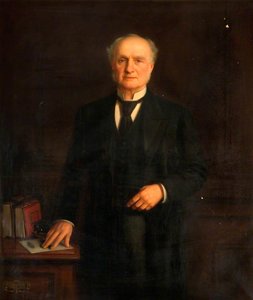
- The Portraits of Local Prominence: Gibbs held the trust of the community's leaders, capturing figures such as Alderman George Bowden, the Mayor of Smethwick, with a sense of civic importance and character.
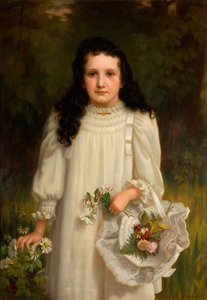
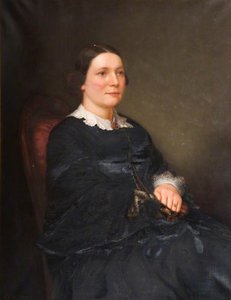
- The Intimacy of Youth: His ability to capture innocence is perhaps best seen in his depictions of children, such as the beautifully rendered Mary Ann Richards, where the artist’s focus on soft textures and gentle gazes creates a profound emotional resonance.
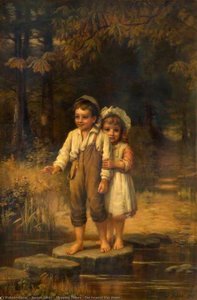
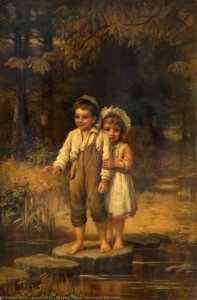
- Narrative Landscapes: Beyond the human form, Gibbs demonstrated a capacity for storytelling through works like Stepping Stones (The Nearest Way Home), a pastoral scene that showcases his skill in blending figures with the natural world, creating a sense of movement and quiet adventure.
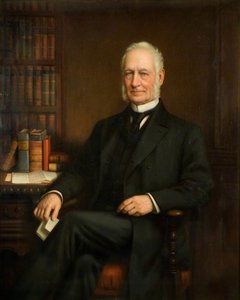
- Historical Commemoration: His portrait of Sir James Timmins Chance stands as a testament to his ability to convey social standing and scholarly dignity through the careful arrangement of costume and posture.
Ultimately, the work of Joseph Gibbs reminds us that art history is not solely composed of the loud and the revolutionary. There is a profound, enduring power in the meticulous observation of the everyday and the beautiful. Through his brush, the fleeting expressions of the Victorian era were granted a form of immortality, ensuring that the quiet grace of his subjects remains as luminous today as it was at the moment the oil first met the canvas.
Quick Facts
- Artistic Movement Or Style: Classical Realism
- Artists Or Movements Influenced By This Artist: ['Thomas Gainsborough']
- Date Of Death: Living
- Full Name: Joseph Gibbs
- Nationality: English
- Notable Artworks: ['Muriel Dorothy Windle']
- Place Of Birth: Dedham, Essex