

 Preview
 Send
Send Share
Share
 Details

 Download
 Similars
 X-Ray
X-Ray Diaporama
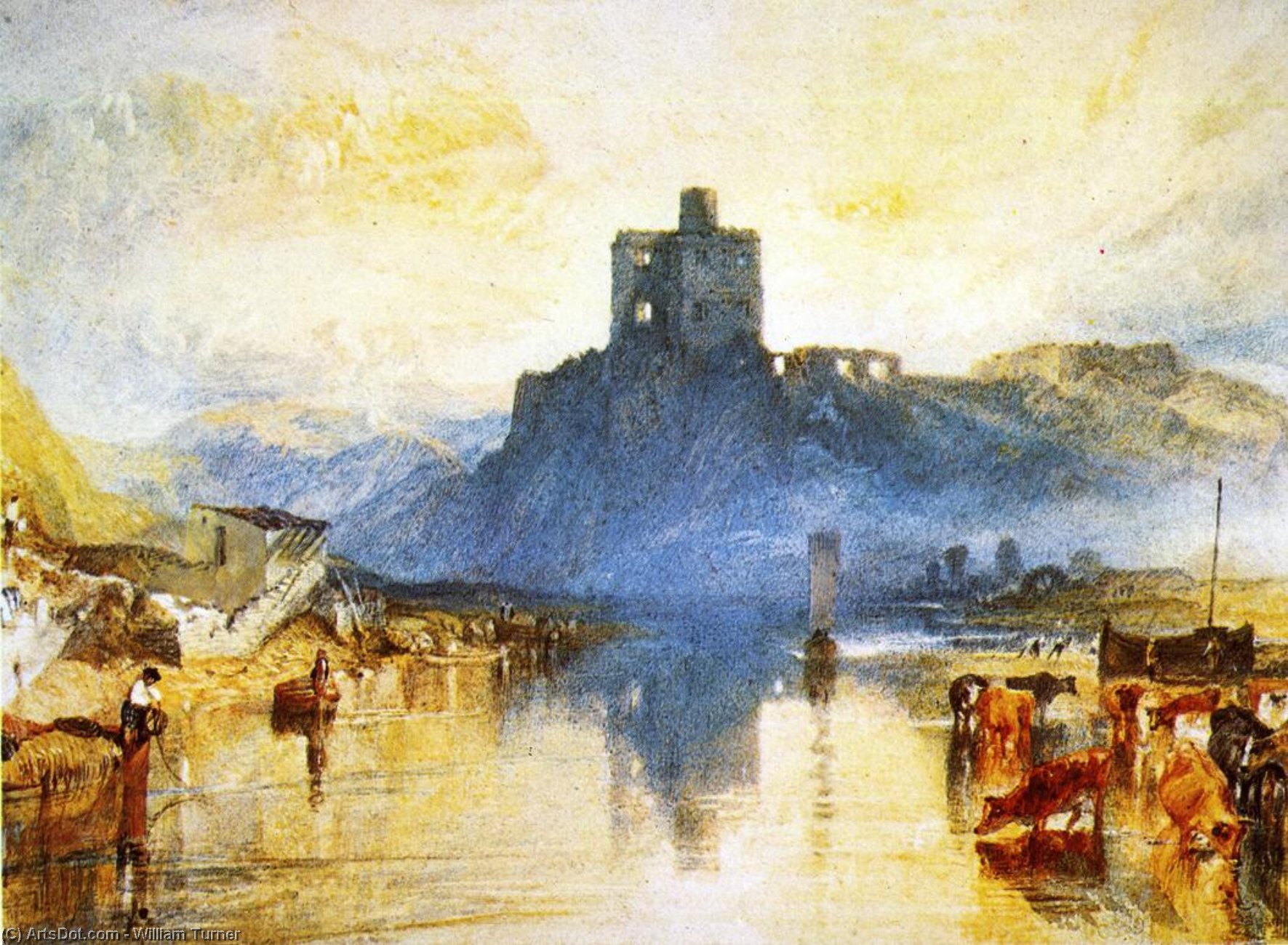
Norham Castle, on the Tweed (for Rivers of England'')''


 Read More
Purchase a high-resolution, enhanced digital image, far superior to the online preview.
Each file is meticulously prepared by our in-house specialists using advanced tools and expert manual retouching. We ensure every image has exceptional clarity, precise color accuracy, and fine detail.
The final file is delivered via email within 72 hours, optimized for immediate use in professional, editorial, and print environments. This is the same quality trusted by top-tier design studios, publishers, and galleries.
Digital Image
Download a high-resolution file for personal display, printing, and creative projects. ( Buy Print Buy Hand Made Painting)
Included in Every Digital Image Order
Expert Digital Delivery, Guaranteed
When you choose ArtsDot.com, you're not just getting an image - you're receiving a professionally enhanced digital artwork, crafted with precision and backed by a satisfaction guarantee. Here's everything that comes with your order, automatically:

Fast Email Delivery
Your high-resolution digital image file will be emailed to you within 72 hours of ordering - ready for immediate use.

AI-Enhanced Digital File
Your artwork is professionally optimized using advanced AI tools and manual editing, ensuring maximum detail, clarity, and color accuracy.

Free Lifetime Re-Delivery
Accidentally deleted or lost your file? No worries - we'll resend it to you anytime, free of charge.

No Import Fees - Ever
Enjoy your artwork instantly with zero customs, duties, or delivery fees - digital downloads are always tax-free.

Color Accuracy Guarantee
We ensure your digital image reflects the original colors as closely as possible using professional tools and color management.

100-Day Satisfaction Guarantee
If you're not satisfied with your digital image, we'll revise it or refund 100% within 100 days - no questions asked.

100% Money-Back Guarantee
Not satisfied? Get a full refund within 100 days of receiving your digital file - no questions asked.

Bulk Order Discounts
Buy 3 images, save 10% - Buy 5, save 15% - Buy 10+, save 20%. Great for creative projects, galleries, and agencies.
Norham Castle, on the Tweed: A Romantic Vision
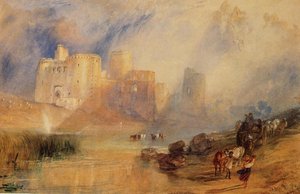
Joseph Mallord William Turner's "Norham Castle, on the Tweed" (1823) is a captivating watercolor that exemplifies the core tenets of the Romantic movement in art. This piece, residing within the esteemed collection of the British Museum, transcends mere landscape depiction; it’s an exploration of light, atmosphere, and the sublime power of nature interacting with human structures.
Subject & Composition
The artwork portrays Norham Castle, a historic fortress situated on the banks of the River Tweed in Northumberland, England. The castle dominates the middle ground, its weathered stone contrasting against the ethereal backdrop of rolling hills and a hazy sky. Turner masterfully employs atmospheric perspective, softening details in the distance to create a sense of depth and vastness. The foreground features figures engaged in everyday activities – wading in the river, tending cattle on boats – subtly grounding the grand scale of the castle within a human context. The composition is carefully balanced, with the castle acting as a central anchor while the flowing river guides the viewer's eye through the scene.
Style & Technique: A Watercolor Masterpiece
Turner’s signature style shines in this watercolor. He eschews precise detail in favor of capturing the fleeting effects of light and atmosphere. The technique is characterized by loose, fluid brushstrokes and layered washes of color – primarily blues, greens, yellows, and oranges – which blend seamlessly to create a luminous quality. Turner's use of "wet-on-wet" allows colors to bleed into one another, simulating the way light diffuses through mist and reflects off water. The overall effect is not photorealistic but rather an evocative impression of a scene bathed in the soft glow of dawn or dusk. He skillfully uses transparency and opacity to create depth and dimension, allowing underlying layers of color to peek through, adding complexity and richness to the image.
Historical Context & Symbolism
Created in 1823, "Norham Castle, on the Tweed" was part of Turner’s “Rivers of England” series. This project aimed to document the beauty and character of Britain's waterways. The choice of Norham Castle is significant; it stands as a testament to centuries of border conflict between England and Scotland, symbolizing both power and decay. The Romantic era emphasized emotion and individualism over classical ideals, and Turner’s work perfectly embodies this shift. His focus on the sublime – the awe-inspiring grandeur of nature that evokes feelings of both wonder and terror – aligns with the philosophical currents of his time. The castle itself can be interpreted as a symbol of human ambition dwarfed by the immensity of nature's forces.
Emotional Impact & Legacy
"Norham Castle, on the Tweed" is more than just a picturesque landscape; it’s an emotional experience. The soft light and tranquil atmosphere evoke a sense of peace and contemplation. The painting invites viewers to immerse themselves in the scene, feeling the cool mist on their skin and hearing the gentle murmur of the river. Turner's ability to convey mood and atmosphere through color and brushwork is unparalleled. This work solidified his reputation as a master of watercolor and continues to inspire artists and art lovers today, demonstrating the enduring power of Romanticism.
Related Artworks
Artist Biography
The Luminary of Light: A Journey Through the Life and Art of J.M.W. Turner
Joseph Mallord William Turner, a name synonymous with the sublime power of landscape and the evocative dance of light, remains one of Britain’s most celebrated and influential artists. Born in Covent Garden, London, in 1775, Turner's journey from a barber’s son to a master painter was fueled by an innate talent, relentless dedication, and a visionary spirit that would forever alter the course of art history. From his earliest days sketching architectural details to his later, almost abstract explorations of atmosphere and color, Turner consistently pushed the boundaries of artistic expression.
His formal training began at the Royal Academy Schools in 1789, where he quickly distinguished himself as a promising student. However, Turner was not content with merely replicating established styles; he sought to capture the very essence of nature – its raw power, its fleeting beauty, and its inherent drama. Early works reveal a meticulous attention to topographical detail, reflecting the prevailing artistic tastes of the time. Yet, even in these early pieces, hints of his future direction are visible—a sensitivity to light and shadow, a willingness to experiment with color, and an emerging fascination with the sublime.
The Evolution of a Visionary: From Topography to Transcendence
Turner’s artistic development was marked by constant experimentation and a growing desire to move beyond mere representation. Influenced by masters like Claude Lorrain and J.M.W. Cozens, he began to infuse his landscapes with a romantic sensibility, emphasizing emotional response over precise depiction. His travels throughout Europe, beginning in 1802, proved pivotal, exposing him to diverse landscapes and inspiring new approaches to composition and color. He wasn’t simply recording what he saw; he was interpreting it through the lens of his own unique vision.
The early 19th century witnessed a shift in Turner's style towards greater expressiveness. His seascapes, in particular, became increasingly dramatic, capturing the fury and majesty of the ocean with unprecedented intensity. Paintings like “The Fighting Temeraire Tugged to Her Last Berth to Be Broken Up” (1839) are not merely depictions of a ship being towed to its final resting place; they are poignant meditations on mortality, loss, and the relentless march of progress. The use of light in this work is particularly striking—a golden sunset casting a melancholic glow over the scene, symbolizing the passing of an era.
A Master of Atmosphere: Light, Color, and the Sublime
Turner’s later works are characterized by an almost radical departure from traditional artistic conventions. He increasingly prioritized atmosphere and color over form and detail, creating paintings that seem to dissolve into pure light and energy. Works like “Rain, Steam and Speed – The Great Western Railway” (1844) exemplify this approach—a swirling vortex of color and motion that captures the dynamism of the industrial age. Critics were often baffled by these later works, but their influence on subsequent generations of artists would prove profound.
He was a pioneer in exploring the effects of light and atmosphere, anticipating the Impressionists’ focus on capturing fleeting moments and subjective perceptions. His use of color was equally innovative—bold, vibrant hues applied with loose brushstrokes to create a sense of movement and energy. Turner wasn't simply painting landscapes; he was attempting to convey the very *feeling* of being in nature – the awe, the wonder, the terror.
Legacy and Influence: The Painter Who Changed Painting
J.M.W. Turner’s legacy extends far beyond his prolific output—over 550 oil paintings, 2,000 watercolors, and 30,000 works on paper. He left an indelible mark on the history of art, influencing countless artists who followed in his footsteps. The Impressionists, particularly Claude Monet, were deeply inspired by Turner’s exploration of light and color, while abstract expressionists like Mark Rothko acknowledged their debt to his atmospheric compositions.
Turner's willingness to challenge conventions, his relentless experimentation, and his unwavering commitment to artistic vision continue to resonate with artists and art lovers today. He remains a pivotal figure in the development of modern art, a true visionary who transformed the way we see and experience the world around us. His works are housed in major museums worldwide, including the Tate Britain in London, where visitors can immerse themselves in the luminous beauty and profound emotional depth of his extraordinary paintings.
Notable Works & Collections
- The Morning After the Deluge (1843): A powerful depiction of nature’s forces, housed in the Tate Collection, London.
- Chichester Canal (1828): Commissioned by George Wyndham, currently at the Tate Collection.
- Ruins of Tintern Abbey: A stunning watercolor showcasing his mastery of light and atmosphere, found in the Calouste Gulbenkian Museum (Lisboa, Portugal).
- The Fighting Temeraire Tugged to Her Last Berth to Be Broken Up (1839): A poignant masterpiece exploring themes of loss and change.
- Rain, Steam and Speed – The Great Western Railway (1844): Capturing the dynamism of the industrial age with swirling color and motion.
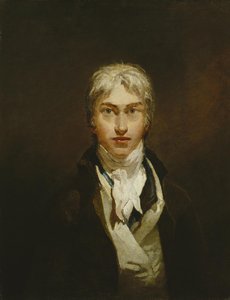
Joseph Mallord William Turner
1775 - 1851 , United Kingdom
Quick Facts
- Artistic Movement Or Style: Romanticism
- Artists Or Movements Influenced By This Artist:
- Claude Monet
- Mark Rothko
- Impressionism
- Date Of Birth: April 23, 1775
- Date Of Death: December 19, 1851
- Full Name: Joseph Mallord William Turner
- Nationality: British
- Notable Artworks:
- The Morning After the Deluge
- Chichester Canal
- Ruins of Tintern Abbey
- Place Of Birth: London, United Kingdom