

 Preview
 Send
Send Share
Share
 Details

 Download
 Similars
 X-Ray
X-Ray Diaporama
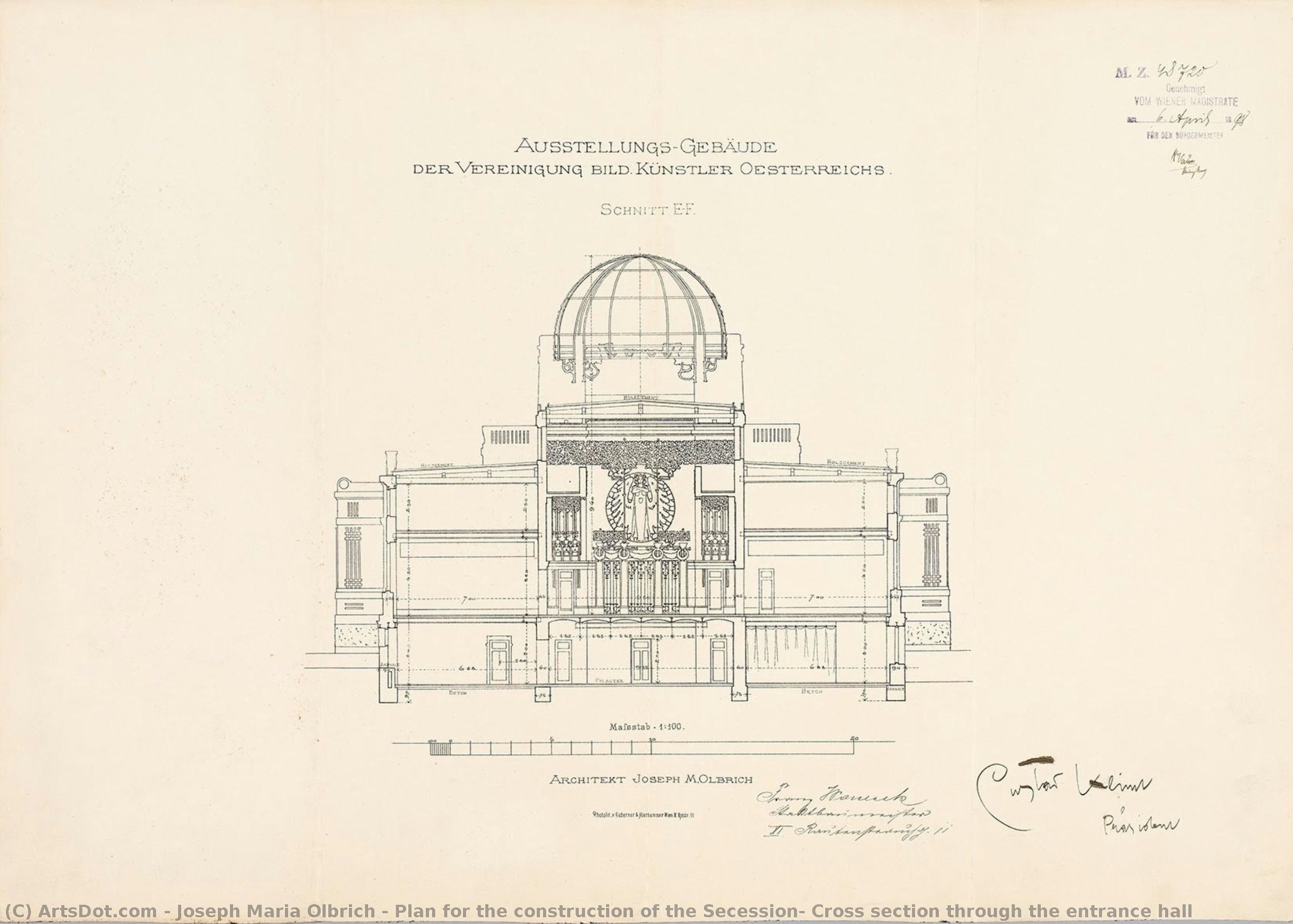
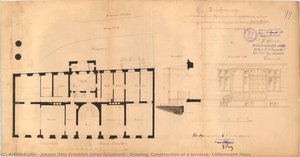
Plan for the construction of the Secession, Cross section through the entrance hall


 Read More
Purchase a high-resolution, enhanced digital image, far superior to the online preview.
Each file is meticulously prepared by our in-house specialists using advanced tools and expert manual retouching. We ensure every image has exceptional clarity, precise color accuracy, and fine detail.
The final file is delivered via email within 72 hours, optimized for immediate use in professional, editorial, and print environments. This is the same quality trusted by top-tier design studios, publishers, and galleries.
Digital Image
Download a high-resolution file for personal display, printing, and creative projects. ( Buy Print Buy Hand Made Painting)
Included in Every Digital Image Order
Expert Digital Delivery, Guaranteed
When you choose ArtsDot.com, you're not just getting an image - you're receiving a professionally enhanced digital artwork, crafted with precision and backed by a satisfaction guarantee. Here's everything that comes with your order, automatically:

Fast Email Delivery
Your high-resolution digital image file will be emailed to you within 72 hours of ordering - ready for immediate use.

AI-Enhanced Digital File
Your artwork is professionally optimized using advanced AI tools and manual editing, ensuring maximum detail, clarity, and color accuracy.

Free Lifetime Re-Delivery
Accidentally deleted or lost your file? No worries - we'll resend it to you anytime, free of charge.

No Import Fees - Ever
Enjoy your artwork instantly with zero customs, duties, or delivery fees - digital downloads are always tax-free.

Color Accuracy Guarantee
We ensure your digital image reflects the original colors as closely as possible using professional tools and color management.

60-Day Satisfaction Guarantee
If you're not satisfied with your digital image, we'll revise it or refund 100% within 60 days - no questions asked.

100% Money-Back Guarantee
Not satisfied? Get a full refund within 60 days of receiving your digital file - no questions asked.

Bulk Order Discounts
Buy 3 images, save 10% - Buy 5, save 15% - Buy 10+, save 20%. Great for creative projects, galleries, and agencies.
Collectible Description
A Vision of Modernity: Plan for the Construction of the Secession Building
The year is 1897, and Vienna stands poised on the precipice of an artistic revolution. Within the meticulously rendered black and white lines of this architectural drawing – a cross-section through the entrance hall of the Secession building – lies not merely a blueprint for a structure, but a manifesto for a new era in design. Created by the visionary architect Joseph Maria Olbrich, this document captures the essence of the Vienna Secession movement: a bold rejection of historical constraints and an embrace of geometric purity, organic forms, and a profound sense of modernism.
Olbrich’s work is inextricably linked to the broader context of late 19th-century Europe. The Secession, emerging from the ashes of the conservative Academic art world, sought to break free from the rigid traditions of Neoclassicism and Historicism that had dominated architectural discourse for decades. Influenced by Japanese prints, Art Nouveau’s flowing lines, and a desire to reflect the dynamism of the industrial age, the movement aimed to create buildings that were both aesthetically striking and functionally innovative. This drawing serves as tangible evidence of that ambition – a meticulously planned space designed to be a catalyst for artistic expression.
Deconstructing Form: A Study in Precision
The image’s strength lies not just in its depiction of the building's grandeur, but in its incredibly detailed technical execution. Every column, archway, and window is rendered with painstaking precision using fine lines and a sophisticated understanding of perspective. The artist masterfully employs hatching and cross-hatching techniques to create subtle tonal variations, suggesting texture and depth – an unexpected element within a monochrome drawing. The use of one-point perspective draws the eye towards the central archway, creating a powerful sense of spatial coherence and inviting the viewer into the heart of the hall.
Note the deliberate symmetry of the composition; it speaks to the Secession’s core values of order and balance. However, this isn't a static imitation of classical design. Instead, the geometric forms – rectangles, circles, and arches – are arranged in a dynamic interplay, hinting at movement and energy. The careful detailing reveals an architect deeply invested in understanding how light interacts with space, creating a sense of volume and atmosphere within the planned interior.
Symbolism and Artistic Intent
The Secession building itself was intended to be more than just a venue for art exhibitions; it was conceived as a Gesamtkunstwerk – a total work of art. Olbrich’s design reflected this ambition, integrating architecture, sculpture, and decorative arts into a unified aesthetic experience. The entrance hall, as depicted here, embodies this principle perfectly. The soaring archway, reminiscent of Roman triumphal arches but executed with a distinctly modern sensibility, immediately establishes a sense of grandeur and aspiration. The columns flanking the archway are not merely structural elements; they contribute to the overall composition, creating a balanced and harmonious visual rhythm.
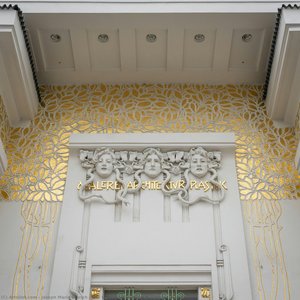
Furthermore, the Secession’s embrace of floral motifs – a hallmark of Art Nouveau – is subtly present even in this technical drawing. The delicate lines suggesting foliage and tendrils hint at the organic forms that would adorn the building's exterior and interior, creating a seamless blend between nature and architecture.
A Legacy of Innovation
Joseph Maria Olbrich’s work represents a pivotal moment in architectural history. His design for the Secession building remains an iconic example of Art Nouveau and a testament to the transformative power of artistic innovation. This drawing, offering a rare glimpse into the architect's meticulous planning process, provides invaluable insight into the movement’s aesthetic principles and technical achievements. Reproducing this artwork today allows us to appreciate not only its beauty but also the profound impact it had on shaping the visual landscape of the 20th century – a legacy that continues to inspire architects and designers worldwide.
Related Artworks
Artist Biography
A Pioneer of the Vienna Secession
Joseph Maria Olbrich, born in Troppau (modern-day Opava, Czech Republic) on December 22, 1867, stands as a pivotal figure in the transition from nineteenth-century historicism to the dawn of modern architecture. His life, though tragically cut short at the age of forty, was one dedicated to forging a new aesthetic language – an artistic vision that would become synonymous with the Vienna Secession and the broader Art Nouveau movement. Olbrich’s early exposure to his father's construction business instilled in him a practical understanding of building processes, a foundation he later refined through formal education at the Vienna School of Arts and Crafts and subsequently at the Academy of Fine Arts Vienna under Carl von Hasenauer. This academic grounding provided him with a mastery of traditional architectural principles, but it was his travels through Italy and North Africa, enabled by the prestigious Prix de Rome, that truly broadened his artistic horizons, exposing him to diverse influences that would later inform his unique style. A crucial period in his development came during his apprenticeship with Otto Wagner, where he contributed significantly to the ambitious Wiener Stadtbahn project. This experience marked a turning point, as Olbrich began to move away from the constraints of historicism and embrace the emerging Jugendstil aesthetic – a German variant of Art Nouveau characterized by organic forms and flowing lines.The Secession Building: A Manifestation of Artistic Ideals
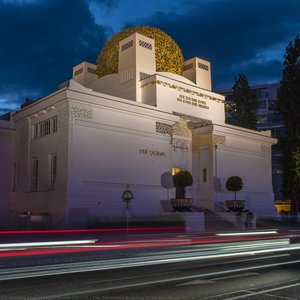
Olbrich’s most enduring legacy is undoubtedly the Secession Building in Vienna, completed in 1898. This iconic structure wasn't merely a building; it was a manifesto, a physical embodiment of the ideals championed by the Vienna Secession – a group of artists who rebelled against the conservative artistic establishment. The building’s most striking feature is its distinctive gilded dome, affectionately known as the “golden cabbage,” composed of laurel leaves crafted from hammered gold leaf. This audacious ornamentation immediately signaled a departure from traditional architectural norms and proclaimed the Secession's commitment to innovation. Beyond its exterior grandeur, the interior space was equally revolutionary. Olbrich masterfully created adaptable exhibition spaces designed to showcase the diverse works of Secession artists – painters, sculptors, designers – in an environment that prioritized both aesthetics and functionality. The building served not only as a headquarters for the movement but also as a vibrant venue for groundbreaking exhibitions that challenged conventional artistic boundaries. His earlier “First Draft for an Exhibition Building at the Wollzeile” demonstrates his ability to integrate practical considerations with artistic vision, foreshadowing the success of the Secession Building itself.Darmstadt and Beyond: Expanding Artistic Horizons
The recognition Olbrich garnered from the Secession Building led to a significant commission in Darmstadt, Germany. Ernst Ludwig, Grand Duke of Hesse, invited him to contribute to the Darmstadt Artists' Colony, an ambitious project aimed at fostering collaboration between artists and craftsmen. Here, Olbrich designed numerous residences and exhibition buildings, each reflecting his signature blend of historical influences and Art Nouveau ornamentation. He gained Hessian citizenship in 1900 and was appointed a professor by the Grand Duke, solidifying his position as a leading figure in the European art scene. The Darmstadt projects allowed him to explore new facets of design, extending beyond architecture into areas such as furniture, pottery, bookbinding, and even musical instruments. This holistic approach to artistic creation underscored his belief in the unity of the arts – a core tenet of the Art Nouveau philosophy. His courtyard and interiors for the 1904 St. Louis World’s Fair further showcased this versatility, earning him the highest prize at the exhibition and international acclaim.Influences, Legacy, and Lasting Significance
Olbrich's artistic development was profoundly shaped by several key influences. Otto Wagner instilled in him a commitment to functionalism and a rejection of excessive ornamentation, while his collaboration with Gustav Klimt and other members of the Vienna Secession fostered a shared aesthetic language characterized by geometric forms, decorative elements, and a sense of playful experimentation. However, Olbrich didn’t entirely abandon historical precedents; he skillfully reinterpreted them through an Art Nouveau lens, drawing inspiration from various periods while simultaneously forging a distinctly modern style. His untimely death on August 8, 1908, in Düsseldorf, due to leukemia, robbed the art world of a visionary talent. Nevertheless, his contributions were pivotal in establishing the Vienna Secession as a major force in European art and architecture. His emphasis on functional simplicity, innovative design, and the integration of arts and crafts continues to inspire architects and designers today. The Österreichische Galerie Belvedere preserves works by Olbrich, ensuring that his legacy endures for future generations. He is rightfully recognized as an early pioneer of modern architecture, a bridge between the ornate historicism of the nineteenth century and the streamlined aesthetic of the modernist movement. His work remains a testament to the power of artistic vision and the enduring appeal of beauty born from innovation.
Joseph Maria Olbrich
1867 - 1908 , Czech Republic
Quick Facts
- Artistic Movement Or Style: Vienna Secession, Art Nouveau
- Artists Or Movements Influenced By This Artist: ['Modern architecture']
- Artists Who Influenced This Artist: ['Otto Wagner']
- Date Of Birth: December 22, 1867
- Date Of Death: August 8, 1908
- Full Name: Joseph Maria Olbrich
- Nationality: Austrian
- Notable Artworks:
- Secession Building
- First Draft Exhibition House
- Darmstadt Colony Buildings
- Place Of Birth: Tropea, Czech Republic

