 Preview
 Send
Send Share
Share
 Details

 Download
 Similars
 X-Ray
X-Ray Diaporama
 Stats
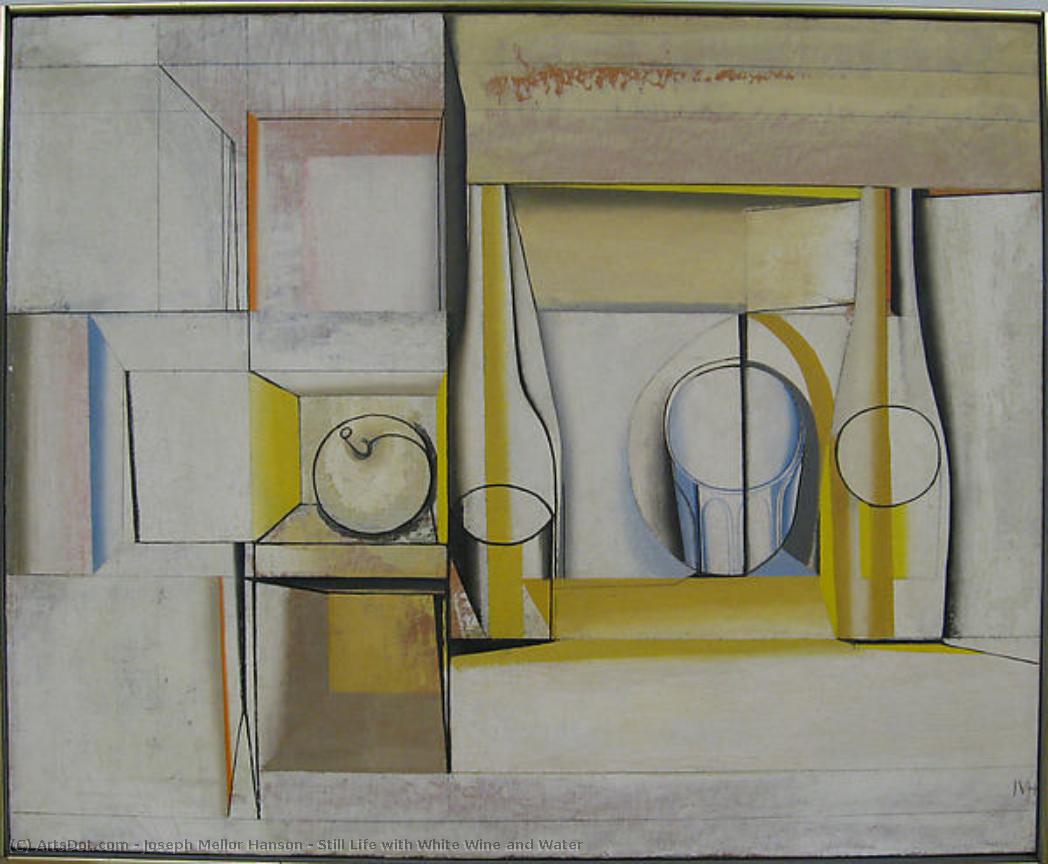
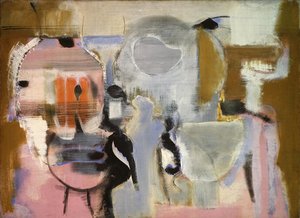
StatsStill Life with White Wine and Water
 1958
1958 61.0 x 74.0 cm
 Read More
Giclée / Art Print
Museum-quality giclée or canvas print with fast production and flexible finish options. ( Buy Hand Made Painting Switch to Digital Image)




































Pick from our preset sizes that match the artwork's original proportions.

You may enter your own dimensions to fit a specific frame or space. If your selected size does not match the original image's proportions, we will either crop the artwork or extend the image with a mirrored or solid-fill edge. A digital mockup will be sent for your approval before production begins.
Please note that the on-screen preview does not reflect the actual cropping or extension. Only the mockup will accurately show the final composition.
While custom sizes are available, we recommend selecting a dimension from the predefined list to preserve the original proportions.
Worldwide Delivery () in 2 weeks instead of standard 4/5 weeks. (8 September)

Free Worldwide Express Shipping

High-Quality Linen Canvas

Full Shipping Insurance

Customs Tax Refund Guarantee

True Color Matching Guarantee

100-Day Return Policy (Defects Only)

100% Money-Back Guarantee

Bulk Discount Offer
 Glass option is only available in size under 110 CM

Still Life with White Wine and Water
Giclée / Art Print
Reproduction Size
-


Total Price
$ 63
Related Artworks







Artist Biography
Joseph Mellor Hanson: A Life in Modernist Abstraction
Early Life and Education
Joseph Mellor Hanson (1900-1963) was a British-born modernist painter who dedicated his artistic career to exploring figure painting through an increasingly abstract lens. He was born on the family farm in the West Riding of Yorkshire, England, and began demonstrating an interest in art at a young age. At fifteen, he commenced studying art, attending evening drawing classes to prepare for admission to Halifax Technical College.
Hanson’s talent earned him a Mcrae scholarship at nineteen, which supported his continued studies. He graduated from Halifax Technical College in 1924, setting the stage for further artistic development abroad.
Parisian Influences and Artistic Development
A pivotal moment in Hanson’s career came with his move to Paris in 1925. He studied with Othon Friesz, becoming his first student and later serving as his assistant in the studio. This mentorship proved profoundly influential, shaping Hanson's approach to color, composition, and abstraction.
By 1928, Hanson had progressed significantly, participating in the Salon des Artistes Indépendants and holding a solo exhibition at the Galerie “Mots et Images.” During his Parisian years (1925-1935), he became associated with other key figures of the period, including Andre L’hôte, Fernand Léger, Jean Hélion, and Amédée Ozenfant. From 1927 to 1935, Hanson worked as an assistant to Ozenfant, aiding in mural execution and instructing pupils at his private art academy.
Return to England and Transition to America
In 1935, Hanson returned to England. After a brief period in London, he taught at a small grammar school in Shropshire until 1938. The outbreak of World War II prompted another significant relocation; in 1939, he settled in New York City.
Hanson’s career took root in the American art scene, and in 1945, he began teaching at Cornell University. He remained there until his retirement, eventually becoming a professor of art within the College of Architecture, Art, and Planning.
Artistic Style and Themes
Hanson’s work is characterized by a highly disciplined style and a commitment to geometric abstraction. While rooted in figuration, his paintings gradually moved towards simplified forms and flattened planes. He explored themes of still life, portraiture, and the human figure, often reducing them to essential shapes and colors.
- Geometric Abstraction: A core element of Hanson’s style, emphasizing structured compositions and non-representational forms.
- Figure Painting: Though abstracting from reality, the human figure remained a recurring subject in his work.
- Influence of Art Deco: Hints of Art Deco aesthetics can be observed in some of his compositions, particularly in the use of stylized forms and decorative elements.
Legacy and Major Achievements
Joseph Mellor Hanson left behind a relatively small but distinguished body of work. A significant portion of his art was generously donated to the Andrew Dickson White Museum of Art (now the Herbert F. Johnson Museum of Art) at Cornell University as part of his bequest.
His artistic contributions were further recognized with a monograph published by Cornell University Press in 1962, authored by Paul Ziff. Hanson’s work represents an important bridge between European modernism and American art, demonstrating the cross-cultural exchange of ideas that shaped the 20th century.
Historical Significance
Joseph Mellor Hanson stands as a testament to the enduring power of modernist principles. His dedication to abstraction, coupled with his unique blend of European and American influences, positions him as a notable figure in the history of 20th-century art. While not a household name, his work continues to be studied and appreciated for its intellectual rigor and aesthetic qualities.

Joseph Mellor Hanson
1900 - 1963 , United Kingdom
Quick Facts
- Ozenfant: movement': 'Modernism, Geometric Abstraction
- Birth Date: 1900
- Birth Place: Wheatley, United Kingdom
- Death Date: 1963
- Influenced: None, 'influenced by':
- Name: Joseph Mellor Hanson
- Nationality: British
- Notable Works: Still Life with White Wine and Water