 Preview
 Send
Send Share
Share
 Details

 Download
 Similars
 X-Ray
X-Ray Diaporama
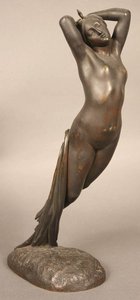
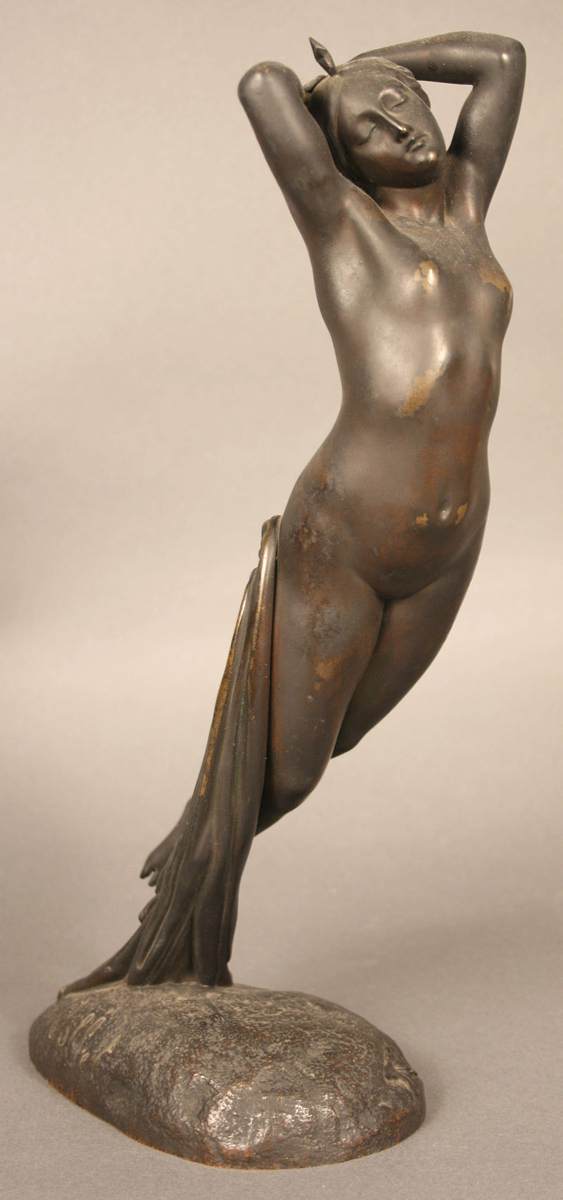
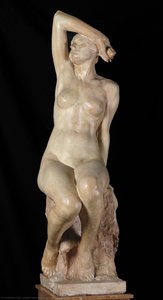
Hesperus, Goddess of the Dawn
 Read More
Giclée / Art Print
Museum-quality giclée or canvas print with fast production and flexible finish options. ( Buy Hand Made Painting Buy Image)




































Pick from our preset sizes that match the artwork's original proportions.

You may enter your own dimensions to fit a specific frame or space. If your selected size does not match the original image's proportions, we will either crop the artwork or extend the image with a mirrored or solid-fill edge. A digital mockup will be sent for your approval before production begins.
Please note that the on-screen preview does not reflect the actual cropping or extension. Only the mockup will accurately show the final composition.
While custom sizes are available, we recommend selecting a dimension from the predefined list to preserve the original proportions.
Worldwide Delivery () in 2 weeks instead of standard 4/5 weeks. (27 August)

Free Worldwide Express Shipping

High-Quality Linen Canvas

Full Shipping Insurance

Customs Tax Refund Guarantee

True Color Matching Guarantee

60-Day Return Policy (Defects Only)

100% Money-Back Guarantee

Bulk Discount Offer
 Glass option is only available in size under 110 CM

Hesperus, Goddess of the Dawn
Giclée / Art Print
Reproduction Size
-


Total Price
$ 63
Related Artworks

Artist Biography
The Sculptor of Myth and Emotion
Joseph Michel Ange Pollet, born in the sun-drenched city of Palermo in 1814, was a master of stone who breathed life into the silent weight of marble and bronze. His journey from the heart of Sicily to the prestigious artistic circles of Europe is a testament to a talent that bridged the gap between classical restraint and romantic intensity. Pollet’s early training was shaped by the profound influences of Valerio Villareng, but it was his time under the legendary Bertel Thorvaldsen and Pietro Tenerani that truly forged his artistic identity. From Thorvaldsen, he inherited the rigorous discipline of Neoclassicism, learning to capture anatomical precision and an idealized, ethereal beauty. However, through the influence of Tenerani, Pollet began to embrace a more dynamic, expressive energy, allowing him to infuse his figures with a sense of movement and dramatic pathos that would become his hallmark.
As his career unfolded, Pollet’s presence resonated far beyond his Italian roots. His travels led him through the vibrant artistic landscapes of Belgium and eventually to the heights of the Parisian art scene. It was at the Paris Salon where he truly captured the collective imagination of the nineteenth-century public. His ability to weave complex narratives into single, frozen moments allowed him to achieve significant accolades, including a bronze medal in 1847, a silver medal in 1848, and the prestigious gold medal in 1851. These honors solidified his reputation as a sculptor capable of translating the profoundest human emotions—sorrow, love, and longing—into tangible, enduring forms.
Masterpieces of Allegory and Grace
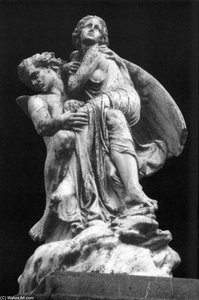
The true essence of Pollet’s genius is perhaps most vividly realized in his breakthrough work, Une Heure de la Nuit. Presented in 1848, this poignant sculpture depicts Hesperus, the goddess of twilight, entwined with Eros. The piece serves as a hauntingly beautiful allegory for the melancholic nature of love, capturing that fleeting moment where light fades into shadow. The work was so profoundly received by critics and collectors alike that it prompted numerous casts in various media, including plaster, bronze, and marble, ensuring its place in the annals of art history. This sculpture does not merely represent figures; it captures a mood, an atmosphere of quiet intimacy and cosmic transition.
Pollet continued to push the boundaries of his medium, moving toward even more monumental and emotionally charged compositions later in his life. His 1869 work, Éloa, stands as a towering achievement of his mature period. In this piece, Pollet utilized intricate stone carving to depict intertwined figures that embody the heavy themes of rescue and sorrow. Through the masterful manipulation of texture and form, he was able to convey the physical struggle and the emotional weight of the narrative, demonstrating a command over stone that felt almost organic. His ability to balance the rigid requirements of classical sculpture with the fluid, dramatic storytelling of the Romantic movement allowed him to create works that remain deeply evocative even centuries after their creation.
Legacy and Artistic Significance
Though Pollet passed away in Paris in 1870, his contribution to the evolution of nineteenth-century sculpture remains undeniable. He stood at a pivotal crossroads in art history, acting as a bridge between the disciplined perfection of the Neoclassical era and the expressive, narrative-driven spirit of Romanticism. His works are not merely objects of beauty but are vessels for storytelling, inviting viewers to contemplate the eternal cycles of myth and human feeling.
The enduring legacy of Joseph Michel Ange Pollet can be summarized through several key artistic pillars:
- Technical Mastery: A profound ability to manipulate marble and bronze to achieve both anatomical accuracy and fluid, lifelike movement.
- Emotional Depth: The capacity to transform mythological subjects into deeply relatable human experiences of love, loss, and longing.
- Historical Synthesis: The successful integration of Thorvaldsen’s Neoclassical precision with the expressive dynamism of the Baroque and Romantic styles.
- Cultural Impact: A celebrated career marked by significant recognition at the Paris Salon and a lasting influence on European sculptural traditions.
Joseph Michel Ange Pollet
1814 - 1870 , Italy
Quick Facts
- Artistic Movement Or Style: Neoclassical/Romantic
- Artists Who Influenced This Artist:
- Bertel Thorvaldsen
- Pierre-Auguste Renoir
- Date Of Birth: 1814 Palermo Italy
- Date Of Death: 1870 Paris France
- Full Name: Joseph Michel Ange Pollet
- Nationality: Italian
- Notable Artworks:
- Une Heure de la Nuit
- Éloa
- Place Of Birth: Palermo Italy