 Preview
 Send
Send Share
Share
 Details

 Download
 Similars
 X-Ray
X-Ray Diaporama
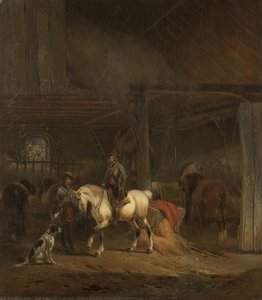
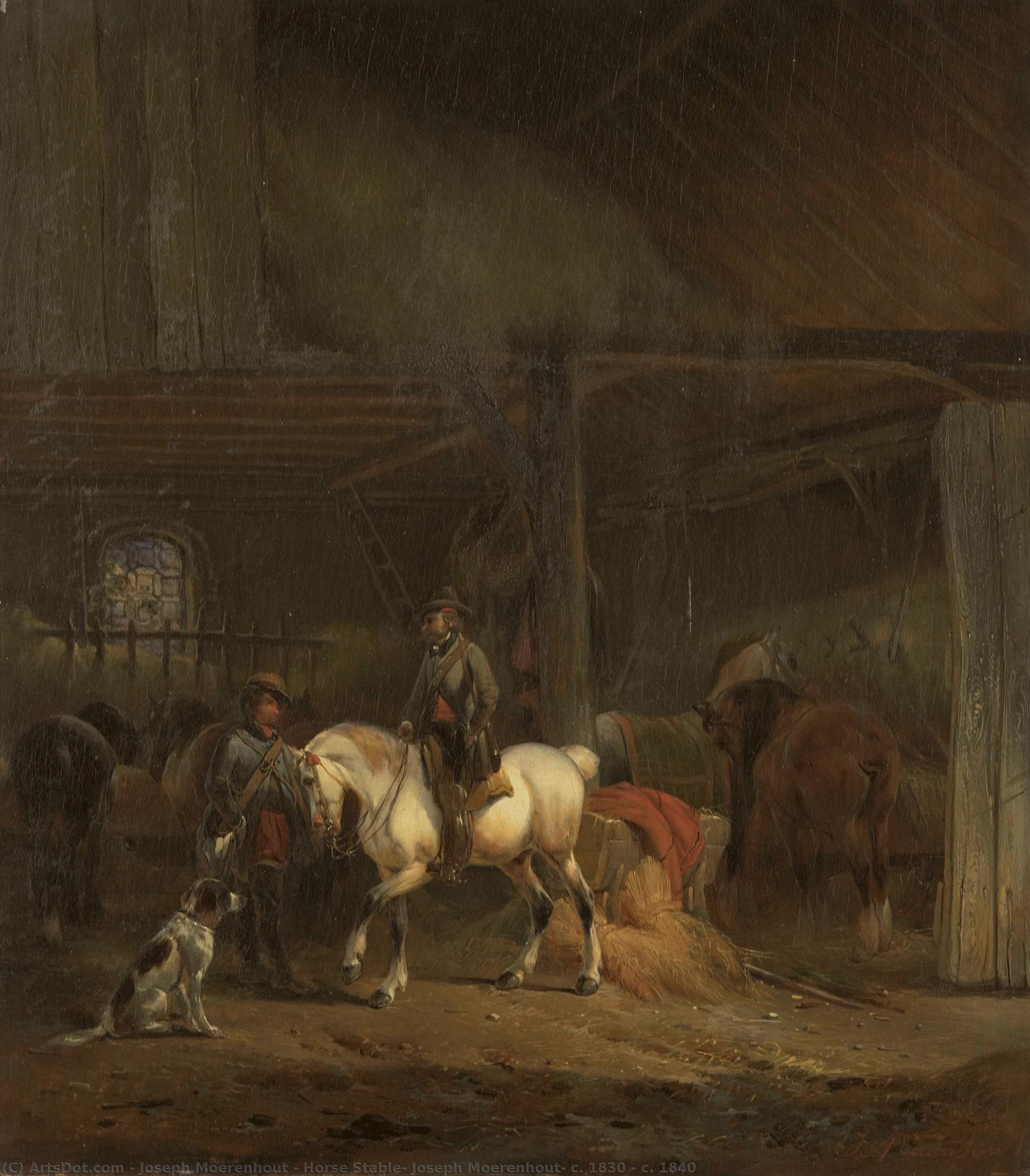
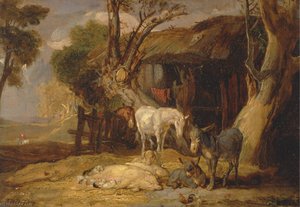
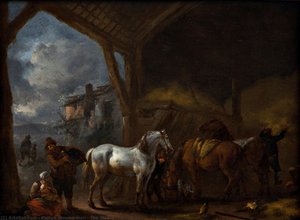
Horse Stable, Joseph Moerenhout, c. 1830 - c. 1840
 1840
1840 39.0 x 34.0 cm
 Read More
Hand Made Oil Reproduction
Hand-painted oil on canvas in your size and frame, made to order by our artists. ( Buy Print Buy Image)




































Pick from our preset sizes that match the artwork's original proportions.

You may enter your own dimensions to fit a specific frame or space. If your selected size does not match the original image's proportions, we will either crop the artwork or extend the painting with additional hand-painted elements. A digital mockup will be sent for your approval before production begins.
Please note that the on-screen preview does not reflect the actual cropping or extension. Only the mockup will accurately show the final composition.
While custom sizes are available, we recommend selecting a dimension from the predefined list to preserve the original proportions.
After order, ArtsDot.com team will email client for instructions and provide a mockup preview
Worldwide Delivery () in 3/4 weeks instead of standard 5 weeks. (29 August). No compromise on quality.

Free Worldwide Express Shipping

High-Quality Linen Canvas

Full Shipping Insurance

Customs Tax Refund Guarantee

True Color Matching Guarantee

60-Day Return Policy (Defects Only)

100% Money-Back Guarantee

Bulk Discount Offer
 Glass option is only available in size under 110 CM

Horse Stable, Joseph Moerenhout, c. 1830 - c. 1840
Reproduction Medium
Reproduction Size
-


Total Price
$ 263
Related Artworks




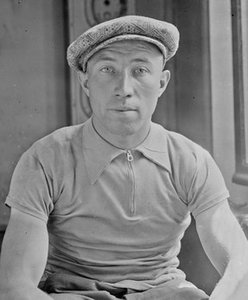
Artist Biography
The Spirit of the Equine: The Life and Art of Joseph Moerenhout
In the heart of the nineteenth century, a period defined by the sweeping romanticism of Europe, the brush of Joseph Jodocus Moerenhout captured the raw energy and noble grace of a world in motion. Born on May 3, 1801, in the quiet village of Ekeren near Antwerp, Moerenhout emerged from the Flemish landscape with a profound sensitivity to the natural world. His early years were steeped in the atmosphere of the post-Napoleonic era, a time when the borders of Europe were shifting and the spirit of adventure was palpable. This sense of movement would become the hallmark of his career, as he transitioned from a student of local masters to an internationally recognized painter of equestrian scenes, beachscapes, and hunting subjects.
Moerenhout’s artistic journey was one of constant movement and profound study. His formal education began in Antwerp under the guidance of H. van der Poorten, where he mastered the foundational techniques of figure and animal depiction. However, it was his travels that truly expanded his visual vocabulary. Seeking to refine his command over light and atmosphere, he journeyed to The Hague, immersing himself in the legacy of the Dutch Golden Age. There, he studied the works of masters like Philips Wouwerman, learning how to imbue animal anatomy with meticulous detail while maintaining a sense of atmospheric depth. This period of study allowed him to blend the precision of Northern European traditions with the burgeoning Romantic movement.
A Fusion of Traditions and Techniques
The true brilliance of Moerenhout’s style lies in his ability to synthesize diverse influences into a singular, cohesive vision. In 1824, his move to Paris marked a pivotal chapter in his development. Under the tutelage of the renowned military and history painter Horace Vernet, Moerenhout learned to infuse his compositions with a sense of drama and narrative tension. The influence of Vernet is most evident in Moerenhout’s spirited portrayals of cavalry and hunts, where the muscularity of the horses and the kinetic energy of the scene seem to leap from the canvas.
Throughout his career, Moerenhout frequently collaborated with other masters of the landscape, creating composite works that were greater than the sum of their parts. During his significant periods living in The Hague between 1831 and 1853, he worked alongside the Romantic landscapist Andreas Schelfhout and the painter Louis Meijer. In these collaborations, Moerenhout provided the specialized expertise of the animalier—the expert depiction of horses—while his colleagues provided expansive, sweeping Dutch scenery. This synergy resulted in breathtaking works that combined meticulous anatomical accuracy with vast, atmospheric horizons, capturing everything from the quiet stillness of a horse stable to the salt-sprayed intensity of a coastal beachscape.
Legacy and Artistic Significance
The legacy of Joseph Moerenhout is etched in the enduring vitality of his subjects. His works were not merely observations of animals, but celebrations of life, strength, and the romanticized connection between man and beast. One of his most celebrated achievements, Le Départ pour la Chasse (1852), serves as a testament to his prestige; this oil panel, depicting the noble preparations for a hunt, was so highly regarded that it was gifted to Queen Victoria and later engraved for publication in London.
As an artist who bridged the gap between the meticulous traditions of the seventeenth-century Dutch masters and the emotive power of nineteenth-century Romanticism, Moerenhout holds a unique position in art history. His ability to capture the fleeting moment—the flared nostril of a racing horse, the spray of a wave, or the quiet shadows of a stable—ensures that his work remains a captivating window into a bygone era of European elegance and natural splendor. He passed away in Antwerp in 1875, leaving behind a body of work that continues to resonate with those moved by the timeless beauty of the animal kingdom and the untamed landscapes of the continent.
Quick Facts
- Artistic Movement Or Style: Romanticism
- Artists Who Influenced This Artist:
- Philips Wouwerman
- Horace Vernet
- Date Of Birth: May 3, 1801
- Date Of Death: June 11, 1875
- Full Name: Joseph Jodocus Moerenhout
- Nationality: Belgian
- Notable Artworks:
- Horse Stable (c. 1830-40)
- The Horse Race (1829)
- Place Of Birth: Ekeren, Belgium