

 Preview
 Send
Send Share
Share
 Details

 Download
 Similars
 X-Ray
X-Ray Diaporama
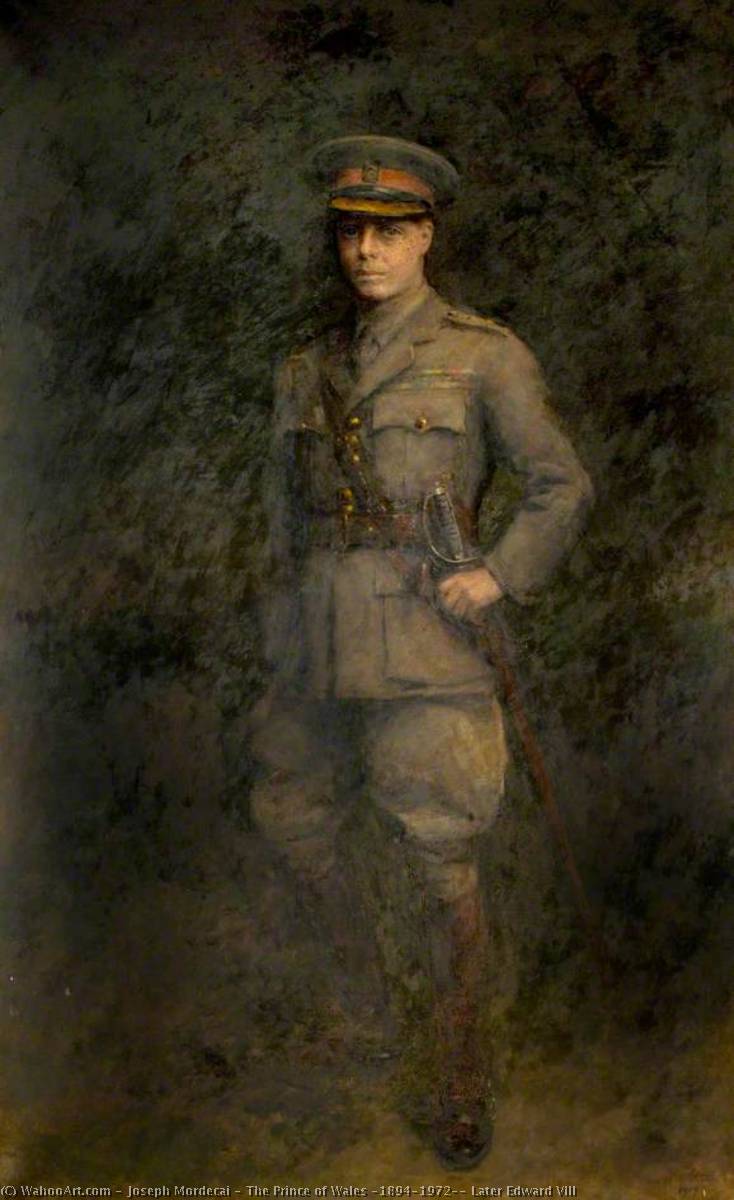
The Prince of Wales (1894–1972), Later Edward VIII
 1917
1917 243.0 x 154.0 cm
 Herbert Art Gallery - Museum
 Read More
Purchase a high-resolution, enhanced digital image, far superior to the online preview.
Each file is meticulously prepared by our in-house specialists using advanced tools and expert manual retouching. We ensure every image has exceptional clarity, precise color accuracy, and fine detail.
The final file is delivered via email within 72 hours, optimized for immediate use in professional, editorial, and print environments. This is the same quality trusted by top-tier design studios, publishers, and galleries.
Digital Image
Download a high-resolution file for personal display, printing, and creative projects. ( Buy Print Buy Hand Made Painting)
Included in Every Digital Image Order
Expert Digital Delivery, Guaranteed
When you choose ArtsDot.com, you're not just getting an image - you're receiving a professionally enhanced digital artwork, crafted with precision and backed by a satisfaction guarantee. Here's everything that comes with your order, automatically:

Fast Email Delivery
Your high-resolution digital image file will be emailed to you within 72 hours of ordering - ready for immediate use.

AI-Enhanced Digital File
Your artwork is professionally optimized using advanced AI tools and manual editing, ensuring maximum detail, clarity, and color accuracy.

Free Lifetime Re-Delivery
Accidentally deleted or lost your file? No worries - we'll resend it to you anytime, free of charge.

No Import Fees - Ever
Enjoy your artwork instantly with zero customs, duties, or delivery fees - digital downloads are always tax-free.

Color Accuracy Guarantee
We ensure your digital image reflects the original colors as closely as possible using professional tools and color management.

60-Day Satisfaction Guarantee
If you're not satisfied with your digital image, we'll revise it or refund 100% within 60 days - no questions asked.

100% Money-Back Guarantee
Not satisfied? Get a full refund within 60 days of receiving your digital file - no questions asked.

Bulk Order Discounts
Buy 3 images, save 10% - Buy 5, save 15% - Buy 10+, save 20%. Great for creative projects, galleries, and agencies.
Related Artworks








Artist Biography
Joseph Mordecai: A Victorian Portraitist of Faith and Form
The world of 19th-century portraiture was a landscape of established conventions, yet within it flourished artists who dared to challenge boundaries and imbue their work with profound personal meaning. Joseph Mordecai (1851 – 1940), a Jewish artist born in England, stands as a compelling example of this duality. His career spanned over seven decades, producing a remarkable body of religious paintings, evocative portraits, and landscapes that reflect both the formal training he received within the established art world and his deeply held spiritual convictions.
Mordecai’s early life was shaped by his family's heritage and their connection to London’s Jewish community. He began his artistic journey at Heatherley’s School of Art, a prestigious institution known for its rigorous training in classical techniques. Subsequently, he honed his skills at the Royal Academy Schools, absorbing the principles of academic painting – careful observation, meticulous detail, and a commitment to realistic representation. However, beneath this veneer of technical proficiency lay a restless spirit and an evolving artistic sensibility.
A pivotal moment in Mordecai’s development occurred during his time studying at the Royal Academy. He began to develop a distinctive style characterized by rich color palettes, dramatic lighting, and a remarkable ability to capture the psychological depth of his subjects. His portraits were not merely likenesses; they were imbued with an atmosphere of solemnity and introspection, reflecting the inner lives of those he depicted. Notably, he secured commissions from prominent figures, including George V and Edward VII, solidifying his position within the established art circles of London.
Yet, Mordecai’s artistic journey was profoundly influenced by his religious beliefs. He wrestled with questions of faith and doubt throughout his life, a struggle that became increasingly central to his work. His paintings of biblical scenes – particularly those depicting figures like St. Joseph – are imbued with a sense of profound reverence and spiritual intensity. These works demonstrate not just an understanding of the narratives but also a deep emotional engagement with their theological significance. His depictions often eschew the conventional, heroic portrayals favored by some contemporaries, instead presenting figures as vulnerable and deeply human.
Mordecai’s artistic output extended beyond religious subjects to encompass landscapes and portraits of Victorian society. His landscapes, characterized by atmospheric perspective and a sensitivity to light and color, offer glimpses into the beauty of the English countryside. His portraits of members of the British aristocracy and gentry are equally noteworthy, capturing their social standing and individual personalities with subtle grace.
A significant aspect of Mordecai’s legacy lies in his role as a founder of the Reconstructionist movement within Judaism. Dissatisfied with the rigid formalism of traditional Orthodoxy, he sought to create a more inclusive and dynamic form of Jewish faith that embraced both its historical roots and contemporary values. This vision profoundly shaped his artistic practice, encouraging him to explore new ways of representing religious themes and engaging with the complexities of modern life.
Key Works and Artistic Style
- St. Joseph Overseeing the Pharaohs’ Granaries (c. 1890): This iconic painting exemplifies Mordecai's masterful use of light, color, and composition to convey a sense of drama and spiritual significance. The scene is rendered with meticulous detail, capturing the solemnity of the moment and the profound implications of Joseph’s role in saving Egypt from famine.
- Portraits of Royalty (Various Dates): Mordecai's portraits of King Edward VII and Queen Alexandra are considered among his finest achievements. He skillfully captures their regal bearing while also revealing glimpses of their inner lives, creating images that are both formal and deeply personal.
- Landscapes of the English Countryside (Various Dates): Mordecai’s landscapes demonstrate a keen eye for detail and an ability to capture the beauty of the natural world. His paintings evoke a sense of tranquility and contemplation, inviting viewers to immerse themselves in the serenity of the countryside.
- Religious Scenes (Numerous Examples): Paintings such as “The Presentation at Bethlehem” and “The Flight into Egypt” showcase Mordecai’s ability to infuse biblical narratives with emotional depth and spiritual resonance. His depictions are characterized by a sense of reverence, humility, and profound humanism.
Historical Context and Influences
Mordecai's artistic development occurred during a period of significant social and cultural change in Britain. The Victorian era was marked by rapid industrialization, urbanization, and the rise of new ideas about religion, science, and society. The influence of Romanticism, with its emphasis on emotion, imagination, and the sublime, can be seen in his work, particularly in his landscapes and portraits.
Furthermore, Mordecai was influenced by a diverse range of artists, including the Pre-Raphaelites, whose interest in medieval themes and symbolism resonated with his own spiritual sensibilities. He also admired the works of Rembrandt van Rijn, known for his dramatic use of light and shadow and his ability to capture the psychological depth of his subjects.
The rise of Jewish intellectualism during this period also played a role in shaping Mordecai’s artistic vision. He engaged with contemporary debates about Jewish identity, religious practice, and social justice, seeking to create art that reflected both his personal faith and his commitment to the betterment of society.
Legacy and Recognition
Joseph Mordecai's work has been recognized for its technical skill, emotional depth, and spiritual significance. His paintings are held in prominent collections throughout Britain, including the National Portrait Gallery, the Guildhall Art Gallery, and the Government Art Collection. His legacy extends beyond his artistic achievements, as he played a key role in shaping the course of Reconstructionist Judaism.
Today, Mordecai is remembered as one of the most important Victorian portraitists and religious painters of his time. His art continues to inspire and challenge viewers with its beauty, complexity, and profound sense of human experience.
joseph mordecai
1851 - 1940
Quick Facts
- Artistic Movement Or Style: Victorian Art Style
- Artists Or Movements Influenced By This Artist: ['WahooArt.com']
- Artists Who Influenced This Artist:
- James Sant
- Heywood Hardy
- Nikolai Ge
- Date Of Birth: 1851
- Date Of Death: 1940
- Full Name: Joseph Mordecai
- Nationality: American
- Notable Artworks:
- St Joseph Cathedral
- San Diego Art
- Portrait of George V
- Portrait of Edward VII
- Place Of Birth: WahooArt, Nebraska

