 Preview
 Send
Send Share
Share
 Details

 Download
 Similars
 X-Ray
X-Ray Diaporama
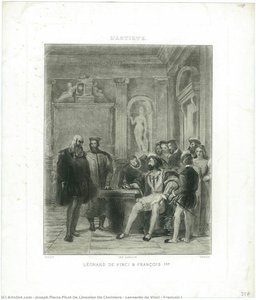
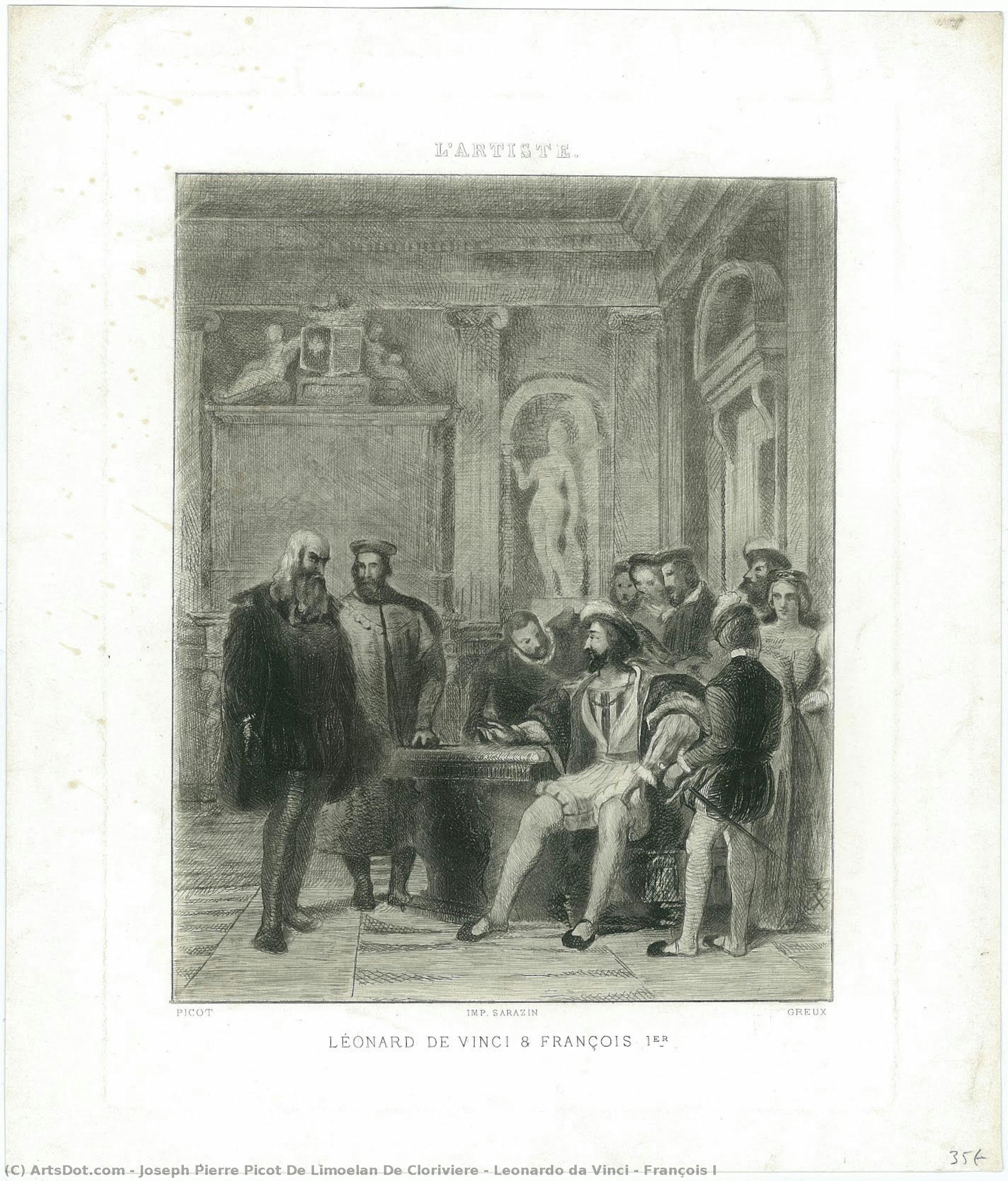
Leonardo da Vinci & François I


 Read More
Giclée / Art Print
Museum-quality giclée or canvas print with fast production and flexible finish options. ( Buy Hand Made Painting Buy Image)




































Pick from our preset sizes that match the artwork's original proportions.

You may enter your own dimensions to fit a specific frame or space. If your selected size does not match the original image's proportions, we will either crop the artwork or extend the image with a mirrored or solid-fill edge. A digital mockup will be sent for your approval before production begins.
Please note that the on-screen preview does not reflect the actual cropping or extension. Only the mockup will accurately show the final composition.
While custom sizes are available, we recommend selecting a dimension from the predefined list to preserve the original proportions.
Worldwide Delivery () in 2 weeks instead of standard 4/5 weeks. (26 August)

Free Worldwide Express Shipping

High-Quality Linen Canvas

Full Shipping Insurance

Customs Tax Refund Guarantee

True Color Matching Guarantee

60-Day Return Policy (Defects Only)

100% Money-Back Guarantee

Bulk Discount Offer
 Glass option is only available in size under 110 CM

Leonardo da Vinci & François I
Giclée / Art Print
Reproduction Size
-


Total Price
$ 63
Collectible Description
Related Artworks
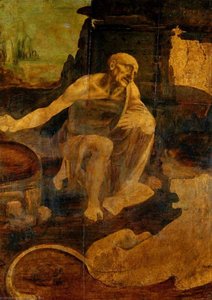
Artist Biography
A Life Forged in Revolution: The Remarkable Journey of Joseph-Pierre Picot de Limoëlan de Clorivière
Joseph-Pierre Picot de Limoëlan de Clorivière’s life reads like a captivating novel, a tale woven with threads of military service, political intrigue, and an unexpected artistic blossoming. Born in the small French town of Broons in 1768, his early years offered little hint of the extraordinary path he would take. The tumultuous era of the French Revolution cast a long shadow over his youth, inevitably shaping his destiny. He entered the military, a common trajectory for young men of his standing, but fate intervened in a dramatic fashion. Accusations of involvement in a conspiracy to assassinate Napoleon Bonaparte forced him into exile in 1803, an event that irrevocably altered the course of his life and ultimately led him across the Atlantic to America.From Soldier to Miniature Portraitist: A New Artistic Calling
Arriving in the United States, Picot de Limoëlan de Clorivière found himself a stranger in a new land, compelled to forge a new identity and livelihood. He initially settled in Savannah, Georgia, where he began to practice his skills as a miniaturist. This transition from soldier to artist was not merely a change of profession but a profound reinvention. Miniature portraiture, popular among the burgeoning American elite, offered him both financial stability and an outlet for his keen observational abilities. His work quickly gained recognition for its delicate precision and remarkable likenesses. He moved on to Baltimore, Maryland, further establishing himself as a sought-after artist during the first decades of the 19th century. The intimacy of the miniature form allowed Picot de Limoëlan de Clorivière to capture not just physical appearances but also subtle nuances of character and social standing—a skill honed perhaps by years spent observing individuals within the rigid hierarchies of European society.The Art of Ivory: Technique and Style
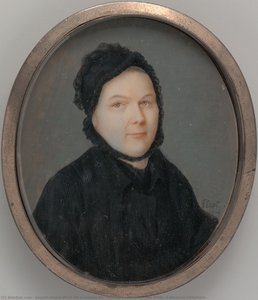
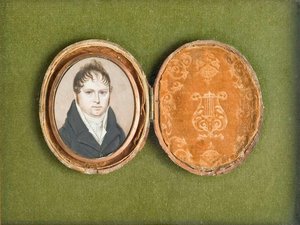
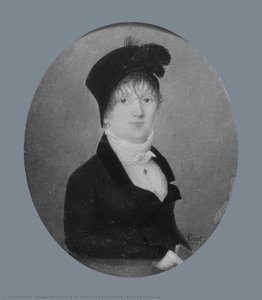
Picot de Limoëlan de Clorivière specialized in watercolor portraits painted on ivory, a demanding medium that required exceptional technical mastery. The smooth, non-porous surface of ivory allowed for an unparalleled level of detail and luminosity. His technique involved meticulous layering of translucent washes, building up form and color with painstaking care. He possessed a remarkable ability to render textures—the sheen of silk, the softness of skin, the sparkle in an eye—with astonishing realism. While influenced by European portrait traditions, his style evolved to reflect American sensibilities, embracing a more direct and unadorned approach. His portraits are characterized by their clarity of line, subtle modeling, and a quiet dignity that speaks volumes about the sitters he portrayed. The *Portrait of Mrs. Phineas Miller (Catherine Littlefield)*, circa 1806, exemplifies his skill—a captivating depiction of a woman whose inner life seems to radiate from the delicate ivory surface.A Legacy Beyond the Canvas: Faith and Final Years
Picot de Limoëlan de Clorivière’s story took another unexpected turn in 1812 when he became a pastor in Charleston, South Carolina. Though he continued to paint sporadically during this period, his artistic output diminished as his religious duties consumed his time and energy. Later, he accepted the position of chaplain at The Visitation Monastery in Georgetown, D.C., where he spent his final years. This transition reflects a deep spiritual dimension to his character—a search for meaning beyond the world of art and politics that had defined much of his life. He died in Washington, D.C., in 1826, leaving behind a small but significant body of work that offers a unique glimpse into the lives of early American society.Historical Significance: A Transatlantic Artist
Joseph-Pierre Picot de Limoëlan de Clorivière occupies a fascinating position in art history as a transatlantic artist whose life bridged two worlds—the Old World of European tradition and the New World of burgeoning American identity. His story is a testament to the resilience of the human spirit, the power of reinvention, and the enduring allure of artistic expression. He wasn’t merely a painter; he was a soldier, an exile, a clergyman—a man whose life experiences profoundly shaped his art. His miniatures offer more than just portraits; they are windows into a pivotal moment in history, capturing the faces and stories of individuals who helped shape a nation. His work continues to be celebrated for its technical brilliance, artistic sensitivity, and the captivating narrative it embodies—a life forged in revolution, transformed by exile, and ultimately dedicated to the pursuit of beauty and spiritual fulfillment. His legacy reminds us that art is not simply about aesthetics but also about the human stories behind the canvas.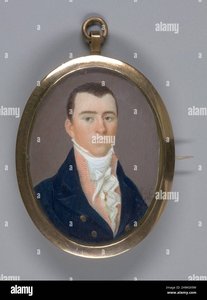
joseph pierre picot de limoelan de cloriviere
1768 - 1826 , France
Quick Facts
- Artistic Movement Or Style: Miniature portraiture
- Date Of Birth: 1768
- Date Of Death: 1826
- Full Name: Joseph-Pierre Picot de Limoëlan de Clorivière
- Nationality: French
- Notable Artworks:
- Mrs. Phineas Miller (c. 1806)
- Portrait of a Lady (ca. 1808)
- Place Of Birth: Brune, France
Related Articles

Leonardo da Vinci's Masterpieces: Explore 25 Iconic Artworks for Your Home | ArtsDot
Journey through Leonardo da Vinci's genius with our curated selection of 25 iconic artworks. Explore the stories behind Mona Lisa, The Last Supper & more Renaissance masterpieces. Find museum-quality art reproductions for your home at ArtsDot.com.

Leonardo da Vinci: A Renaissance Master’s Synthesis of Art, Science & Human Observation – Reinterpreted for the Collector
Explore Leonardo da Vinci’s timeless masterpieces with ArtsDot. Discover insights into his art, science, and legacy – trusted expertise for discerning collectors seeking authentic reproductions & investment opportunities.
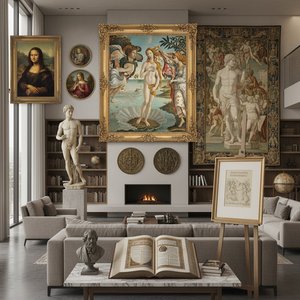
Renaissance Humanism's Greatest Art: 10 Masterpieces for Your Home
Explore 10 Renaissance Humanism masterpieces by Leonardo da Vinci, Michelangelo & Raphael. Discover the stories behind these iconic paintings & sculptures and bring timeless art into your home with museum-quality reproductions from ArtsDot.com. Explore the full collection online!

Louvre Masterpieces: Explore the Top 25 Artworks for Your Home | ArtsDot
Journey through the Louvre's 25 most iconic artworks! Explore masterpieces by Leonardo da Vinci, Michelangelo & Delacroix. Discover art history, techniques & find museum-quality reproductions for your home at ArtsDot.com.

Uffizi's 25 Masterpieces: Renaissance Art & Timeless Decor Inspiration
Journey through the Uffizi Gallery's 25 most iconic Renaissance artworks! Explore Botticelli, Leonardo da Vinci & Michelangelo’s masterpieces. Find museum-quality art reproductions and curated decor ideas to bring timeless Italian beauty into your home. Discover all masterpieces on ArtsDot.com