 Preview
 Send
Send Share
Share
 Details

 Download
 Similars
 X-Ray
X-Ray Diaporama
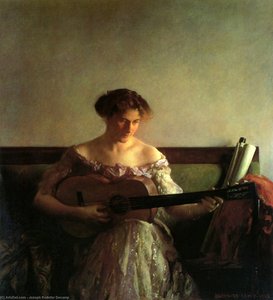
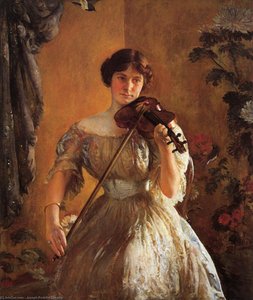
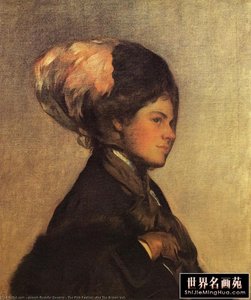
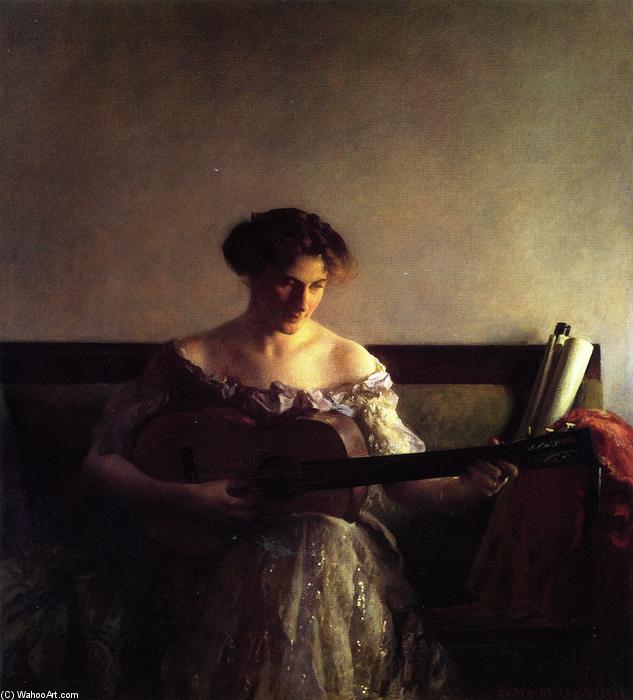
The Guitar Player


 Read More
Hand Made Oil Reproduction
Hand-painted oil on canvas in your size and frame, made to order by our artists. ( Buy Print Buy Image)




P118B $10

P118H $10

P118W $10

P438Z $10

P508JH $12

P508YH $12

P805H $10

P805Z $10

P919BZ $10

P919G $10

P919XJ $10

P959ZH $10

P968JZ $12

W106C $8

W218G $10

W218JH $8

W218Y $10

W307PJ $10

W316G $10

W316PJ $8

W316Y $10

W398PJ $8

W4111J $10

W500HY $15

W500JH $15

W692G $12

W849H $8

W940BG $15

W953PJ $8




Pick from our preset sizes that match the artwork's original proportions.

You may enter your own dimensions to fit a specific frame or space. If your selected size does not match the original image's proportions, we will either crop the artwork or extend the painting with additional hand-painted elements. A digital mockup will be sent for your approval before production begins.
Please note that the on-screen preview does not reflect the actual cropping or extension. Only the mockup will accurately show the final composition.
While custom sizes are available, we recommend selecting a dimension from the predefined list to preserve the original proportions.
After order, ArtsDot.com team will email client for instructions and provide a mockup preview
Worldwide Delivery () in 3/4 weeks instead of standard 5 weeks. (17 August). No compromise on quality.

Free Worldwide Express Shipping

High-Quality Linen Canvas

Full Shipping Insurance

Customs Tax Refund Guarantee

True Color Matching Guarantee

60-Day Return Policy (Defects Only)

100% Money-Back Guarantee

Bulk Discount Offer
 Glass option is only available in size under 110 CM

The Guitar Player
Reproduction Medium
Reproduction Size
-


Total Price
$ 263
Artwork Description
A Portrait of Quiet Reflection: Exploring Joseph Rodefer DeCamp’s “The Guitar Player”
Joseph Rodefer DeCamp stands as a cornerstone of American Luminist painting and the Boston School, embodying a distinctive aesthetic that seamlessly blends realism with luminous Impressionistic light—a masterful achievement achieved through decades of artistic exploration. Born in Cincinnati, Ohio, in 1858, DeCamp’s formative years were marked by rigorous academic training under luminaries like Thomas S. Noble and Frank Duveneck, establishing him firmly within the Beaux Arts tradition before he embarked on a transformative journey into European artistic centers—Munich and Florence—where he absorbed influences from Impressionism and plein air painting. This dual grounding profoundly shaped his artistic vision, resulting in canvases that resonate with an unparalleled sensitivity to atmosphere and human emotion.- Subject Matter: “The Guitar Player” depicts a woman seated on a couch, her gaze directed outwards—away from the viewer—suggesting contemplation and immersion in musical performance. This deliberate positioning elevates the portrait beyond mere likeness, inviting viewers into the inner world of its subject.
- Style & Technique: DeCamp’s approach aligns perfectly with Luminist principles, prioritizing tonal harmony and subtle gradations of light to convey a sense of serenity and stillness. The painting utilizes oil on canvas—a technique favored by luminists—allowing for exceptional detail while maintaining an ethereal quality that captures the diffused illumination characteristic of domestic interiors.
- Historical Context: Created in 1908, “The Guitar Player” emerged during a period of burgeoning American artistic ambition following the Impressionist movement. DeCamp's work reflects the broader trend toward capturing fleeting moments of everyday life with nuanced sensitivity—a hallmark of Luminism’s enduring legacy.
- Symbolism: The guitar itself serves as a potent symbol of creativity, passion, and emotional expression. Its placement in the woman’s lap emphasizes her engagement with artistic pursuits and suggests an inner harmony between intellect and emotion.
Related Artworks

Artist Biography
A Luminist of American Life: The World of Joseph Rodefer DeCamp
Joseph Rodefer DeCamp, a name synonymous with the refined elegance of American Impressionism and the distinctive style of the Boston School, occupies a pivotal position in the narrative of late 19th and early 20th-century American art. Born in Cincinnati, Ohio, in 1858, DeCamp’s artistic journey was one of dedicated study, evolving influences, and ultimately, a masterful synthesis of realism, impressionistic light, and an enduring fascination with the subtleties of human experience. His canvases offer glimpses into a world of quiet domesticity, luminous interiors, and portraits that capture not merely likeness but also the inner lives of his subjects. From early training under Thomas S. Noble and Frank Duveneck in Cincinnati to formative years spent absorbing artistic traditions in Munich and Florence, DeCamp’s foundation was built upon rigorous academic principles before blossoming into a uniquely American vision.Formative Years and European Influences
DeCamp's initial exposure to art came at the McMicken School of Design in Cincinnati, where he honed his foundational skills under the guidance of Noble, whose emphasis on draftsmanship would remain a cornerstone of DeCamp’s technique. However, it was his association with Frank Duveneck that proved particularly impactful, steering him towards a bolder, more direct approach to painting. This influence propelled DeCamp across the Atlantic in the 1870s, joining Duveneck and a cohort of American students at the Royal Academy of Munich. While initially embracing the academic rigor of the academy, DeCamp soon gravitated toward Duveneck’s independent spirit and followed him to Florence, immersing himself in the rich artistic heritage of Italy. These European experiences were crucial, providing not only technical training but also exposure to the Old Masters – particularly the Dutch painters like Jan Vermeer – whose influence would become increasingly apparent in his later work. The meticulous detail, subtle lighting, and quiet intimacy found in Vermeer’s interiors resonated deeply with DeCamp, shaping his aesthetic sensibilities and informing his approach to composition and atmosphere.The Boston School and a Distinctive Style
Upon returning to the United States in 1883, DeCamp settled in Boston, becoming an integral part of what would become known as the Boston School. Alongside artists like Edmund C. Tarbell and Emil Otto Grundmann, he championed a style that blended Impressionist techniques with traditional academic training. This wasn’t a wholesale adoption of French Impressionism; rather, it was a uniquely American adaptation, prioritizing solid draftsmanship, carefully considered compositions, and a luminous quality of light achieved through subtle color harmonies. DeCamp's work during this period often depicted women engaged in everyday activities – sewing, reading, or simply lost in thought – bathed in the soft glow of interior light. He also embraced Tonalism in the 1890s, further refining his palette and emphasizing atmospheric effects. His incorporation of Japonisme—the influence of Japanese art and design—added another layer to his artistic vocabulary, introducing delicate patterns and a sense of refined elegance into his compositions. The founding of the Ten American Painters in 1897 solidified DeCamp’s position as a leading figure in the movement towards an independent American artistic identity.Recognition and Enduring Legacy
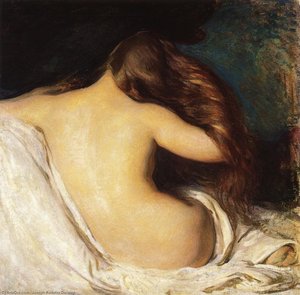
Throughout his career, DeCamp received numerous accolades for his contributions to American art. He earned the Temple Gold Medal in 1899 for *Woman Drying Her Hair*, the Beck Gold Medal in 1912 for *Portrait of Francis I. Amory*, and the Lippincott Prize in 1920 for *The Red Kimono*. His work was also recognized internationally, receiving an honorable mention at the 1900 Exposition Universelle in Paris. Beyond his artistic achievements, DeCamp dedicated himself to education, serving as a faculty member at both the Massachusetts Normal Art School and the School of the Museum of Fine Arts in Boston, nurturing generations of aspiring artists. His influence extended far beyond his students; he helped shape the course of American painting, bridging the gap between academic tradition and modern innovation. DeCamp’s legacy lies not only in the beauty and technical mastery of his paintings but also in his ability to capture a particular moment in American history – a time of social change, artistic experimentation, and a growing sense of national identity. His luminous interiors, intimate portraits, and serene landscapes continue to resonate with viewers today, offering a glimpse into a world of quiet elegance and enduring beauty. His works are held in prominent museum collections across the country, including the Museum of Fine Arts, Boston, the Pennsylvania Academy of the Fine Arts, and the Terra Foundation for American Art, ensuring that his contribution to American art will be celebrated for generations to come.Notable Works
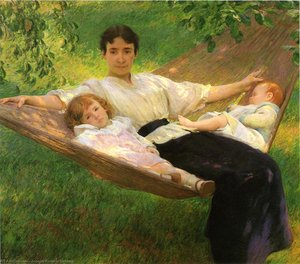
- The Hammock – Portrait of the Artist's Wife and Children: A tender depiction of domestic life, showcasing DeCamp’s skill in capturing familial intimacy.
- The Guitar Player (1908): Demonstrates his ability to blend figure painting with atmospheric effects, creating a captivating scene of musical contemplation.
- Portrait of Dr. Horace Howard Furness (1906): A masterful portrait that reveals not only the subject’s physical likeness but also his intellectual depth and character.
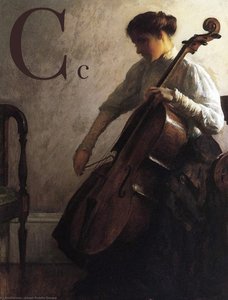
- The Cellist (1908): Exemplifies DeCamp's skill in portraying figures within subtly lit interiors, evoking a sense of quiet concentration and artistic passion.
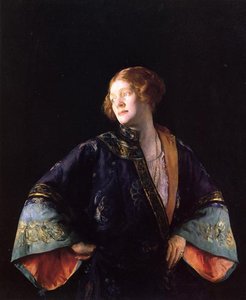
- The Blue Mandarin Coat (1922): A striking example of his incorporation of Japonisme, showcasing the influence of Japanese aesthetics on his work.
- Jetty at Low Tide (also known as The Water Pier): Captures serene coastal beauty with texture and light.
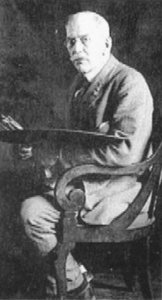
Joseph Rodefer DeCamp
1858 - 1923 , United States of America
Quick Facts
- Artistic Movement Or Style: Impressionism, Boston School
- Artists Or Movements Influenced By This Artist:
- Boston School
- American Impressionism
- Artists Who Influenced This Artist:
- Frank Duveneck
- Jan Vermeer
- Thomas S. Noble
- Date Of Birth: November 5, 1858
- Date Of Death: February 11, 1923
- Full Name: Joseph Rodefer DeCamp
- Nationality: American
- Notable Artworks:
- The Hammock
- The Guitar Player
- The Cellist
- The Seamstress
- Jetty at Low Tide
- Place Of Birth: Cincinnati, USA
Related Articles
Frederick Childe Hassam: American Impressionism's Chronicler of Light & Modern Life
Explore the captivating world of Frederick Childe Hassam, a pioneer of American Impressionism. Discover his iconic paintings capturing light, urban life & coastal beauty. Learn about his legacy and influence on American art history.
Lilla Cabot Perry: Pioneering American Impressionism & Society Portraiture
Discover Lilla Cabot Perry (1848-1933), a pioneering American Impressionist painter. Explore her captivating portraits of Boston society, Monet's influence, and lasting legacy in art history. Learn more at ArtsDot.
Masterpieces of Boston: Explore 25 Iconic Artworks | ArtsDot
Journey through 25 iconic artworks at Boston's MFA! Explore masterpieces by Monet, Sargent, Van Gogh & more. Discover art history, techniques & find museum-quality reproductions for your home on ArtsDot.com.

Capturing a Nation's Light: Exploring the American Impressionist Movement
Explore the captivating world of American Impressionism! Discover key artists, techniques & its lasting impact on art history. Find museum-quality reproductions and expert guidance at ArtsDot.
William Merritt Chase: A Study in American Impressionism & Artistic Luminosity
Explore the life & work of William Merritt Chase, a leading American Impressionist painter and influential art educator. Discover his vibrant portraits, landscapes, and lasting legacy with ArtsDot.